
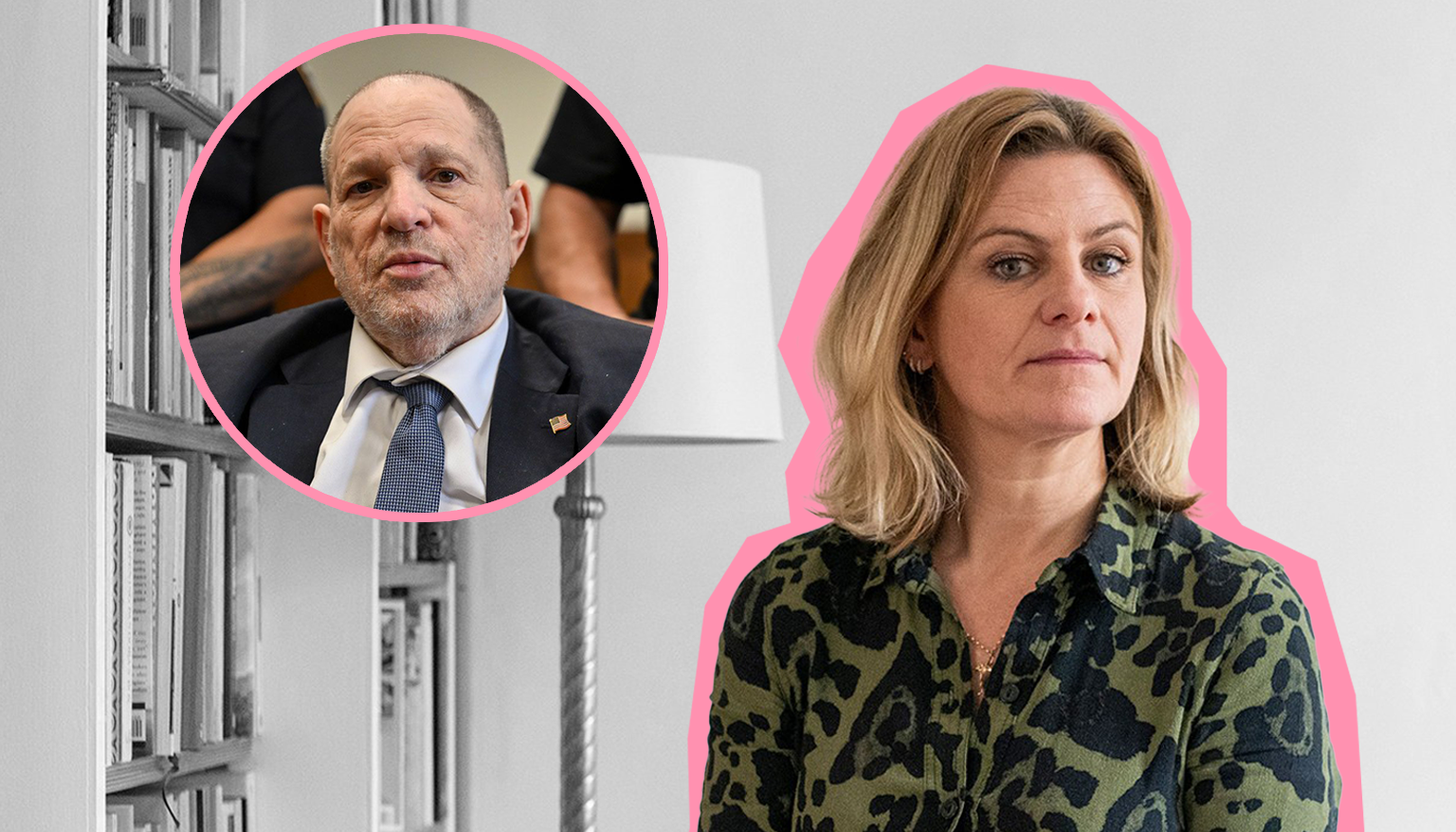
“I want to publicly break my non-disclosure agreement (NDA),” Zelda Perkins told the British Financial Times in October 2017.
A non-disclosure agreement, or NDA, is, simply put, a contract that prohibits the parties from disclosing certain information. Zelda Perkins, a former assistant to Harvey Weinstein, was permanently banned from speaking out about Weinstein’s sexual harassment and assault allegations, as well as the legal strategies the producer used to silence his victims, under such an agreement since 1998.
Harvey Weinstein is an American film producer who was once considered one of the most powerful and influential figures in Hollywood. Together with his brother, Bob Weinstein, he founded the film companies Miramax and The Weinstein Company. In October 2017, investigative publications in The New York Times and The New Yorker exposed Harvey Weinstein’s crimes — over the decades, dozens of women working in the film industry had accused him of sexual harassment, assault, and rape. The investigation became a major catalyst for the #MeToo movement. The movement has inspired millions of people to speak out publicly about their experiences of sexual assault, harassment, and abuse of power.
The nondisclosure agreement was preceded by the Venice Film Festival in 1998. Perkins was approached by an assistant who told her that Weinstein had sexually assaulted her:
She was pale, shaking, and in a very difficult emotional state. She told me that something terrible had happened. She was in shock, crying, and had a hard time speaking. I was furious, deeply moved, and shocked. I said, “We have to go to the police,” but she was in such a difficult state that she couldn’t. We were in a strange environment, and neither of us knew what to do.
They decided to start legal proceedings after returning to England, but after consulting with lawyers, they discovered that there was nothing they could do legally: “It was our word against his.” Zelda and her assistant were told to be “good girls,” sign a nondisclosure agreement, accept compensation, and leave.
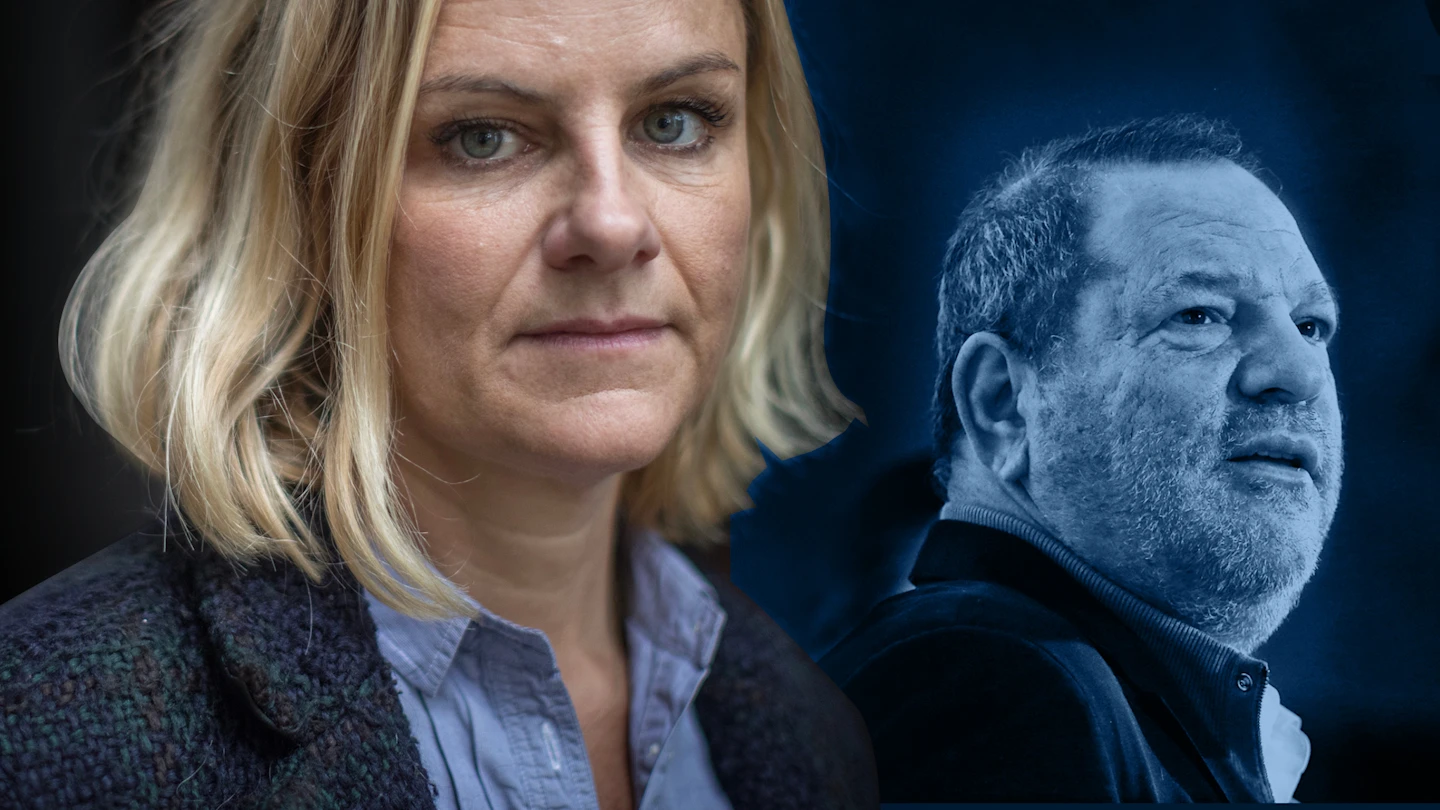
“I thought the law was there to protect those who obeyed it. But I discovered it had nothing to do with truth and justice. It was all about money and power,” Zelda told the Financial Times, and it was this injustice that led to her years of hard work and struggle.
Zelda exposed a vicious system and showed how rich and influential people use NDAs not only to protect commercial or organizational secrets, but also to hide their own crimes and silence their victims.
About a week ago, Zelda was in Tbilisi. She spoke about power, silence, systems of impunity, struggle and courage at ZEG, the international storytelling festival. Before her session, Aprili Media asked Zelda about her long-standing struggle, changes and the advice she would share with those in opposition.
Over the course of 19 years, Zelda has had several attempts to break her non-disclosure agreement. However, she cites a call from The New York Times in 2017 as a turning point.
“Interestingly, this was the first time a female journalist had contacted me. Before that, only male journalists called me, and the difference was clear. She didn’t start asking questions. She said she was just calling to tell me a few things. And from what she said, I realized she was talking to the right people and that people in positions of influence had started talking about Weinstein.”
Perkins says the burden of silence for two decades was the hardest.
“Imagine that this part of your life is just a black hole,” Zelda’s lawyer told her. She was to live as if nothing had ever happened.
In 1998, she was 25 years old, at the beginning of her career and proud of her professional achievements, but suddenly found herself in a reality where she had lost her job, her daily routine, her surroundings, and she couldn’t even talk about the reasons.
“This is what people don’t understand about NDAs: they not only take away the ability to own and understand your trauma, but also the ability to talk to friends and family. I wasn’t allowed to talk to the police, I wasn’t allowed to talk to lawyers… I wasn’t allowed to say anything to anyone about what happened, including the colleague I went through this experience with.”
She says she could no longer function normally in her homeland. At that time, Perkins’ only way to survive was to leave the country. She went to Guatemala, where she trained horses. No one there was interested in the film industry or Weinstein. In that environment, Perkins had the freedom to speak. Over the next few years, she tried to communicate with the media several times.
“Inside, I was always convinced that such a blatant injustice could not be hidden forever and that one day the truth would inevitably become known. Journalists tried to publish this story several times, but each time the article was “blocked” along the way and did not reach the reader,” says Perkins.
Zelda cites the case of Italian model Ambra Gutierrez as a prime example of the suppression of the story. The model was sexually harassed by Weinstein. Ambra went to the New York police. Law enforcement officers decided to secretly record Weinstein’s confession and prove his guilt. However, despite his confession and the existence of evidence, no legal prosecution was initiated and the case was closed.
“When the law of a country allows you to be silenced for speaking out about harm and violence, it means that the system is not working properly. You can’t change human nature. There is good and bad, light and dark in all of us. But the law can be changed. The #MeToo movement led to public speaking, and Weinstein was finally arrested. Many people thought that the problem was solved. For me, it wasn’t, because while he had to answer for his actions before the courts, he didn’t solve the problem. In my opinion, the only way to solve the problem was to change the system, the law.”
Since 2017, Perkins has been actively campaigning for legislative and regulatory changes to prohibit the misuse of NDAs. To this end, he launched the Can’t Buy My Silence UK campaign in 2021. The campaign works with the governments of the United Kingdom, Ireland, Canada and Australia and has already achieved significant legislative reforms in three countries.
The most significant changes have been made in the United Kingdom — amendments to several acts collectively ensure that NDAs are void if they are used to silence victims and witnesses of harassment, discrimination, or crime.
After she began speaking publicly, Zelda realized that she had to follow this path to the end. She was alone and exhausted again, but still focused on the end result. Even today, she says that despite the setbacks in human rights in various parts of the world, there has also been tremendous progress. She calls it the history of humanity.
“Even if we look at the West, where we were 10 years ago, the change is colossal. We are discussing issues today that no one was talking about 10 years ago. To some extent, we have already forgotten how many positive changes have occurred. The narrative of men is always to prove that, for example, MeToo did not work. They are trying to return women to silence and submission. But the reality is that every step forward is a step forward. Every step back is probably only half a step back.”
Zelda says that the history of human rights is always a series of ups and downs, but the ultimate direction is always for the better, and therefore it is our duty to fight for our rights. As for women who are struggling, Zelda advises them:
“We all live in very different environments, and it’s easy for me to say, ‘You should always talk,’ I mean, in the democracy I live in, it’s still difficult, but I know that I won’t be thrown in jail, attacked on the street, or killed for it. However, I think the most important first step for all women is to talk to each other.
“Never be afraid to talk to each other. We should always talk to each other because we make up more than half of the world’s population and we have power. It’s just that this power manifests itself in different forms. The more we talk to each other and the less isolated and disconnected we are, the better our chances are of defeating the oppression that we face in different parts of the world, in different forms. We should always be together.”
Zelda Perkins has received numerous awards for her work. She was named TIME’s “Person of the Year” and received the UN Women UK Award for Outstanding Contribution to Gender Equality.
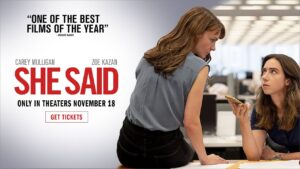
Her story was brought to life on screen by actress Samantha Morton in the Universal Pictures film “She Said.” The film chronicles Weinstein’s coming-out process and the culture of silence that allowed the film producer’s crimes to continue for years.
In December 2025, Zelda Perkins was awarded the title of CBE (Commander of the Order of the British Empire) in the British New Year Honours List for her work for social justice.