

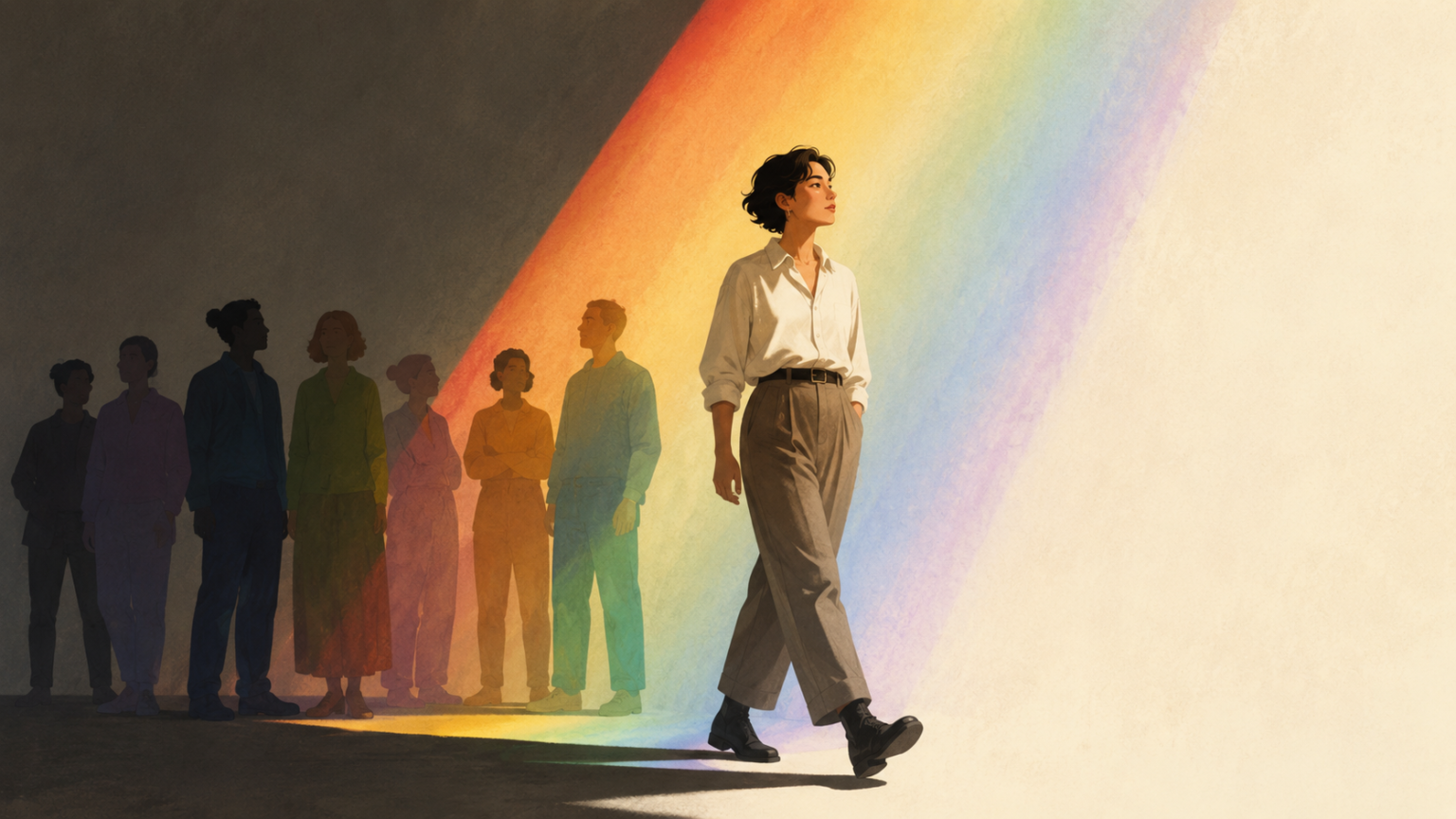
Pride can be a mass march, a celebration, a memorial event, a political campaign, or a quiet sense of self-worth. Some LGBTQ+ people enthusiastically participate in public events; for others, it is not safe to participate, they do not see themselves in these events, or they simply do not want to attend. These different experiences belong to one larger idea, because Pride is not just a march. It is a response to the shame and exclusion that people have historically faced because of their sexual orientation or gender identity.
The word “pride” can seem confusing. Pride can sometimes mean arrogance, but LGBTQ+ pride doesn’t claim that one group is superior to another. It rejects the idea that LGBTQ+ people should hide themselves, apologize, or live a relatively limited life. When this rejection is shared, a personal feeling can become a movement. People find each other, create communities, confront discriminatory institutions, preserve their history, and claim a place in public life.
Pride has never had one fixed form or purpose. It can demand changes to laws, help isolated people realize they are not alone, honor those lost to persecution or illness, and celebrate lives that are often described only in terms of suffering. At the same time, Pride raises questions about visibility, security, representation, political strategy, and commercial influence. So to understand Pride, we need to understand both why it arose and what it can actually achieve.
Why Has Pride Become the Answer to Shame?
Shame is often a personal feeling, but it can also be socially constructed. For generations, laws have criminalized same-sex relationships and restricted gender expression. Medical institutions have viewed homosexuality and gender diversity as “disorders” to be corrected; families, religious communities, schools, workplaces, and the media have been able to propagate the idea that LGBTQ+ people are immoral, dangerous, or ridiculous and incapable of a normal future. These institutions have not always been unanimous, and their attitudes have varied over time and place, but collectively they have been able to portray exclusion as a natural phenomenon, as if the problem was the identity itself, not how society treated people with that identity.
When a person internalizes these discriminatory messages, external stigma can become a constant form of self-control. They may carefully control their clothing, their voice, their friendships, or what they say about their personal life. They may avoid mentioning their partner or distance themselves from other LGBTQ+ people. Hiding themselves can protect them from ostracism, job loss, homelessness, or violence, so it should not be seen as cowardice. However, hiding can also lead to isolation, even among people who think they know each other well.
Pride changes where we see the problem. If LGBTQ+ identity is seen as a personal flaw, it is expected to be changed or hidden by the person themselves. But when many people realize that they have been taught to feel the same fear, they begin to question the laws and expectations that generate that fear. In this sense, pride is not about praising oneself for some “achievement.” It is about demanding equal human dignity and separating a person’s dignity from the stigma attached to their identity.
Finding others gives this claim collective power. Shared language, social spaces, organizations, and friendships allow people to share experiences and imagine futures that once seemed impossible. Coming out — speaking openly about one’s queer identity — can help facilitate this process: The visibility of LGBTQ+ people in families, workplaces, and communities challenges the perception that they are distant and alien. However, openness cannot become an obligation. Visibility is easier and safer for some than for others, and a movement that confronts shame should not create new shame for those who choose not to make their personal lives public. Pride defends the possibility of living honestly; it does not require everyone to reveal themselves.
How Did Pride Become a Movement?
LGBTQ+ people and communities existed long before the modern Pride, and their organization did not begin with a single event. In 1897, Dr. Magnus Hirschfeld and other activists founded the Scientific-Humanitarian Committee in Berlin. Through petitions, research, and public education, the organization fought Section 175 of the German Criminal Code, which criminalized sexual relations between men. Similar efforts elsewhere later created social associations, publications, and legal campaigns, often under strict surveillance. Bars, private homes, cultural circles, and informal friendships became spaces where people could find each other, share knowledge, and support each other.
These early movements employed a variety of strategies. Some emphasized respectability to assert that gay men and lesbians could conform to societal expectations. Others more openly challenged these expectations and challenged institutions that controlled sexuality and gender. Public protests and resistance to police harassment existed well before 1969. This history is important because the Stonewall riots did not suddenly create the LGBTQ+ community out of silence. It became a powerful symbol because existing communities and organizations were willing to turn resistance into a long-standing public tradition.
In the early hours of June 28, 1969, police raided the Stonewall Inn, a gay bar in New York City. Such raids were common, but this time the bar’s patrons and the crowd outside resisted. The clashes continued for several nights. The Stonewall uprising involved people of diverse racial, class, sexual, and gender backgrounds; it was not led by any one organization, nor was it initiated by a single, identifiable figure. Its significance lies not in its being the first instance of resistance, but rather in its becoming a collective symbol of humiliation and rejection of police control.
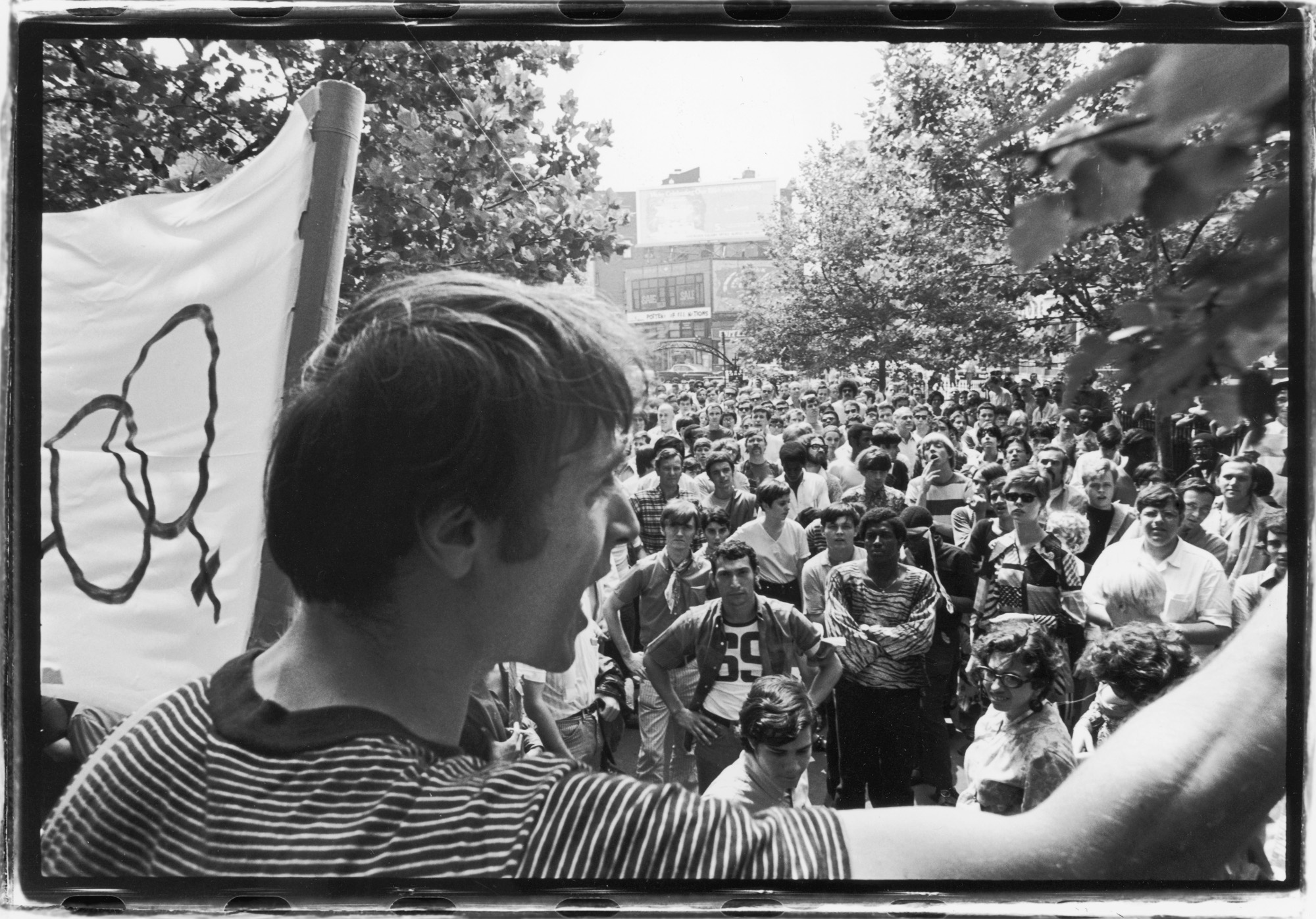
Activists deliberately transformed this memory into modern Pride. In June 1970, marches in New York City and other cities across the United States commemorated the first anniversary of Stonewall. Participants marched openly on public streets, turning a one-time moment of resistance into a recurring political practice. As queer communities around the world were able to join in this annual celebration and adapt the march to local needs, the tradition spread. As a result, the month of June became widely associated with Pride, and public marches have remained one of its most recognizable forms.
The HIV/AIDS crisis of the 1980s and 1990s made Pride even more important. Community members were facing mass illness and death, compounded by government neglect, medical discrimination, and societal hostility. Pride events became spaces where people mourned, shared health information, demanded research and treatment, and made it impossible to ignore the scale of the crisis. Memorial events and protests coexisted with the celebration, demonstrating why celebrating Pride is not just about fun: it can empower communities living in loss. The crisis also strengthened organizations and activist networks that later fought for access to health care, protection from discrimination, legal recognition of relationships, and other legislative changes.
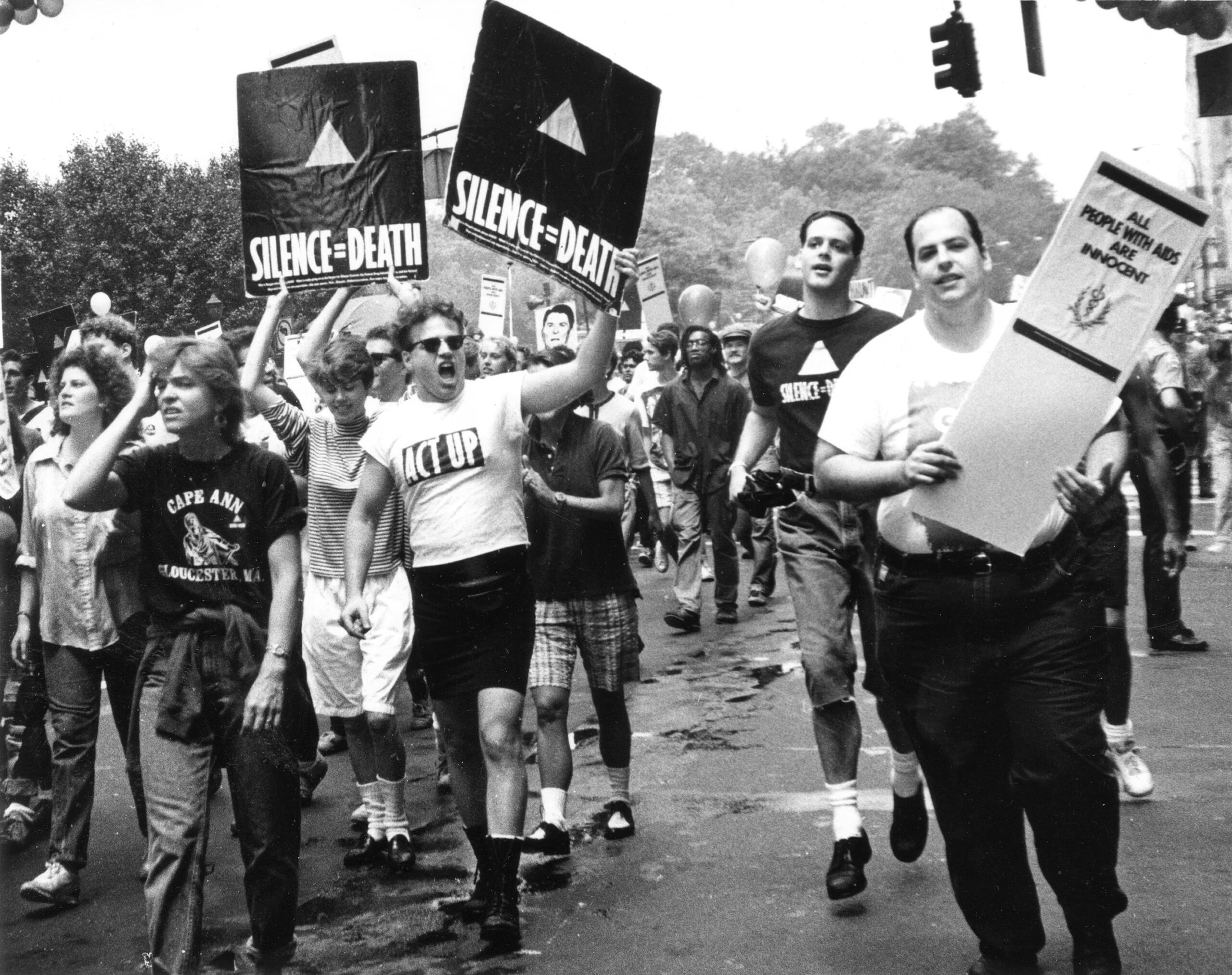
As Pride spread, communities brought their own histories, political systems, cultures, and levels of security to it; there was never a single universal model that all countries could replicate directly. Early liberation marches often clashed with larger public institutions, while later events increasingly involved festivals, cultural programs, NGOs, political parties, public agencies, and corporate sponsors. These changes brought resources, security, and widespread recognition, but they also generated controversy. Critics feared that the protest movement could become a commercial spectacle, with the most attention-grabbing or marketable faces getting the most attention, while the celebration was overshadowed by endless injustices. Pride didn’t simply transition from protest to celebration — it incorporated different goals that today coexist and are sometimes even contradictory.
What Does Pride Do and Why Is It a Subject of Controversy?
One of the most important functions of Pride is recognition. LGBTQ+ people often grow up in environments where the lives of heterosexual and cisgender people are presented as the universal norm, while the lives of queer people are either completely invisible or only seen as a problem. Pride disrupts this apparent absence. A gathering, an appearance, a story, or a public statement can show a person that others have overcome similar fears, formed relationships and families, developed a culture, and found a sense of belonging. Visibility can make the future conceivable.
Visibility not only represents community, it also helps create it. Pride events connect people to organizations, services, political campaigns, cultural activities, and each other. The relationships and practical skills developed while organizing an event can later be used in legal advocacy, healthcare, mutual aid, and education. Public gatherings also make a political demand: LGBTQ+ people have a place not only in their private lives, but also in the streets, institutions, and civic discourse. A single march rarely changes the law, but it can attract attention, attract participants, show support, and strengthen long-term campaigns.
Pride also preserves memory and creates space for joy. Communities whose histories have been erased or largely written by hostile institutions use anniversaries, memorials, archives, and symbols to connect present-day struggles with the past. The celebration has another purpose: it challenges the notion that LGBTQ+ people should only be seen in public as victims or objects of contention. The music, humor, warmth, and joy do not claim that injustice has ended — they declare that life cannot be postponed until all injustices are eliminated.
None of these outcomes are automatic. Visibility can challenge prejudice, but it can also put people at risk of harassment, surveillance, family exclusion, or violence. Those who take the most risk are not always those who gain the most influence. A large event may appear inclusive but remain inaccessible to many due to cost, disability, language, police involvement, or geographic location. Institutional and corporate support can bring resources, but the rainbow symbol means little if the institution’s daily operations remain discriminatory.
These contradictions explain why even LGBTQ+ people themselves cannot agree on Pride. Some want a more radical form of protest; others value a friendly celebration or a space where they can find community. Some see corporate involvement as a sign of social change; others see it as an attempt to profit from the movement. For some, public visibility is essential, while others believe that specific events endanger vulnerable people without providing protection. No single event can fulfill all functions or represent all people. Therefore, Pride must be evaluated on its terms and purposes: who it serves, what opportunities it creates, what threats it poses, and whether its public symbols are linked to lasting change.
One of the key issues underlying these debates is the difference between private tolerance and equal citizenship. Society may claim that it does not bother LGBTQ+ people as long as they live invisibly, but at the same time expect them to hide their relationships, refrain from public displays of affection, disappear from cultural spaces, or refuse to organize. Such acceptance is conditional on invisibility. Pride counters this by showing that LGBTQ+ people are already part of families, workplaces, schools, religious communities, and civic life. The demand is not for approval from everyone, but for equal security, rights, and access to common institutions.
Pride in Georgia: Fighting for Visibility in the Face of Violence
The example of Georgia shows why we cannot consider Pride in isolation from the conditions in which visibility occurs.
For historical context, it should be noted that in the 2000s, the country underwent legal reforms related to LGBTQ+ people: Consensual same-sex relations between adults were no longer considered a crime on June 1, 2000, after the new Criminal Code came into force. Later laws banned various forms of discrimination. However, public events have repeatedly revealed the gap between rights written in law and rights protected in practice. In the case of Georgia, the main question was not whether Georgian Pride resembled celebrations held in other countries, but whether LGBTQ+ citizens can gather and express their opinions with the same expectation of safety as other citizens.
Before the Pride parade, there were several instances in Georgia where the queer community and supporters gathered on May 17, the International Day Against Homophobia and Biphobia. The first such gathering was held in 2011, although it did not include a march. In 2012 and 2013, clergy and parishioners assaulted peaceful demonstrators who took to the streets. In 2013, the number of perpetrators was much higher and they were organized in advance. Clergy and parishioners broke through police barriers and chased the protesters. The Ministry of Internal Affairs took peaceful activists out of the area in buses and minibuses, although aggressive individuals also attacked people in transport. In both the 2012 and 2013 cases, the European Court of Human Rights found that the Georgian authorities failed to provide adequate protection for civilians and investigate the incident.
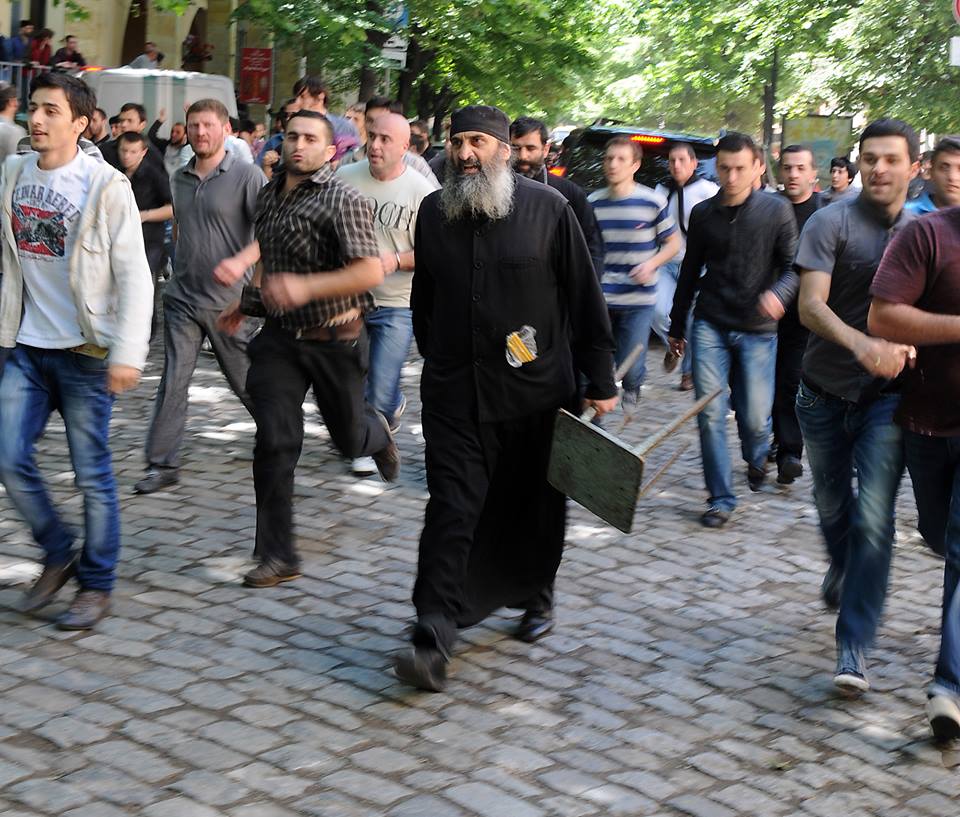
From next year, clergy and parishioners will gather on the streets on May 17, because since 2014, Ilia II has established this day as the “Day of Family Purity.” In recent years, representatives of the Georgian Dream government have also joined these gatherings — this very party wrote the “Day of Family Purity” into the law and declared it a day off. As for the queer community gathering on May 17, after this period, the events are no longer held publicly — activists mainly gather at a secret time and place.
As for Pride itself, public discussion about holding it began actively in 2019. The first Pride in Georgia was planned for this year, but a few days earlier, on June 20, the authorities dispersed peaceful protesters who were protesting Gavrilov’s visit to the parliament. The Tbilisi Pride organization postponed the march because of this. Ultimately, the gathering was held on July 8, at a secret time and place, near the Ministry of Internal Affairs. The reason for this was also that the authorities were unable to ensure security at the publicly planned location and homophobic groups were mobilized there.
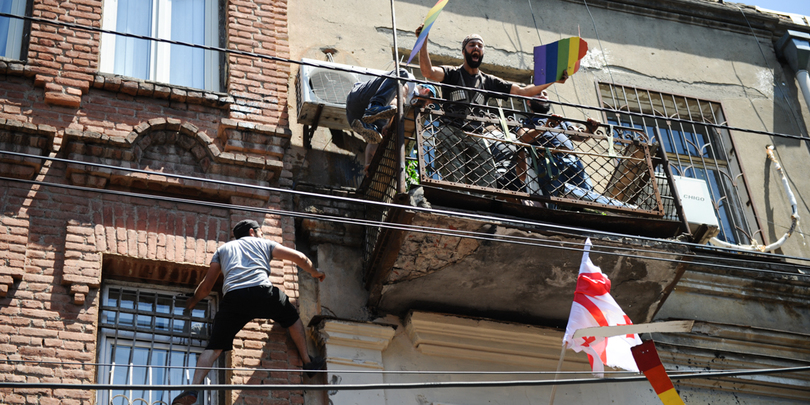
The following year, the public gathering was not held due to the pandemic, and in early July 2021, two Pride Week events (a film screening and a Pride Festival) were held indoors amid the mobilization of violent groups, although the police protected the safety of participants and guests. On the morning of the third event, the march, Prime Minister Garibashvili stated that he considered it inappropriate to hold the march. Soon after, large-scale violence by homophobic groups began on Rustaveli Avenue and the surrounding area. The state again failed to protect civilians — violent groups physically assaulted more than 50 journalists, stormed the Tbilisi Pride office, and ransacked the offices of non-governmental organizations. Within a few days, one of the beaten journalists, Lekso Lashkarava, died.
Given the events of the previous year, no Pride March was announced for 2022. Other events planned as part of Pride Week took place amid the mobilization of violent groups, although the police did not allow them to enter the area.
The Pride March was not planned as part of Pride Week 2023 either. The Pride Festival, which was scheduled for July 8 and was to take place near Lake Lisi, was disrupted by violent groups before it even started. Police once again failed to stop them, and they invaded the closed area. Pride organizers were forced to leave the festival grounds.
These events have shown that staying in private space does not necessarily ensure safety. When violence is tolerated by the government, demanding that LGBTQ+ people not appear in public can become a demand for their disappearance.

Pride in Georgia is also caught in the middle of broader political debates about religion, family, national identity, and Europe. Opponents often portray LGBTQ+ rights as a foreign agenda, even though LGBTQ+ people themselves are part of Georgian society. International support can influence the perception of local activism, but the basic demands — dignity, safety, freedom of expression, and peaceful assembly — belong to citizens, not to a foreign culture. A discriminatory and homophobic legislative package adopted in 2024, packaged under the guise of “family values and protection of minors,” imposed sweeping new restrictions on LGBTQ+ representation, legal recognition of family, gender transition, and public gatherings, making visibility and organizing even more difficult.
These conditions create a fundamental strategic rift. Some believe that retreating from danger rewards violence and gives hostile groups control of common spaces. Others fear that visible measures expose vulnerable people to danger without reliable protection. This is not simply a conflict between courage and fear — it is a difficult decision about how to fight for equality when risks are unevenly distributed among people.
Pride also tests institutions: freedom of assembly is most important when the government protects threatened assemblies, not just majority-supported events. The efforts to organize Pride demonstrate whether formal rights can be exercised in practice, or whether violence is allowed to decide who can assemble.
However, the lives of Georgian LGBTQ+ people are not limited to these confrontations. They continue in friendship, art, advocacy, mutual support, and everyday decisions between honesty and safety. Pride may appear as a march, but it can also mean rejecting the idea that one must be invisible to belong.
What Does Pride Mean Today?
Pride emerged as a response to the shame that was imposed on us: not as an assertion of superiority, but as a refusal to accept inferiority. It transformed personal dignity into a collective action, helping people find each other, preserve their history, resist exclusion, and establish a place in the public sphere. Its different forms—protest, celebration, memorial, community networking, or personal dignity — reflect the diverse conditions that LGBTQ+ people face.
Visibility cannot protect itself, and public symbols only matter when they are backed by safety, accountable institutions, and lasting changes in how people are treated. Pride neither demands participation or coming out from all LGBTQ+ people, nor unanimous agreement with its organizations and strategies. Its ongoing question, at any event, is broad: Can people live honestly, safely, and publicly without being treated as less valuable? Pride remains necessary wherever the answer lies in silence, concealment, or exclusion, and wherever people must collectively organize to change that.
Sources:
- Behavioral Sciences—Out of DSM: Depathologizing Homosexuality
- National Park Service—Stonewall National Monument
- NYC LGBT Historic Sites Project — Christopher Street Liberation Day March, 1970
- Library of Congress — About LGBT Pride Month
- HIV.gov — A Timeline of HIV and AIDS
- Georgian Legislative Herald — On the Elimination of All Forms of Discrimination
- Amnesty International — Georgia: Failure to Protect Tbilisi Pride Encourages Violence
- Reuters — Anti-LGBT Protesters Break Up Pride Festival in Georgia
- UN Human Rights — Georgia: Call to Rescind New Anti-LGBTIQ Law