

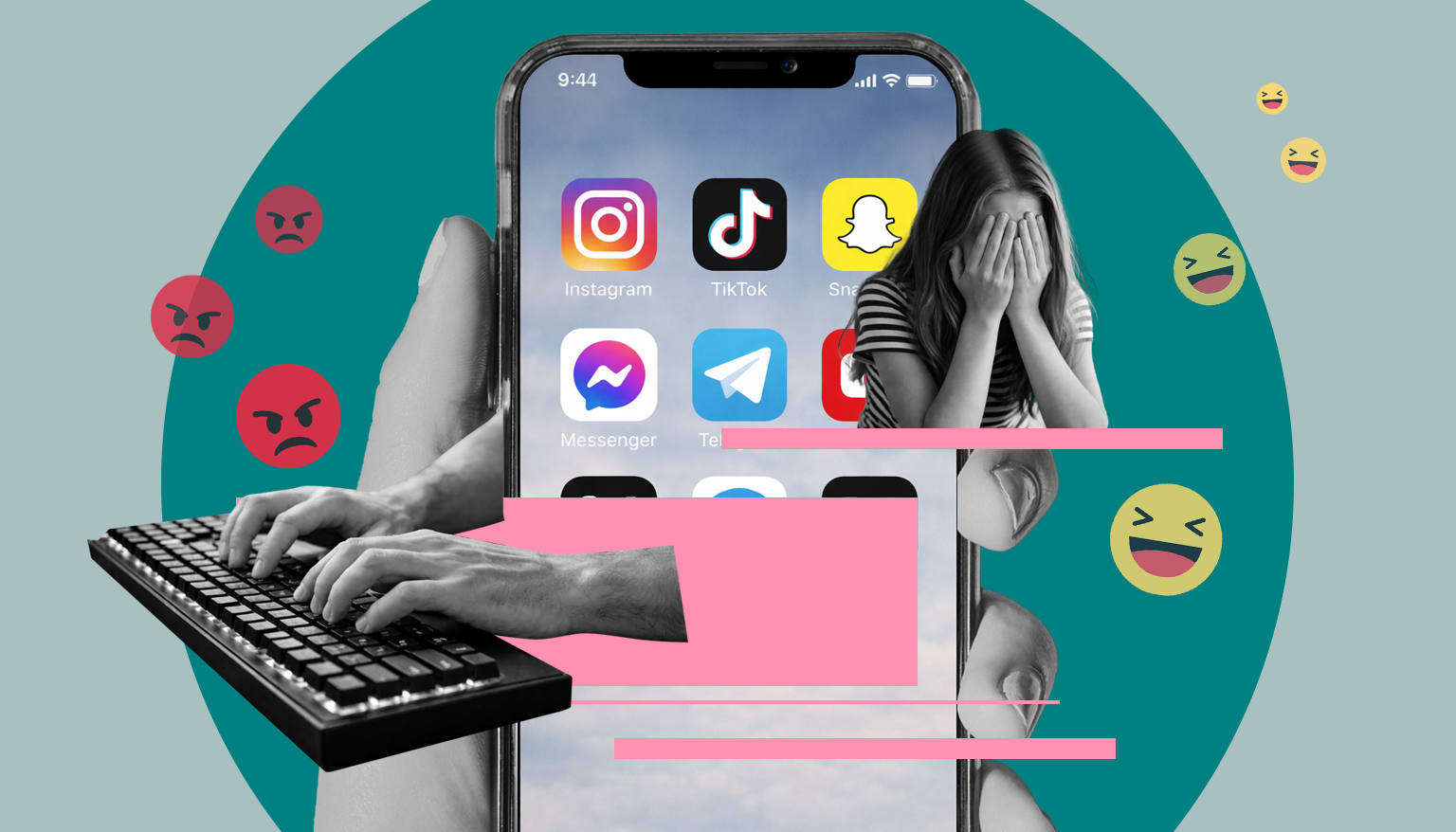
"For several weeks, someone has been writing horrible things to me using fake accounts. He wrote to me from several accounts and I blocked him everywhere. Texting wasn't enough, and now he's writing comments on my posts."

"My sister, who is 14 years old, had a photo posted on social media photoshopped, pretending to be in her underwear, and they put it in a Telegram group."

"Someone on TikTok took my videos and photos and is writing and posting terrible things, people."

"They have posted my photos and promise people sexual services."

"Maybe you can help me. What can I do? How can I find it, or if I do, is there any point in suing?"
In the wake of the proliferation of digital platforms, technological progress, and the development of artificial intelligence, many posts and comments on social media are raising similar questions and concerns. Human rights activists have been noting for many years that digital platforms are not free from crime and that violence can often be exposed. Technology-enabled gender-based violence (TFGBV) is therefore not new — in fact, it is a widespread and growing problem. Like other forms of violence, this crime stems from gender inequality, power imbalances, and discriminatory social norms.
According to research, 38% of women using the Internet worldwide have personally experienced online violence, 63% know someone who has been a victim of such violence, and 85% of women have witnessed cases of online violence against women.
Certain groups of women are at higher risk of technological violence. For example, given that adolescent girls and women often use technology to connect with peers, learn, and obtain information, they are more vulnerable to online violence.
In this article, we will talk about the dangers facing adolescent girls in the digital world, specifically, what is known about gender-based violence against minors committed through technology in the world, what the situation is in Georgia, and what is needed to prevent this crime.
Simply Put — What Do You Need to Know About Gender-Based Violence Committed through Technology?
Technology-enabled gender-based violence includes forms of violence such as the use of textual and visual material (photos, videos), unwanted digital surveillance and monitoring. The perpetrator may use a variety of devices and platforms, for example, simple means such as text messages, emails, social networks, or more modern and complex technologies, including artificial intelligence (AI), GPS location systems, etc.
For example:
- Have they created fake accounts on social media with your name and image?
- Has your identity been misused to spread false information and tarnish your reputation?
- Have they used hate speech in private messages, comments, or chats?
- Residential address, email, phone number, family members’ contact information — have personal and sensitive information been made public on various platforms without permission?
- Have you received unwanted sexual messages or images? Have you been monitored on social media, in text messages, or through apps or GPS systems?
- Have you ever had a sexual photo/video taken or shared without your permission?
- Has anyone tried to exchange unwanted sexual text messages, images, or videos using blackmail, bribery, or threats?
- Have they created a fake, synthetic image (deepfake) using your photos and artificial intelligence and distributed it?
You may have already heard of these forms under the following terms: image-based violence, cyberstalking, cybersurveillance, online harassment, hate speech, doxing, technology-enabled sexual violence, identity theft, etc. Each episode describes a different crime of technology-enabled gender-based violence and should be reported immediately to the appropriate authorities.
What Are the Challenges in Georgia?
There are no unified public statistics on how many adults or minors become victims of gender-based violence committed through technology. On the website of the Prosecutor’s Office of Georgia, in the news section, information about crimes is periodically published. For example, during 2025, a total of 18 stories were found about crimes committed against minors. Among them, we read about cases of depraved acts committed against minors, rape, trafficking, degrading and inhuman treatment, and physical violence. In some cases, more than one minor is the victim.
As for gender violence committed through technology, it is not under this name, although in 2025, in cases under other articles, 12 cases are identified from the data available on the prosecutor’s office website. Among them, 6 cases are against adults and the same number of minors. The investigation is mainly into the fact of depraved acts, illegal acquisition, storage and use of private life secrets. The method and handwriting of the crime are similar:
2025, December 20: "The defendant corresponded with a 14-year-old minor through a fake Instagram account, during which he sent her intimate video material. Also, as a result of threats and coercion, he obtained and illegally stored intimate photo and video material containing the victim's private life, threatening to distribute it, forcing the minor to send other intimate material and continue the relationship with her. The defendant tried to persuade the victim in various ways, including periodically transferring money to the account of the minor and persons related to her.

2025, October 22: "The defendant registered on various channels of the social network Telegram and received photo and video materials of pornographic content containing images of minors from various individuals, stored them in the Telegram application on his mobile phone, and sent them to members of the Telegram group for distribution."
Reports of crimes were also published on the Facebook page of the Special Investigation Service before the agency was abolished. For example, information is being sought on three cases of depraved acts and pedophilia committed using social networks between February and May 2025. In one case, 5 facts of pedophilia, sexual extortion and depraved acts were revealed in Tbilisi and a 40-year-old man was arrested.
“The accused intentionally created fake Facebook and Instagram accounts, through which he systematically contacted girls under the age of 14 living in different regions of Georgia, met them under different names, hid his age and identity, sent them pornographic photo and video materials and talked about sexual issues. The investigation revealed 5 criminal episodes of the accused, who was exposed in pedophilia. In particular, the accused, through a fake Facebook Messenger profile, initially contacted a 14-year-old girl living in Zugdidi, and then another 14-year-old child living in Senaki. The accused sent pornographic video materials to the affected children and talked about sexual issues, after which he forcibly undressed the underage girl and forced her to send him photos and videos depicting her naked body. The accused also contacted 11 children living in Gori district using similar methods. “He sent pornographic photos and videos to 12-year-old girls living in Tbilisi and discussed intimate issues with them.”
Cases of gender-based violence committed through technology are highly prevalent at Sapari, a women’s rights organization.
“It is gradually beginning to be identified that this is actually a crime and it does not matter, for example, the fact that it was committed online. It is just that, beyond the appeal, the effectiveness of the investigative bodies is very weak,” says Mari Varamashvili, a lawyer for Sapari.
Cyberstalking, posting photos and videos without permission, and violating privacy are just a few of the crimes that minors and their parents report to the organization.
“Cases of cybergrooming, or perverted behavior in the digital space, are also common. For example, adults establish various types of intimate communication with children under the age of 16. Initially, they may get to know each other as peers and in this way enter into trust with the children. Based on this trust, crimes often develop. Initially, they may start with cybergrooming, perverted behavior, and then, based on this trust, they may obtain materials depicting the children’s private lives,” says Mari Varamashvili.
The first case of cybergrooming on the TikTok platform in Sapari’s practice, when a pedophile was identified and arrested, was in May of last year. Initially, the organization was contacted by the mother of a minor, who was told by her son that a stranger was texting her online.
It turned out that the pedophile introduced himself to the child as her peer. The man sent the child intimate material on the TikTok platform, forced the child to send the same type of material and perform various sexual acts.
“Initially, the child seemed uncomfortable, but the perpetrator used such manipulation methods and wrapped it all around him that the child could not figure out how to get rid of it. He taught her how to do it all secretly from his parents and adults,” recalls Mari.
On January 15, a pedophile who used TikTok to sexually abuse a minor was found guilty of a charge of lewd conduct with a person under the age of 14. He was sentenced to 9 years in prison.
“It was quite a difficult case, because the other side had an unidentified TikTok account and we didn’t know who was behind it. It took us a lot of work to identify this person, to get in touch. Then we conducted all the investigative actions, whether it was a personal search or checking their phones, and all the evidence came out to charge them,” the human rights activist tells us.
In December, another minor who was a victim of cyberstalking and cyberbullying contacted the organization. The man met a teenage girl on a social network, gained her trust, but as soon as the girl tried to stop the correspondence, he became aggressive. Despite blocking or leaving him unanswered, this person continued to contact the minor, as well as her family members and friends, through various profiles.

“The correspondence was degrading, insulting, and also threatened to harm her. He spread various types of damaging information.”
Mari tells us that before addressing Sapari, the minor and her family also went to state authorities, but there was no timely response to the case. The child received victim status in December, after Sapari became involved in the case. The man was also subsequently charged with threatening and stalking a minor, and the court sentenced him to imprisonment.
Using these cases as an example, the human rights defender speaks about how problematic the investigation is and how often the attitude of the investigative bodies is unclear. According to Mari, it is problematic that the crime is not spelled out in the legislation, although there are articles that can be adapted if they work accordingly.
“In addition to the lack of qualifications and competence, they also do not understand at the level of perception and sensitivity that crimes committed in the digital space have exactly the same consequences as those committed in the physical space, and moreover, the digital space is distinguished by its scale and continuity, reaching a larger audience than the physical one,” says Mari.
There was also a case when a minor from the region contacted the organization about gender-based violence committed through technology. The teenager had not had any social networks for a year. She was afraid to leave her home. According to the human rights activist, several years earlier, the child had sent a photo of his private life to an unidentified person, and this person threatened to spread it.
“To she somehow protected herself, she simply postponed her life, canceled absolutely everything and locked herself in the house. At that moment, this girl didn’t even know that it was a crime. […] This is also a problem — children are not informed that this is a crime. Despite the fact that we, as an NGO, often plan information campaigns, it is very common when this does not fully cover the group of minors who are most exposed to these crimes. These are precisely the digital platforms where every second minor can be a victim of all this without even knowing that this is a crime and that the crime requires an appropriate response and punishment of the perpetrator.”
It is necessary to properly explain to children what the risks are, or who may be a threat in virtual space, and it is also important to fully support children and inform them accordingly so that they do not blame themselves, Mari tells us.
Legislation
Human rights expert Londa Toloraia analyzed Georgian legislation and prepared a relevant document on the extent to which the law addresses gender-based violence committed through technology and whether it complies with international standards and regulations of developed countries.
“The lack of statistics hinders the understanding of the scale of the challenge and the fight against this category of crimes. However, interviews conducted with experts and practitioners in the field as part of the research show that gender-based violence committed through technology is widespread in Georgia as well,” the document states.
“If you ask me how many children are victims of gender-based violence committed using technology, I can’t give you an answer because we don’t have public statistics. We know the news through surveys, interviews with lawyers, or experts. We also heard from parents that something happened, that for example there are closed groups of children where hate speech is used against children, discrimination is done on various grounds, and personal and private data is made public. We may hear from official sources about some individual case,” says Londa.
Londa also tells us that in terms of battling violence against women, Georgia has made very rapid progress over the past ten years, although the last three years have seen a setback — combating violence against women is no longer as high a priority as it was.
“Perhaps, if we had gone by inertia and continued to develop in this direction, we might have reached a point today where violence committed through technology would be relevant, both at the political and legislative levels. […] I think that today, in this reality, no one has time for that anymore. Not only for violence committed using digital and technology, but even for physical violence. Today, there are already question marks about how effectively the response is being made.”
Canada, Sweden, Denmark, the Netherlands, Australia — Londa talks about examples of countries where relevant laws have already been adopted, both regarding crimes committed online, as well as the regulation of safety in the online space:

“In some countries, legislation also establishes the obligations of private institutions. For example, on a company’s website, FB page, or in comments, someone’s personal data, comments expressing hate speech, or a photo or video containing personal data were posted. The responsibilities and duties of private institutions are even established by legislation. Here, for example, what they are obligated to do in this case: how should they delete it quickly, what criteria should they use to remove content containing signs of crime or violation of the law from their pages, etc.
Londa talks about several aspects of the problem. Among them, the fact that online violence is not recognized either at the legislative or strategic level. She says that law enforcement agencies do not have the relevant competencies and knowledge, for example, how to obtain evidence in cases of technology-related crimes.
“There is also a big question mark over how correctly restraining and protective orders are issued for such facts, or whether they are issued at all. The research also said that police officers have difficulty naming violence committed using technology, and the issue on the agenda is that warrants should not be issued at all.”
According to her, victims of crimes committed using technology need specific services for rehabilitation. Also, in the case of such crimes, it was mentioned as a problem that for investigation purposes, agencies take and keep for a long time the mobile phones and computers from which the correspondence was carried out, which is an inconvenience for the victims.
The main recommendation of the Group of Experts on Action against Violence against Women and Domestic Violence — GREVIO — is that the country review existing legislation and recognize the digital dimension of violence in national strategies, as this is what will determine future state policy.
“GREVIO also recommends that professionals working on violence against women be equipped with appropriate financial, technical resources and knowledge. International cooperation in this regard is also very important, because during this type of violence, perpetrators use social networks – FB, Instagram, TikTok and other platforms. International cooperation is relatively organized with Facebook/Meta, but with other platforms it is either very weak or non-existent, therefore, obtaining evidence from there is practically impossible.”
Londa also spoke to us about recurring and widespread cases within the scope of the study:
- Offering money to girls aged 10-14 in exchange for intimate photos and videos online.
- Making fake intimate photos of children and blackmailing them into sending them to friends, parents, and relatives.
- Creating fake FB pages, including using children’s names, and then offering sexual services through these fake pages.
- Bullying among teenagers in the online space, shaming them with various personal stories, emphasizing their appearance, etc.
According to human rights activists, in order to prevent crime and ensure prompt and effective investigation of cases, the following steps are crucial: defining the problem in a national strategy, providing information about online violence to adolescents, bringing the Georgian legislative framework into line with modern crimes, and engaging in international cooperation with social networks and digital platforms.
What International Research and Practice Show
According to UNFPA, 64% of adolescent girls with access to digital technologies are active users and are therefore at high risk of TFGBV.
A survey conducted by Plan International, a non-governmental organization working on children’s rights, showed that half of the 14,000 girls aged 15 to 22 surveyed in 22 countries had experienced cyberstalking through receiving specific photos and messages, or had experienced online violence.
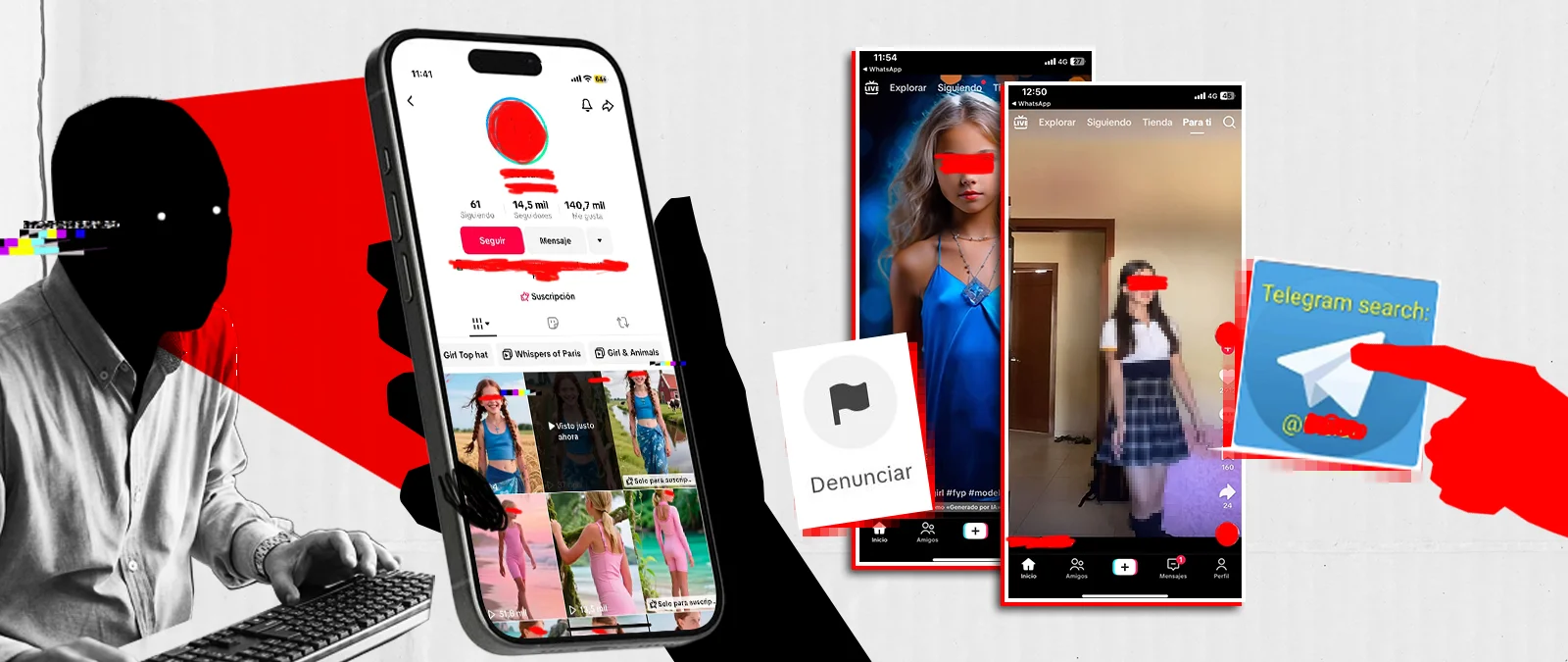
“TikTok Abusers: A Gold Mine for Pedophiles” — The Spanish organization Maldita, which investigates online disinformation, published a new investigation in December 2025 on the safety of minors on digital platforms . The investigation revealed how vulnerable underage girls are on social platforms. A seemingly harmless “trend” or dance video, sometimes shared by parents, can be shared by dangerous profiles, for example, to attract pedophiles.
The main findings from the Maldita report are as follows:
- The organization identified 40 accounts with a combined total of more than 1.5 million followers. These pages host more than 5,200 videos generated by artificial intelligence and 3,600 videos featuring real teenagers.
- Artificial intelligence-generated sexualized content about girls and teenagers: Dozens of accounts on TikTok are creating sexual videos of minors using artificial intelligence.
- Even your child’s dance video could fall into the hands of a pedophile: Some TikTok users use videos uploaded by real teenagers. They then put these videos together on a single profile, and these pages are filled with explicit, sexually explicit comments.
- Both users and TikTok make money from these pages and content. The algorithm knows what pedophiles like and suggests videos on the “For You” page and in the search box.
- TikTok prohibits, but does not enforce, its own rules: they say they do not approve of “accounts that use AI-generated images of young people, or that contain adult clothing, sexual poses, or facial expressions” and “sexualization of adolescents, etc.”
- Although Maldita reported 15 accounts that shared AI-generated sexualized videos of minors, TikTok said only one violated its rules, and all of them were still accessible 72 hours later.
In the comments of these TikTok videos, there are users sharing links to Telegram channels where child pornography and child abuse material is sold.
- Maldita identified 12 Telegram accounts selling illegal material.
- Eight of them provided the organization with evidence of possession of actual child pornography. Maldita.es provided this information to the Spanish police.
Typically, online violence occurs anonymously and remotely, from anywhere in the world, which sometimes makes it impossible to identify and punish the perpetrator. Technology is easily accessible to perpetrators, and it is also easy to distribute material depicting violence. At the same time, it is difficult to delete traces/content of the violence committed from the Internet. That is why it is essential that TFGBV be part of the response policy that the state implements to prevent gender-based violence against women.
Advice for Teenagers and Parents
Human rights activists emphasize that in order to protect women and girls from online, technological violence, there must be appropriate legal levers in the country. Studies show that this type of violence seriously harms the health of adolescent girls and women, their safety, their personal or professional lives, and even their lives. This form of violence causes stress, anxiety, and depression. In addition, there is always a danger that violence from the online dimension will continue in the physical space.
“Excluding girls from online spaces to prevent violence is not the answer – it is depriving them of the opportunities to develop the skills that will shape their future. Instead, proactively working with adolescents can help them exercise their digital rights and learn how to protect themselves. We need to teach both boys and girls the importance of consent and mutual respect, both in real and online spaces,” writes UNFPA Executive Director Diene Keita.
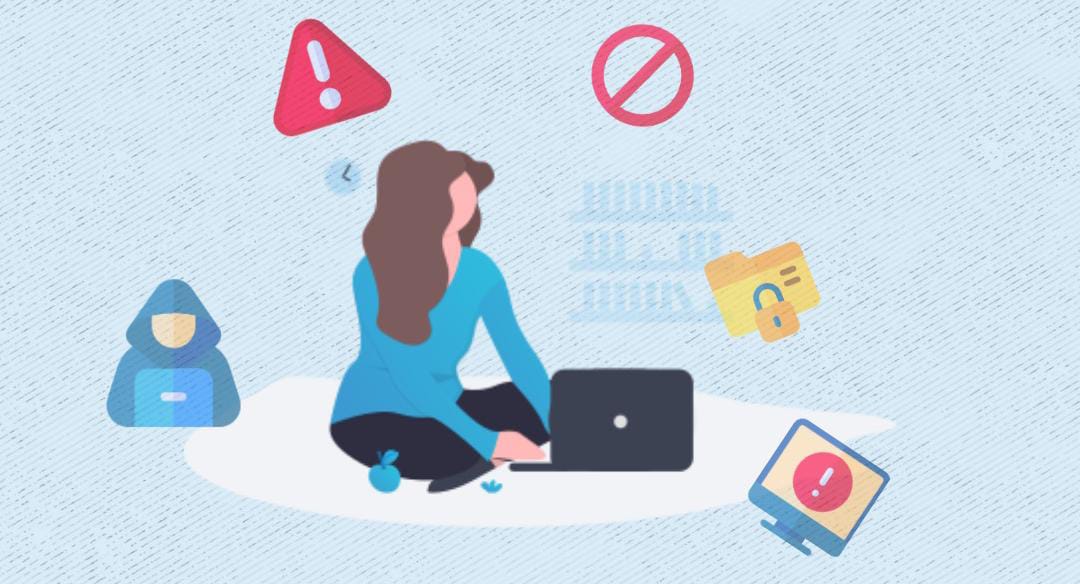
Teenage girls deserve to be full and empowered members of the online space. Accordingly, there are a number of recommendations and tips that can help minors stay safe online. The United Nations Children’s Fund (UNICEF) recommends:
- Don’t be alone with your fears: If you are concerned about your safety or are upset about something that happened online, talk to an adult you trust immediately. You can call 112.
- Respect what others say on social media, even if you disagree with them.
- You have the right to privacy — just like everyone else. It’s not okay to log into other people’s accounts, or use their phones or profiles without permission.
- Do not spread rumors or post/share hurtful or degrading stories or photos. What may be a harmless joke to one person may be very hurtful to another. We all have the right to be treated with dignity and respect.
- Think twice before you hit the send button — especially when you’re angry or upset. It’s hard to control what happens to and who sees a photo or video once it’s shared. And it’s nearly impossible to delete it.
- If you see something on social media that makes you feel upset or upset, you can report it. Many platforms allow you to report a specific post or photo if it violates the platform’s guidelines. Most social media platforms allow you to “block” someone so that you can no longer see their content or contact them.
- You can change your privacy settings on social media. This way, you can control who sees your information, photos, and videos. Think carefully about what you share and with whom. You may have heard it many times and it may seem obvious, but never share personal information like your address, phone number, or bank details. If you don’t keep your privacy settings secure, anyone can see this information.
- Making new friends is great, but before you accept someone’s friend request, take a look at their profile — try to figure out who they are. Do you have mutual friends? Are you from the same city? Don’t feel obligated to accept just anyone as a friend. Check your privacy settings so that the person doesn’t see information you don’t want to share. Remember, sometimes people pretend to be someone else, and it can be hard to know if they’re telling the truth about who they really are.
- Be cautious about any job offer you receive online. Did you apply for the job yourself, or did you contact someone for employment? If not, it could be a scam and you should be extra careful. Research the company or business that is contacting you. Also, be cautious when going on a first date if you only know the person online. I recommend that you don’t go alone. Plan to meet in a public place and ask an adult you know and trust to go with you.
- If something doesn’t seem right, always trust your instincts. Talk to someone you trust and ask for advice.
It is important for parents to be more aware of the different forms of online violence. If you have a teenager, these basic tips for navigating digital platforms safely, preventing crime, and reducing risks may be useful for you too.
Beyond the immediate dangers, it is also important to consider how online violence affects children’s overall well-being. Being bullied online, sharing inappropriate content, and interacting with online bullies can lead to stress, anxiety, and long-term emotional trauma. Research from the American Academy of Pediatrics suggests a link between long-term exposure to online risks and problems such as depression and low self-esteem. Understanding the severity of these risks highlights the importance of proactive parental involvement, media literacy, education, and effective safety measures to create a safe online environment.
Remember, parental support and example will help a teenager make informed decisions online and develop the confidence to ask for help if needed.
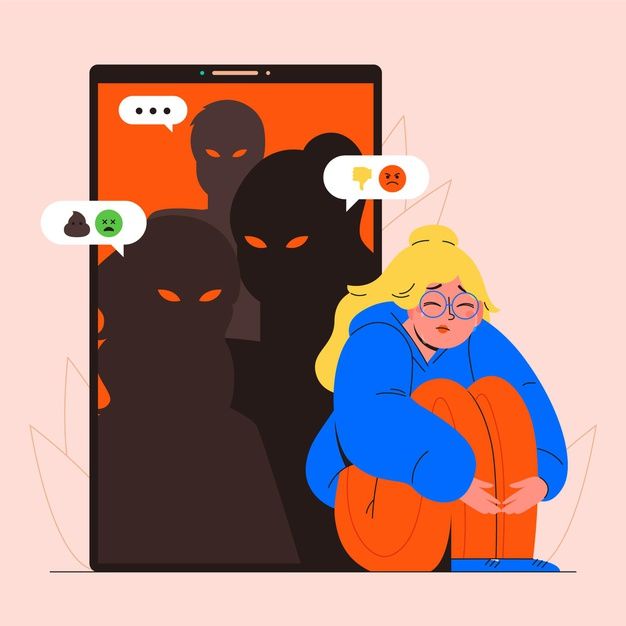
- Be an involved, open, and supportive parent: Get involved in your child’s online activities as a family — for example, play together, talk about their favorite apps, games, and websites.
- Maintain open communication: Ask them about their online experiences, who they interact with, and if they have any problems. Reassure your child that they can come to you anytime. Your teen may not share their concerns online if they are afraid you will punish them for it. Tell them that if they feel uncomfortable or unsafe online, you will not limit their access to the internet or devices if they are honest. Be alert and talk to them about any changes in their behavior or mood. Consider seeking professional help if necessary.
- Establish some rules: Set clear rules for device use and define appropriate consequences for violations. Listen to your child’s input — this will help them better understand the risks. Be a role model — children are more likely to follow the rules if they see you doing the same. Consider creating a family-specific tech agreement (called a family online safety agreement). This is a set of rules that outlines how devices are used in your home and what is considered acceptable online behavior.
- Use safety features and settings: Get to know the devices you and your children use. Set them up with privacy and online safety in mind. Use parental controls to monitor and control screen time and content access according to your child’s age and experience. Choose apps and games carefully; check age ratings and user recommendations, for example, in the App Store and Google Play.
The digital world offers immense opportunities for learning and entertainment, but, as we have already mentioned, this dimension comes with potential risks that all parents and minors should be aware of in order to make this journey safe and diverse.
If you are a minor and are experiencing harassment, blackmail, or other forms of violence online, on various social platforms, it is important to first know that it is not your fault and you are not alone. There is always a solution.
Don’t blame yourself, keep evidence (e.g. screenshots of messages, comments, profiles) and be sure to ask an adult you trust for help. Also, if you are a victim of violence or have information about violence against someone else, you can contact the police or call organizations that will help you free of charge and confidentially:
- 112 — emergency number that operates 24 hours a day;
- 116 006 — Advisory hotline for citizens;
- 1481 / 032 299 58 98 — Public Defender’s Office;
- +995 32 233 13 56 — Partnership for Human Rights;
- 599 40 76 03 — Sapari;
- 595 190 303 — Women’s Initiatives Support Group (WISG).
Remember, everyone has the right to feel safe, secure, and respected everywhere, including online.