

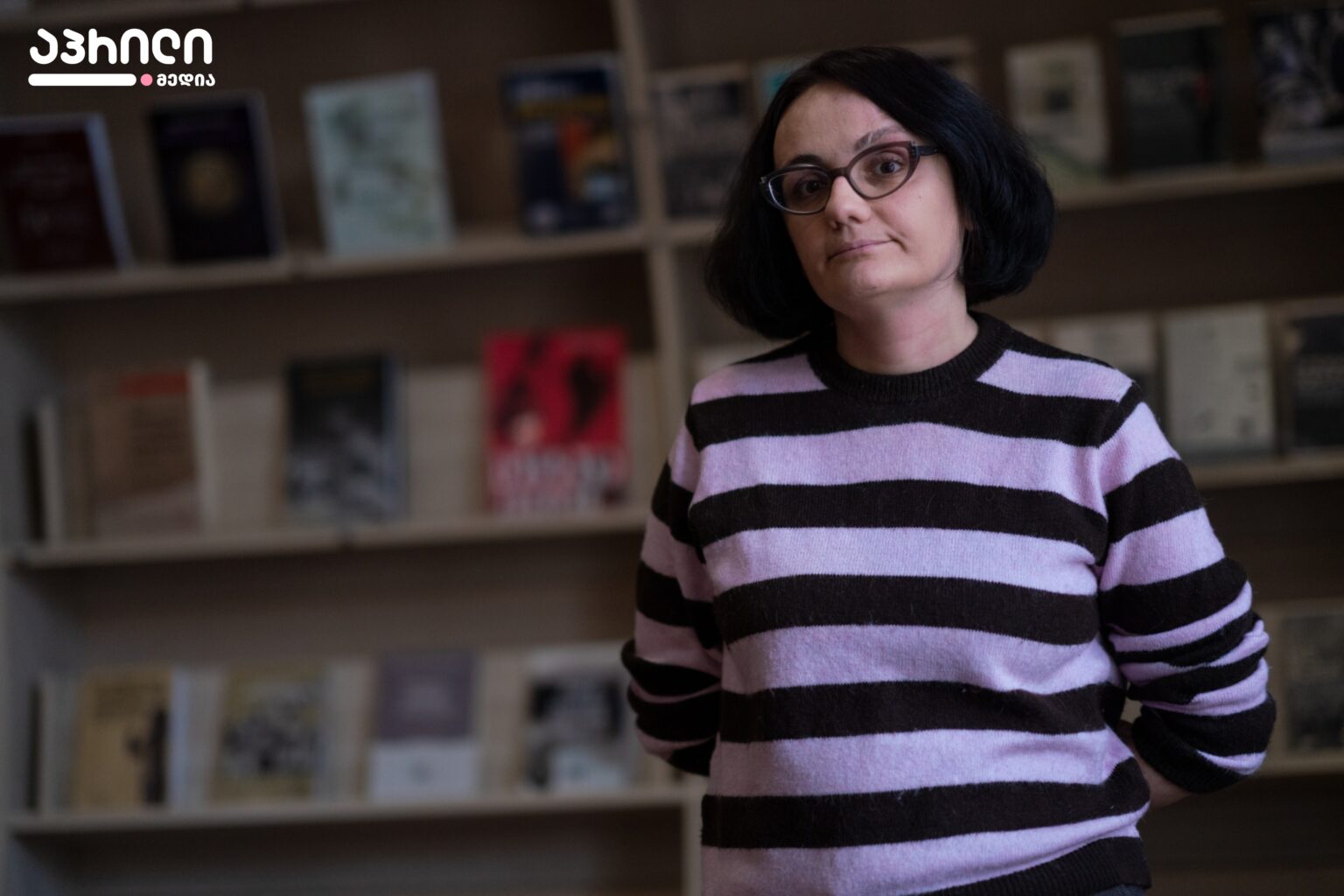
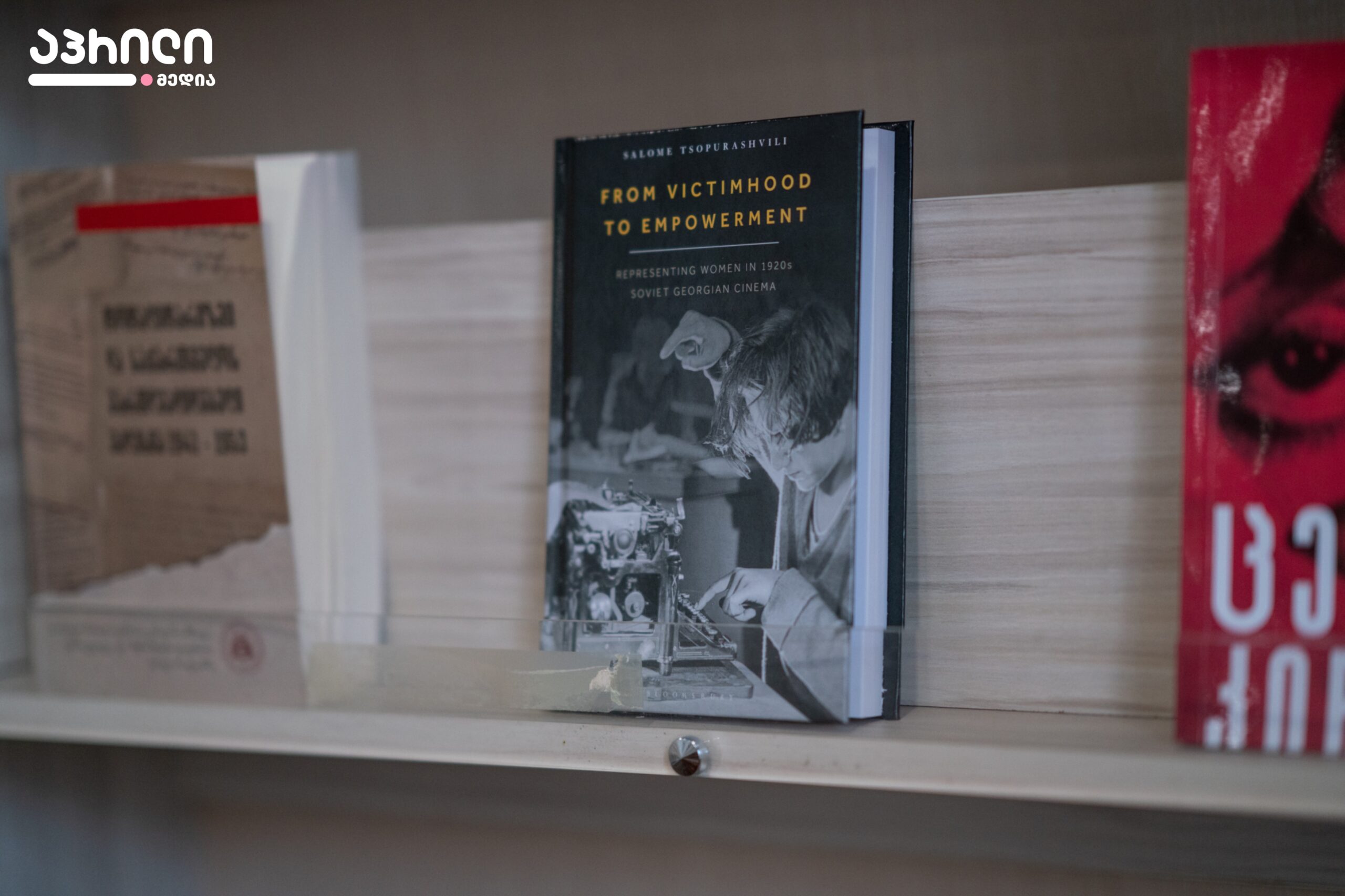
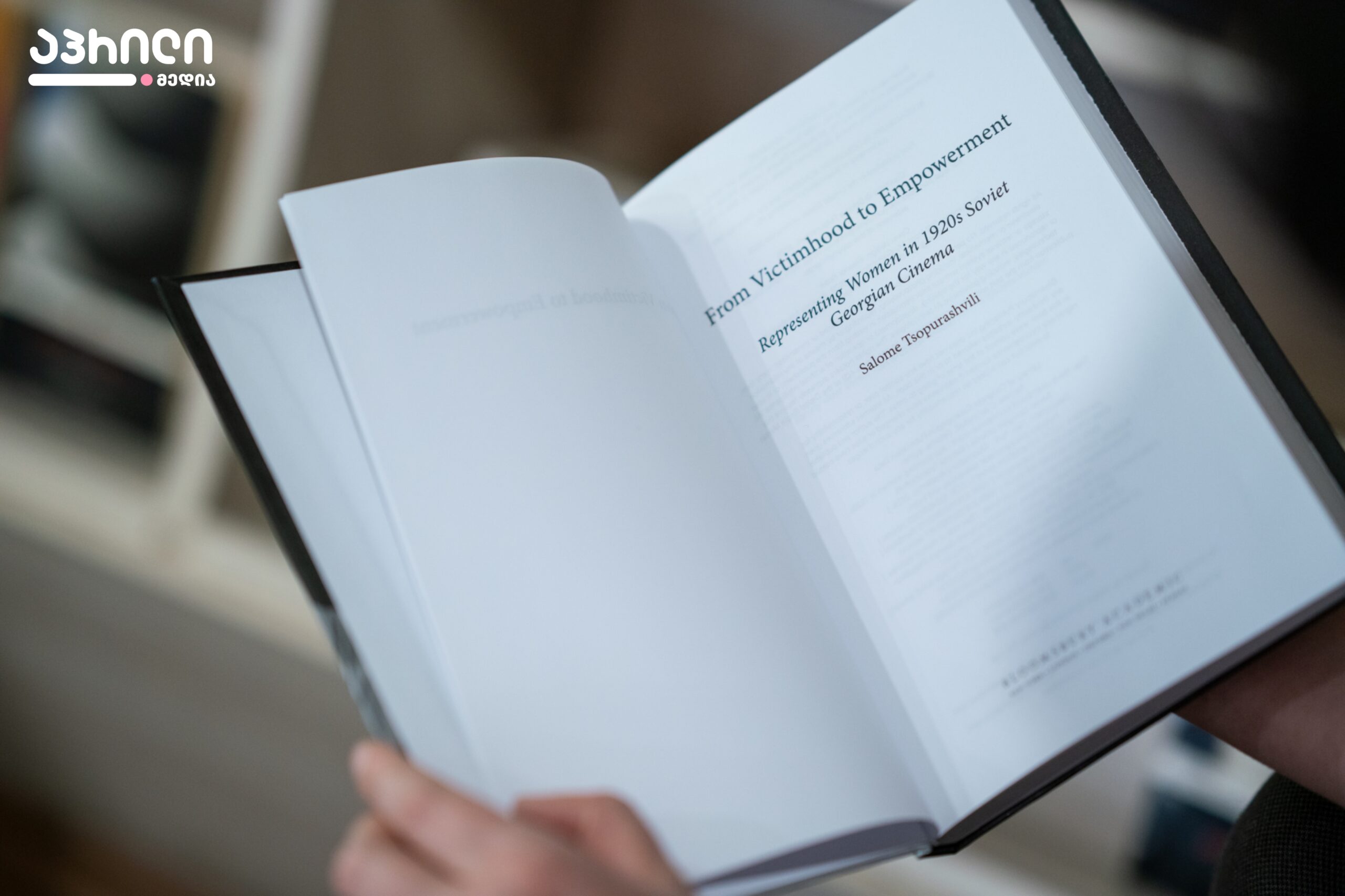
“From Victimhood to Empowerment: Representing Women in 1920s Soviet Georgian Cinema” — an English-language book with this title was published in August 2025 by one of the most prestigious publishing houses in the academic space, the British Bloomsbury. The author of the book is Salome Tsopurashvili, Assistant Professor at Ilia State University.
“What was life like in this country in the 1920s? What kind of people were we? What was happening that made the making of a film (“My Grandmother”) possible?” — it was these questions, curiosity, and the belief that visual imagery often tells us more about the past, that determined Salome Tsopurashvili’s long-standing research interest.
Against the backdrop of political, ideological, social, class, or cultural processes, what was happening in Georgian Soviet films, what topics were being filmed or scripts being created on, in which spaces, with what roles and messages did the characters appear, who did the regime give voice to and who did it leave in the shadows — Aprili Media spoke to Salome Tsopurashvili about her book, scientific interests, 15 years of research and discoveries.
From Coincidence to Research Topic
On a rainy December evening in 2010, Salome Tsopurashvili will go to a film festival with her sister and father. The Amirani Hall will be full of people. American musician Beth Custer and her band will be placed in front of the stage and will sound Kote Mikaberidze’s silent film “My Grandmother” (1929) with specially written music. Just a few minutes after the film starts, Salome will already that she will have to write her doctoral thesis on a topic that this film will unconditionally cover.
15 years later, “My Grandmother” will appear not only in her doctoral thesis, but also in Salome Tsopurashvili’s first book, and what’s more, a still from the film will even adorn the cover. In the book’s dedication, Salome will write:
"A special thanks goes to my sister, Tamar — for insisting on going to a screening of Kote Mikaberidze's "My Grandmother" on a rainy December day in 2010, as part of Beth Custer's tour, and for many other reasons. Without her, my current research interests might have developed in a completely different direction."

That day was special because it was my first time leaving home after several months of treatment and a car accident that took my mother's life. This book is dedicated to the memory of our late father, Lado, who was one of the signatories of the Act of Restoration of Georgia's State Independence in 1991 and was with us that evening."
From Curiosity to a Book
The Soviet avant-garde, the 1920s, gender and visual art, the portrayal of gender roles in cinema, women’s issues in a historical context, Soviet cinema — all of these were areas of Salome’s scientific interest, and “My Grandmother” led her to a doctoral thesis and a book.
“The very first shots are shocking. We had no expectations that something like this could exist in the history of Georgian cinema. The titles, shots, surreal, very abstract scenes, etc. The music is also completely fantastic. This orchestra had a similar mission to bring silent films to life and they specially wrote soundtracks for various films,” — Salome shares her first emotions after watching the film.
Returning from the movie theater, she knew that first of all she had to see other Georgian films of that decade. The films, recorded on a disk in a digitized format, were then included in the “Hot Chocolate” magazine. The project was already finished, so Salome searched for old issues of the magazine at newsstands or with acquaintances, and therefore the films. In her dissertation, she discussed a total of 11 films — at that time, no more copies of the films were physically available. Later, the number of films for the book increased.
“If it weren’t for the project initiated by Gaga Chkheidze, the former director of the Film Center, to return the film heritage to Georgia from the Moscow film archives, the topics discussed in the book would be much more limited and poorer. And more generally, we would still not be able to see the most important films with our own eyes and would still have to rely on short descriptions and annotations,” Salome tells us.
In addition to accessibility in Georgia, Salome had two other criteria according to which she selected research films.
“First of all, since I was interested in how Georgian identity was constructed and produced in Georgian Film Studio’s works, the action in the film had to be set in Georgia or the Caucasus. The second criterion was that the female character had to be at the forefront against the backdrop of a social struggle, whether it was class exploitation, ethnic oppression, or the struggle between the old and the new.”
Salome defended her degree at Tbilisi State University, in the International Doctoral Program in Gender Studies, in 2017. The program was based on interdisciplinary research. In Salome’s case, it was at the intersection of three disciplines — history, film studies, and gender studies.
The uniqueness of the program was also determined by the international cooperation component.
“The collaboration meant that our students were taught by lecturers from various Western universities. Professors would come and give us lectures, we would take intensive courses, and we would have supervisors based on our profile.”
After the doctoral thesis, there was a search for new materials, literature, and reading. She calls this process a passive period of working on the book, which lasted two years, from 2017 to 2019. Then she won a scholarship to Oxford University and went there in 2020. She also signed a book contract there. 5 years later, the book is already available in the USA, London, Australia, and Georgia, in the Iliauni Library.
“The first thing I want this book to bring is renewed interest in one’s own past […] for the reader to go to the sources themselves, as far as possible and researchable, to read and understand them for themselves, and not be a victim of these discursive, distorted, semi-mythologized representations.”
Today, she reminds students in the audience that the past does not lie in visual images, such as in films. Despite the propaganda function, it is always possible for the author to slip something characteristic of those times into the visual format that should not have been there.
Salome’s research and teaching interests are in line with each other. She is interested in the role and factor of gender in cinema and art, and she has built her training courses around these issues.
“Dissemination of knowledge from this perspective is, of course, a source of pleasure. Moreover, it is very pleasant to observe, discover, or notice how students open up, see more, change, and notice things themselves during the work process. This is a great inspiration for me, as well as for every lecturer or teacher who sees the results of their work in the transfer of knowledge.”
Gaze, Passion, Suicide, Transformation — Women on the Screen in the Footsteps of Ideology and Propaganda
Class and the symbolic meaning of the female body, the intersection of class and ethnicity, the representation of the “East”, the transformation of the “East”, the new Soviet woman, women of the Nep (New Economic Policy) era, the transformation of the mother figure – in these 7 chapters of the book, Salome analyzed 16 films.
Working on both the paper and the book was a rather laborious process. Selecting films, watching them, marking them, making raw observations, drawing connections, fitting them to theories, and researching and searching through archives and old magazines and newspapers.
“On the one hand, I was looking for information related to these films, starting with purely factual material: when filming began, when it ended, etc. Also, who wrote what kind of reviews and how did they respond in the Georgian press, in the Russian press. Additionally, I was researching the details described in the films, whether there were any preconditions created in the press that were later reflected in the films.”
As Salome says, when we talk about Soviet art, we have a very specific context, especially when it comes to cinema. Given the political context, art for art’s sake, does not exist in isolation. Art should serve the masses, cinema should serve ideology, should reinforce it — such was the declared task of cinema in the 1920s.
“When Lenin says (at least, that is how it was conveyed), that cinema is the most important of all the arts, it is because cinema is the most propagandistic. It is best able to explain and show to people who cannot read or write […] in a simple way, to convey messages, be they political, ideological, and, of course, about what a new person should be, including a new Soviet woman and a new Soviet man, what they should do and how they should look, etc.”
Salome tells us that during the transitional period of the 1920s, many things changed on a life level, in gender relations — there were instructions from the party, and one of the missions was to transform women, to bring them into the workforce. “Every cook should be able to run the state,” Salome recalls Lenin’s famous phrase. Women’s emancipation was supposed to take place according to the regime’s interests and ideology. However, until the transformation period began and the portrait of the new Soviet woman was refined, female characters on the screen were mostly weak and submissive.
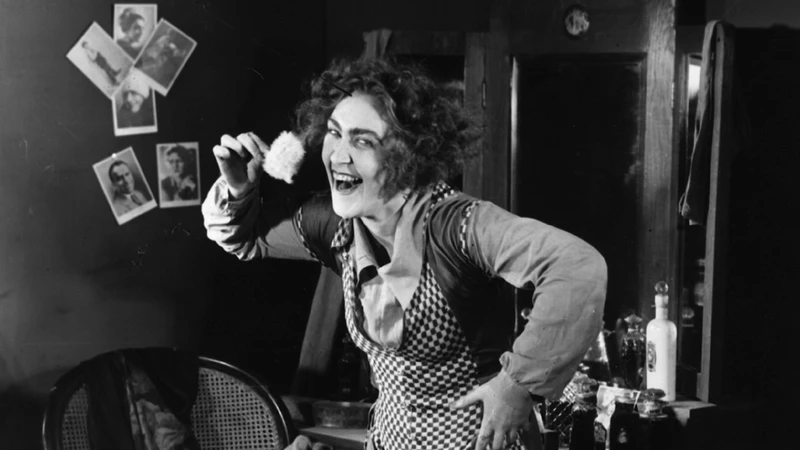
In the early 1920s, film adaptations of books were popular. Generally, the plot did not deviate from the original, although there were differences between the characters in the text and on screen.
“Literary characters are quite strong. Yes, they fail in the end, but in literary texts they are very independent, stubborn, and self-willed. They don’t need male protection at all; they stand up for themselves very firmly as long as they can. These aspects have completely disappeared from film adaptations, and women are very weak, fragile, submissive, and much weakened.”
The author of the book explains this phenomenon from several perspectives. Among them are the general context of the early twentieth century and, globally, the emergence and activism of women in public spaces. Perhaps the counterbalance to this phenomenon is the weakened representation of women on screen. Another explanation for Salome is the simplification of the character to make the work easier.
Passion, revenge, murder, and violent eroticism – these were the themes that the film plots revolved around. Several trends emerge in relation to female characters in Georgian Soviet films of the early 1920s:
- The peasant woman, as a victim, is often a “stepping stone” between upper-class and lower-class men;
- A woman, as a passive object, can be transformed into an animal, such as a horse;
- The female body as an ideological battlefield and also an object of satire among men;
- High-class women possess the gaze, and they are portrayed as passionate and seductive characters. However, for the most part, the woman remains the object of the gaze;
- “What is permitted for a man is forbidden for a woman” — Salome discusses this double standard in a patriarchal society using the example of the film “Who Is the Guilty”:
The husband (Siko) is in America, the wife (Fati) is here. The context is very different, how the betrayal occurs. The man goes freely, chooses a local acrobat woman, flirts with her, lives a life of luxury. The wife who stays here loses her child first, then her beloved father-in-law. She is unhappy, alone, and at this time falls victim to her neighbor, who, one might say, is obsessed with her. It is also noteworthy that Siko, who has gone away, also has a child, and this becomes public knowledge, that is, everyone knows that he was cheating on his wife, that he had a child with someone, and no one has a problem with it. But Pati’s betrayal is unforgivable, she must be punished by the unfaithful husband himself. This is a very good illustration of how false these double standards are.
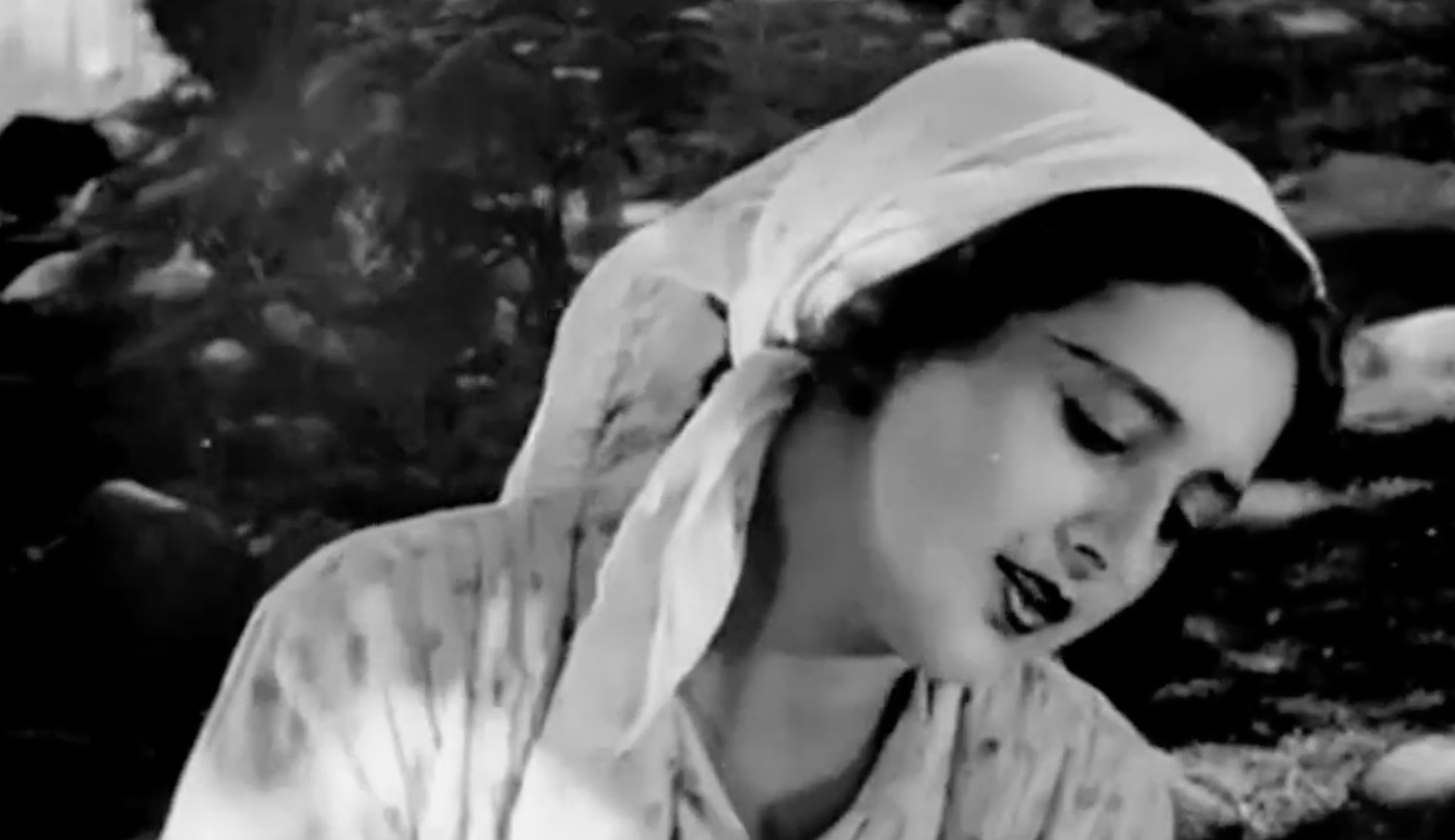
At the end of the film, Fati drowns herself in the river. Arsena the Robber’s (1924) character Nino also commits suicide at the end of the film. Salome says that in general, the act of suicide in films can be analyzed in different ways depending on the context.
Russian film and culture scholar Rachel Morley, in her discussion of female characters committing suicide in pre-revolutionary Russian films, equates this act with an expression of agency, a manifestation of subjectivity — that is, a woman refuses to share her existence with an abuser and regains control over her own body. Salome does not share a similar interpretation with the characters in “Arsena the Robber” and “Who Is the Guilty.”
“These women kill themselves not because they no longer want to be with their abuser, to escape their abuser, but because their partner is no longer sensitive enough to understand their trauma. Those rejected by them can no longer find any other way out. Of course, someone may disagree with me and, let’s say, develop a different argument, but I see the acts of suicide in these films as a manifestation of weakness and not as a kind of agency, that is, for example, I am taking back my body and establishing some kind of control over my life, that I no longer want to be with my abuser.”
Salome says that towards the end of the decade, traditional gender roles in films were rethought and new characters began to reflect the socio-political ideals of an emancipated woman. Gradually, romantic stories disappeared and the main plot line concerned the struggle between the “old” and the “new”, as well as reflecting modern life.
“In general, femininity itself was associated with weakness. This was what the ‘new Soviet woman’ had to be freed from. Everything feminine was perceived very negatively. The 1920s were ideologically very misogynistic, despite a number of reforms and the idea that women should be liberated, leave the house, engage in construction, etc. Everything feminine was perceived as negative. The ideal was a man.”
By the end of the decade, more androgynous characters, devoid of femininity, appeared on the screen. Salome tells us that several factors contributed to this transformation: the demands of ideology, the emergence of new professionals in the film studio, and a cultural revolution that also meant a transformation of everyday life. In Georgia, this cultural revolution was also expressed in the campaign to free women from the veil, says Salome:
“A very aggressive campaign was underway in Adjara […] It is also interesting that this movement existed earlier in Central Asia and Azerbaijan and coincided with the Cultural Revolution in Georgia.”
Statements also appeared in the press. During this period, Mikheil Gelovani also made a film in support of the campaign, entitled “Youth Wins” (1928).
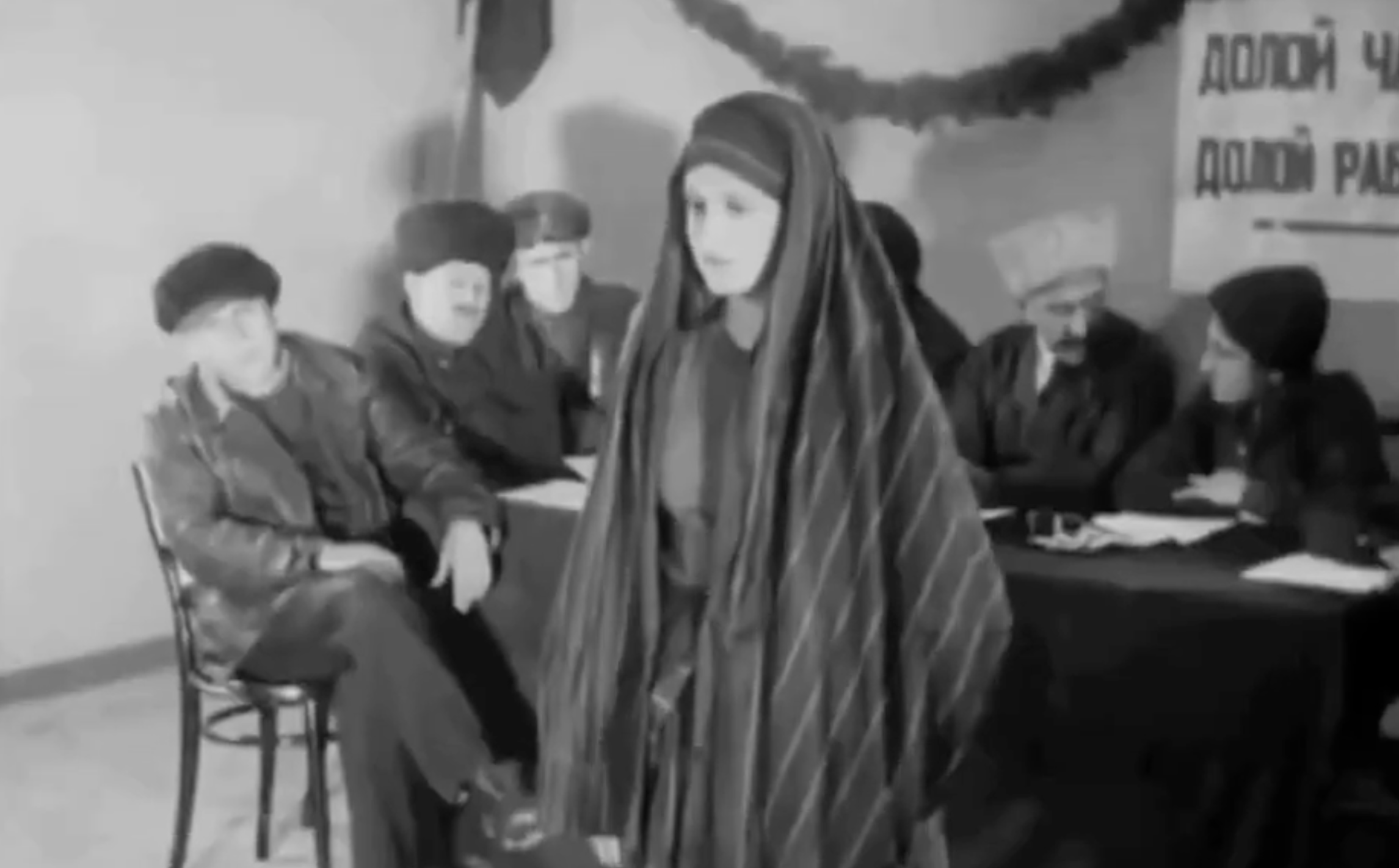
“In this case, we have the heroine of the film, Aishe, who takes off her veil and tramples on it in public. Others join her, and in short, women are liberated and happy. She even marries whomever she wants, of her own free will, and this is, of course, part of the project of women’s liberation, which has been very actively pursued in the press in these years.”
Salome’s book reveals that in reality the campaign was far from the joy it was portrayed in the film or happily wrapped up in the press. As Timothy Blauvelt and Giorgi Khatiashvili have shown in their research, in most cases the headscarves were taken off by women members of local communists and Komsomol families, and they did so under duress — under the threat that otherwise their husbands would lose their jobs, or they would be arrested or deported. Despite the press reporting on the high level of female participation, in reality women were forced to attend meetings and threatened with arrest and violence by their husbands if they refused to wear the headscarf.
In new films, along with the main characteristics of female characters, the component of the gaze and the attitude towards the female body have also changed.
“For example, in the film “Giuli” (1927), Nato Vachnadze plays the main role, but the camera’s attitude towards her is very different from, say, the attitude towards her in other films. She is no longer a fetishized, someone you have to watch all the time, or someone the camera observes, examines closely, examines, etc. No, in this case, she himself becomes the owner of the gaze, and not just the object of the gaze.”
According to observations of films, as female characters become more powerful and dominate the audience, they lose their feminine characteristics and take on a more masculine position.
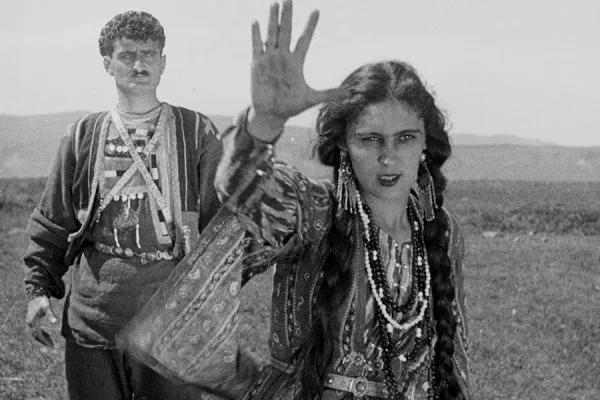
“Such female characters usually refuse to do things that are traditionally considered feminine, whether it’s motherhood, forgiveness, or something else. Shengelaia’s “Eliso” (1929) is a well-known example of a strong and active woman who is both the owner of the gaze, the protector, the active, and a very complete character in this sense. But she refuses something “traditional,” “feminine,” which in this case is heterosexual love and life with her beloved son.”
As for women in the film industry of the 1920s, Salome tells us that archival materials confirm that the first woman to be officially employed in the film industry was Nutsa Ghoghoberidze. She had been an assistant director since 1927, and in 1928, together with Mikheil Kalatozishvili, she made the documentary-agitation film “Their Kingdom,” which was the debut for both directors.
“As for the films I have discussed, without specific archival material it is difficult to say whether the actresses played any additional roles directly during the filming of these films and whether they offered any ideas to the directors, which, as we know, often happens on the set. But it is known that Nato Vachnadze worked with Esfir Shub as an assistant director-intern during the filming of “Komsomol-Electrification Chief” from the late 1920s and even edited the film. And her sister, Kira Andronikashvili, whom we know from her role in Nikoloz Shengelaia’s “Eliso”, also studied at the Moscow Cinematography University, VGIK, and was a student of Sergei Eisenstein.”
In addition to translating the book into Georgian, one of Salome’s future plans is to create a class on female authors in early cinema.

She says that the most distinctive and memorable chapters in the book for her are the ones she worked on the most and spent the most time on. She tells us that she watched these films many times and rewatched some scenes up to twenty times during the research process.
“I appreciated these films much more, with all their components: artistic, filming, etc. At first, I didn’t like them as much and couldn’t distinguish things as I did at the end of the research. These films seemed boring to me, but then, each time, I noticed and noticed new things, and therefore, I reacted very differently under their charm.”
When asked why Georgian Soviet cinema of the 1920s is important for understanding the representation of women today, Salome answers:
“First of all, this is important for the complex and multi-layered knowledge of history and for the rethinking of national identity, which is constantly in the process of formation. Gender ideas about what a woman and a man should be like are precisely part of this national identity.”