

Cross-dressing can mean different things depending on who you ask — which is why it can be so confusing. Is it about gender identity? Sexual orientation? Fashion? Or something else altogether? Cross-dressing doesn’t fit into a simple framework — and that’s its very essence.
Cross-dressing highlights how fluid and ever-changing our ideas about gender and self-expression are. For some, it’s a step towards personal self-determination, while for others, it’s simply a way to wear what feels comfortable.
In this article, we will explore what cross-dressing means, where it comes from, and why it still retains its significance across cultures and generations.
What Is Cross-dressing?
Cross-dressing simply means wearing clothes that society perceives as belonging to the opposite gender. Think dresses and heels, suits and ties, or any style that is culturally coded as “men’s” or “women’s.” The quotation marks are not accidental — these labels are merely social constructs, not fixed truths.
It’s also important to note what cross-dressing is not. It is not tied to a specific sexual orientation and does not automatically define a person’s gender identity. Cross-dressers can be gay, straight, bisexual, trans, cisgender — or none at all. For some, it is related to sexuality, while for others, it has nothing to do with it at all.
In Western culture, the word “cross-dresser” is most often associated with cisgender men who like to wear “feminine clothing and accessories.” But, in reality, anyone can be a cross-dresser.
Most importantly, cross-dressing is not considered a mental disorder — although in the past it was often associated with a psychological “deviation” or sexual fetish. Such stereotypes and discriminatory perceptions still exist today, which is why it is important to distinguish cross-dressing from a disorder. While cross-dressers may be criticized for “violating societal norms,” the act itself is simply a form of self-expression — whether temporary, occasional, or lifelong.
A Short History of Cross-dressing
One of the most common misconceptions about cross-dressing is that it’s something new — a modern trend or a sign of “social confusion.” In fact, cross-dressing has a long history, and people have been dressing as different genders for centuries.
Gender, Mythology and Society
Cross-dressing is not unique to any particular place or time — it is found in many cultures around the world. For example, Hindu mythology contains many stories that transcend the gender binary. Many indigenous cultures in North America recognized two-spirit identities, in which clothing and social roles could intersect or merge. Some societies have even developed the concept of a “third gender,” a reminder that the categories of “male” and “female” were never as rigid and fixed as we often think.
This fluidity was also reflected in ancient myths and deities. In Sumerian mythology, the goddess Inanna could have both feminine and masculine forms. In Egyptian texts, the god Atum was both male and female. In Greek tradition, Dionysus was often depicted with both masculine and feminine features. These examples show that the intersecting features of clothing and identity have long been part of human imagination and ritual.
Beyond the myths, cross-dressing was also accepted in various communities and social practices. In South Asia, hijra communities existed for centuries in both Hindu and Muslim traditions, where they were seen as a role that transcended the boundaries of “masculine” and “feminine.” In the Balkans, “sworn virgins” were women who took a vow of chastity and lived as men — wearing men’s clothing and assuming their social roles in order to gain rights and freedoms that were otherwise denied to them. Here, cross-dressing became a means of survival and empowerment.
Theater experience is also important. In many Western countries, women were prohibited from performing on stage until the 17th century, so male actors had to play female roles in everything from ancient Greek drama to Shakespeare’s plays. Similarly, women were prohibited from participating in Japanese Kabuki theater, and male actors (onagata) played female characters.
Gender Barriers, Cross-dressing and Women
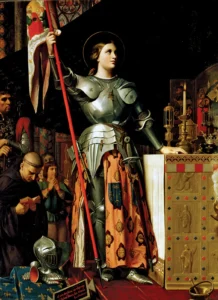
Throughout history, many women have used cross-dressing to overcome the restrictions placed on their gender. For example, Joan of Arc wore soldier’s armor when leading her army into battle, while Egypt’s second female pharaoh, Hatshepsut, was often depicted wearing a ceremonial beard and the traditional kilt of male pharaohs.
In many Western societies, rules forbade women from wearing men’s clothing. These rules were often justified by religious texts and ideas of modesty, but in practice they were interpreted according to the interests of the ruling powers.
Yet women have always found ways to break these rules. Some have even been known to pass themselves off as men without being noticed, so convincingly that they have gained roles, freedoms, and opportunities that would otherwise have been unavailable to them.
Cross-dressing and Men: Charles D’Eon
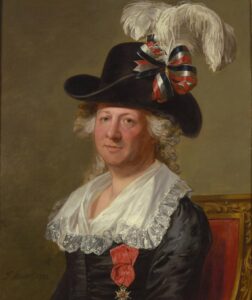
One of the most influential male cross-dressers of the 18th century was Charles d’Éon — a French aristocrat, diplomat, soldier, and spy, better known as the Chevalier d’Éon. Recruited into the secret spy network created by King Louis XV, d’Éon became an important figure in the French court.
D’Eon was also known as “Charlotte”. He was so adept at dressing as a woman that much of his spy work was done while living as a woman. From the age of 49 until his death (aged 81), he lived almost entirely under the name Charlotte.
D’Eon lived between gender lines: sometimes as a man, sometimes as a woman. His life shows that people have had diverse gender roles for centuries, even when society lacked the terms to describe this experience.
This legacy is still important today. Many people have the experience of alternating between different styles or personas — for some, these blend naturally, while for others, they are clearly distinct.
► Cross-dressing should not be considered a foreign or exclusively Western phenomenon. In the modern Georgian cultural space, we have repeatedly seen famous actors or comedians wearing clothing of the opposite sex on stage or on television — mostly for humorous effect. In such examples, cross-dressing, despite its comedic form, still reminds us that clothing and identity are always a game with the boundaries that society sets.
Why Do People Cross-dress?
There is no single reason for cross-dressing — it is a very individual experience. For some, it is about challenging gender roles or exploring their own identity. For others, it may be about sexuality, curiosity, or simply the joy of self-expression. For many people, cross-dressing also helps them relax, be creative, and find inner peace.
Cross-dressing can also be seen as a deeply imaginative act. It is somewhat similar to fiction writing—where the author immerses themselves in the life of a character who is different from themselves. In this sense, cross-dressing allows a person to see the world from a different perspective—to play, to empathize, and to imagine life beyond the boundaries that were set at birth.
Is Cross-dressing a Gender Identity?
Cross-dressing is not a gender identity in itself. It is simply a form of self-expression through clothing. A cross-dresser does not automatically become “less” or “more” male or female—these perceptions depend on the larger context of an individual’s identity, not on what they are wearing.
Nevertheless, cross-dressing can play an important role in the journey of gender identity for some. For some, it is a step towards transformation, or a way to explore life beyond the gender boundaries of “woman” and “man.” For others, it may simply be a personal style or a form of pleasure—and over time, what was once considered “cross-dressing” may simply become everyday clothing.
Cross-dressing experiences are very diverse. Some cross-dressers see themselves as part of the broader transgender spectrum, while others do not. What unites all of these experiences is an element of self-exploration. Cross-dressing breaks down gender stereotypes and opens the door to new possibilities — whether it’s part of a larger self-awareness or simply an act of self-expression that brings happiness.
Are Cross-dressers Drag Queens?
No. It’s true that drag queens typically cross-dress, but drag is largely performance-based. It’s an art form in which people exaggerate their femininity or masculinity — often for comic or satirical effect, theatrical performance, or entertainment.
Cross-dressers, on the other hand, are not typically involved in performance. They wear clothing that society associates with the other gender, but they do so for personal reasons — whether it’s self-expression, comfort, exploration, or style. A person can be equally interested in both cross-dressing and drag, and they can be both a cross-dresser and a drag queen, but the two identities are not the same.
How Common Is Cross-dressing?
Cross-dressing is more common than many people realize. Psychologist Justin Lehmiller found in his book Tell Me What You Want that about one in four people — both men and women — have thought about cross-dressing at least once. Of course, fantasy and actual action are not the same thing, and social stigma makes it difficult to know exactly how many people cross-dress in public or private settings.
However, cultural attitudes are changing over time. Many celebrities are openly playing with gender-neutral fashion on the red carpet, and for many young people, clothing is becoming increasingly gender-neutral. According to The Phluid Project, 27% of Gen-Z teens identify as gender nonconforming, and more than half buy clothes that are outside of their gender identity. For this generation, “cross-dressing” is often no longer even a separate category — it’s simply a way of dressing.
► Cross-dressing has never belonged to just one culture, identity, or era. From ancient myths and beliefs to spies, soldiers, actors, and ordinary people, it has existed for a variety of reasons: for survival, for power, for art, for play, or simply for self-expression.
► Today, as attitudes change, what was once considered radical has become a common way of expressing oneself for many. Cross-dressing reminds us that clothing is often a language of freedom, creativity, and identity.
Source: En Femme Style, Whole Person, Massive Magazine, The School of Life