

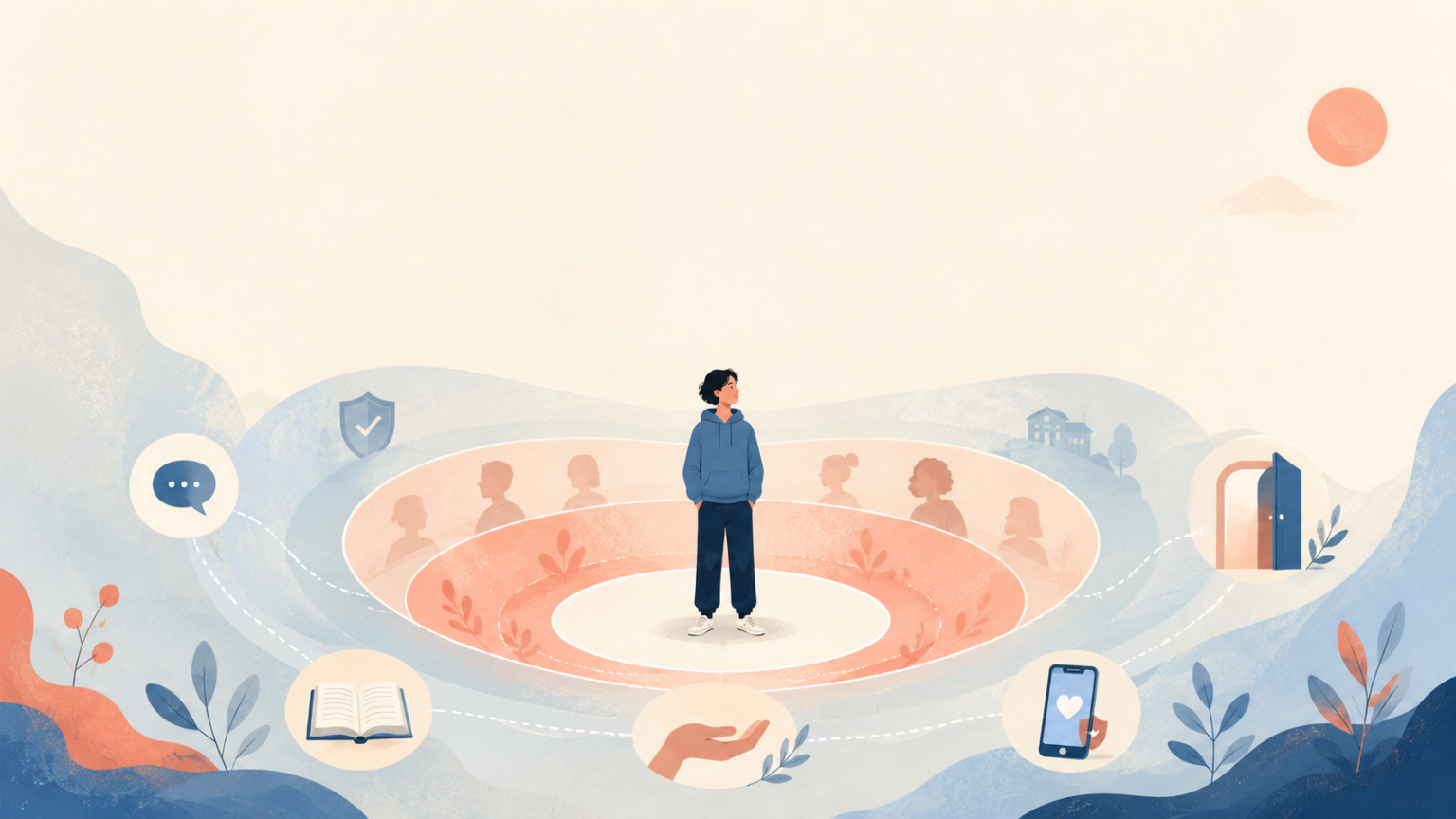
The debate over sexuality education often boils down to the question: How much information should children have about sex, and from what age? This view leaves much of the topic out of the question. Comprehensive sexuality education (CSE) includes information about the body, personal space, relationships, consent, power, health, safety, and seeking help. These issues determine its importance in the context of preventing various forms of violence, including sexual assault and harassment.
This connection is especially important to make because public discourse on sexual abuse often begins only after the harm has already been done. At such times, questions about whether the child recognized the behavior or reported it in a timely manner can distract from the perpetrator and the adults responsible for the child’s safety. As a result, discourse can sometimes be skewed toward assuming that the child themselves did not know or do something wrong.
Therefore, when discussing the preventive value of CSE, we must clearly distinguish between its capabilities and limitations. It cannot place the child in charge of preventing violence, it cannot eliminate the power of adults, and it cannot ensure the disclosure of violence. Its contribution is more modest, but important: teaching the child appropriate terms and concepts, reinforcing that personal boundaries matter, as well as promoting the recognition of coercion and manipulation, and explaining ways to get help.
This issue is particularly relevant for Georgia. Opposition to sexuality education is often based on the perception that it introduces age-inappropriate topics to children. However, some CSE topics were already included in the Georgian national curriculum in 2018-2019 as part of biology and civic education classes, and additional topics were added to the primary school curriculum in 2022. This was a significant change, but the inclusion of individual topics in the curriculum still does not mean that students are receiving a comprehensive and consistent education.
A 2025 evaluation conducted by Tanadgoma in collaboration with UNFPA found significant gaps in both curriculum content and teacher training and monitoring. The report also noted instances where teachers ignored chapters on the human reproductive system. Such silence can itself send a message: students feel embarrassed or ashamed to ask questions about their bodies, sexuality, and relationships.
However, the questions do not disappear — the search for information will simply shift from the space of school and trusted adults to peers, social media, and other sources, where accurate and false information is not always easy to distinguish. So the question is not just whether these topics should be taught in school, but also who will answer young people’s questions, what information will be provided to them, and whether this knowledge will help them understand health, relationships, and safety.
What is age-appropriate comprehensive sexuality education?
The World Health Organization defines CSE as a curriculum-based, progressive and scientifically rigorous approach that addresses the cognitive, emotional, physical and social aspects of sexuality. It provides children and adolescents with age-appropriate information about their bodies, health, relationships and rights, while developing communication, decision-making, mutual respect and help-seeking skills. Topics may include sexual maturation, emotions, relationships, bodily autonomy, personal space, consent, gender norms, online communication, sexual health and access to services.
“Age-appropriate” does not mean that six-year-olds and sixteen-year-olds are given the same information. Younger children may learn about body parts, personal space, emotions, basic principles of consent, and trusted adults. Adults may discuss relationships, bullying, sexual health, digital behavior, and power imbalances. Each stage builds on the next.
In addition to being age-appropriate, CSE must also be accessible and inclusive: children and adolescents with disabilities, out-of-school children, or young people facing discrimination may need adapted materials, different forms of communication, and additional support, as they face greater barriers to accessing accurate information and reliable services.
That’s why sex education doesn’t start with discussing sexual activity with children. It’s based on a simpler premise: children have bodies, relationships, and personal boundaries long before they become sexually active — and they need accurate and reliable words to talk about all three.
Why is silence on these topics not a guarantee of child protection?
Children are often taught to be submissive to adults, to be polite, and to avoid talking about sexuality. They may be asked to accept hugs or caresses from relatives, to leave “personal matters” at home, or to remain silent when they are having an affair. These messages do not constitute sexual abuse, but they can make it difficult to understand, describe, and disclose a violation of personal boundaries.
Parental silence on such topics does not mean that children are not informed. Young people get their ideas about the body and sex from their peers, entertainment, pornography, and social media. The real choice is: do children receive accurate, reliable, and contextual information, or do they receive fragmented, unreliable, and unsupported knowledge? If we present this topic as “shameful,” children may not be able to talk about problematic, difficult, and upsetting experiences at all.
► According to UNICEF 2024 data:
- Today, 650 million girls and women (one in five) living in the world have been victims of sexual violence in childhood, including 370 million (one in eight) who have experienced rape or sexual assault.
- Between 410 and 530 million boys and men (one in seven) have experienced sexual violence in childhood, including 240-310 million (one in eleven) who have been raped or sexually assaulted.
How can sex education contribute to violence prevention?
The preventive value of sexuality education is not based on one specific lesson or rule. It works in several interconnected ways, which we will discuss in this chapter. None of these mechanisms is a guarantee that violence will be prevented, but they can reduce the barriers created by silence, confusion, and lack of information.
It gives children a language to describe their experiences
A child may know something is wrong but not be able to explain why. Using specific, age-appropriate words for body parts, emotions, and behaviors can help them describe their experiences more clearly. Children can also learn important safety distinctions: for example, the difference between personal space and a secret, or between a temporary surprise and a secret that a child is forced to keep to avoid revealing touching, photos, or private messages.
Appropriate language does not guarantee recognition and disclosure of such facts: the child may still be frightened, dependent, or confused. However, the lack of such language creates another obstacle – the child is forced to describe the experience in a way that adults may not understand or attach importance to.
It makes bodily autonomy a part of everyday life
Children learn consent through everyday examples of touch — hugging, teasing, or intruding on personal space. When an adult pauses after a child’s refusal, he or she shows that the child’s response is important; when they laugh at the refusal or continue with theirs, they send the opposite message.
Respect for adults should not require a child to ignore discomfort. A child can walk away, change their mind, or tell someone about the disturbing behavior, and at the same time learn that other people’s boundaries deserve equal respect.
► The goal is not to portray all touch as dangerous, but to make bodily autonomy a normal part of life.
It shows that consent is more than just “yes” and “no”
Consent is sometimes viewed as a question asked before sexual activity. Age-appropriate education, however, presents it as a continuous process: asking questions, listening to the answer, noticing hesitation, and stopping when someone feels uncomfortable. Repeated pressure after a refusal is, at the very least, disrespectful.
For adolescents, context matters. Silence, fear, or lack of resistance does not constitute consent. Consent to one action is not consent to another, and consent can be revoked at any time. Neither being in a relationship nor past experiences between two people create permanent consent. Authority, addiction, the influence of alcohol or other substances, threats, and manipulation can make free choice impossible.
► This education is not just about recognizing harm to potential victims. It encourages all young people to evaluate their own behavior, reject the feeling of entitlement over another person’s body, intervene safely as a bystander, and take responsibility for respecting other people’s boundaries.
It makes it easier to detect grooming and manipulation
Sexual abuse is not always preceded by overt force. In the process of so-called “ grooming” — deliberate actions aimed at manipulating a child and gaining their trust — the abuser may gradually gain trust, show special attention, test the child’s boundaries in small steps, introduce sexual content into the conversation, and make keeping secrets the norm — both offline and online.
For example, someone might ask a child to change their chat space from a platform visible to school or family to a self-destructing messaging app. Such a request alone does not necessarily constitute grooming. However, if it is accompanied by demands for secrecy, gifts, sexualized jokes, requests for photos, or ignoring refusals, it becomes part of a pattern of behavior that both adults and youth should be wary of.
Grooming signs cannot be reduced to a simple list. Context, repetition of behavior, power imbalances, and gradual escalation of behavior are important — especially when the person is perceived as trustworthy. Sex education cannot guarantee that these behaviors will be detected, but it can provide youth and adults with a clearer language for assessing overall patterns of behavior rather than individual acts.
It turns the call to “tell a grown-up” into a more realistic plan
A simple instruction — “Tell a grown-up” — implies that the child knows who to turn to, what to say, and what will happen next. The child may fear punishment, disbelief, shame, family conflict, or the loss of a relationship on which he or she depends.
Safety education helps children identify several trusted adults and continue to seek help if the first person doesn’t respond appropriately. Teens need to know that responding to a message, accepting a gift, agreeing to a meeting, giving initial consent, or sharing a photo does not take away their right to receive help.
► If a child does not immediately recognize the manipulation, it is not their fault.
What does the evidence show?
Reviews of school-based child sexual abuse prevention programs generally show improvements in knowledge and protective skills. A 2015 Cochrane review found improvements in knowledge and some simulated protective behaviors; a 2023 systematic review and meta-analysis also found increases in factual and applied knowledge.
These results speak in favor of safety education, but they do not prove that education alone reduces sexual assault. The knowledge measured after the program does not equate to the ability to resist a trusted adult in real life. Furthermore, in the event of abuse, we should not expect a child to necessarily do the “right” thing or be able to defend themselves.
Child sexual abuse prevention programs and comprehensive sexuality education are related, but not the same. The broader evidence for high-quality CSE suggests improvements in knowledge, attitudes, and health-related decisions.
► According to the World Health Organization, CSE does not promote earlier sexual activity, despite the widespread misconception that the information itself encourages sexual behavior.
Quality matters. Effective education is gradual, iterative, participatory, age-appropriate, and service-related. A one-time lecture or a frightening warning will not serve the same function.
Therefore, CSE is only one part of prevention. It can expand a child’s knowledge and choices, but it cannot eliminate power imbalances, ensure disclosure, and replace appropriate responses from adults and institutions.
Why does responsibility remain with adults and institutions?
If a child fails to recognize the abuse, resist it, or quickly disclose it, it does not mean that they acted wrongly. The child may remain silent, disclose the incident partially or later, or continue to communicate with the abuser. Disclosure is influenced by fear, attitudes, shame, family dynamics, and the relationship with the person who caused the harm.
► Responsibility lies with the person who violated the child’s boundary.
Adults determine whether the messages received through education will be reinforced or rejected in everyday life. A lesson in consent has little power if the family ridicules the child’s daily refusal. A call to report dangerous behavior is also of little value if the school does not have a confidential reporting system, the staff is untrained, or the institution is protecting its own reputation instead of the child.
Therefore, prevention, along with education, requires protection mechanisms: transparent rules on communication and separate meetings between adults and children, trained staff, the possibility of confidential complaints, investigation of cases, referral services, and accountability. In Georgia, SERAT’s conclusion that national monitoring is still underdeveloped makes the main issue of actual implementation — and not just what is written in the curriculum — a key issue.
Knowledge can expand a child’s capabilities. However, adults and institutions still control most of the conditions under which these capabilities can be used.
How do parents and caregivers create a safe environment for a child?
The importance of sex education in the family is not only determined by how well the conversation is planned. The child learns from everyday interactions whether he can ask questions, express confusion and talk about uncomfortable experiences without being ridiculed, punished or controlled. The guide for parents and caregivers, prepared in partnership with UNFPA, also links this connection to bodily autonomy and respect for personal boundaries: the child should know that his body belongs to him and can say “no”, he should also understand that not all touches are acceptable and there is nothing shameful in asking questions. Therefore, the basis of protection is not a one-time transfer of information, but a relationship with an adult in which the child expects to be listened to and supported.
This connection is built through short, age-appropriate conversations. Parents can use the child’s questions, media exposure, puberty, online relationships, or changes in friendships as conversation starters. The goal is not to control all messages or gain approval, but to keep the lines of communication open while respecting the child’s personal space and growing independence.
The parent is not expected to know all the answers or take on the role of investigator. He or she can admit that he or she does not know something; seek reliable information with the child, pay attention to significant changes in behavior, and seek professional help if necessary. If something is on their mind, open-ended questions and concern for the child’s safety are more helpful than questioning, taking away the phone as punishment, or jumping to conclusions.
- See additional resources for parents and caregivers: Elene Japaridze’s Guide — Why Access to Comprehensive Sexuality Education is Important, produced in partnership with the United Nations Population Fund (UNFPA).
How can teenagers recognize bullying and sexual harassment?
Friendships, romance, and online relationships become more important during adolescence, but the line between attention and control, or closeness and pressure, is not always clear. Therefore, assessing individual actions alone is not enough: it is important to consider whether attention becomes control, closeness becomes obligation, and teasing becomes humiliation; whether a person’s freedom is restricted, and whether the behavior continues despite their discomfort.
Sexual harassment is not just about physical contact. It can manifest itself in sexual comments and derogatory jokes, unwanted messages, requests for or sharing of intimate photos, repeated contact after rejection, blackmail, and coercion. A teenager does not need to prove that the other person intended to harm or that what happened exactly meets the legal definition: discomfort is enough reason to set boundaries and seek help.
Safe responses depend on the circumstances. In online situations, it can be helpful to save evidence — such as messages or screenshots — and then block the person and seek help from a trusted adult. If the bullying is being perpetrated by a teacher, coach, relative, or other authority figure, it can be more difficult to escape the situation; this is why seeking help is not a sign of weakness but a form of self-defense.
► 10 short rules for teenagers:
In a guide prepared by Elene Japaridze, created in partnership with the United Nations Population Fund (UNFPA), the basic rules for recognizing sexual harassment and responding safely are summarized as follows:
- Know what sexual harassment means;
- Harassment is not always physical;
- Your discomfort is important;
- “No” is a complete sentence;
- If someone doesn’t respect your “no,” it’s a red flag;
- The online space is also a real space;
- A secret that scares you is not a secret;
- You are not guilty;
- Pay attention to the abuse of power;
- If it hurts you, it’s not a “joke”.
How should an adult respond to a child when they report abuse?
Education will only help to prevent violence if adults are prepared to listen to children’s stories in a safe environment. The World Health Organization’s guidelines emphasize respectful listening, non-judgmental responses and acknowledgement of the child’s feelings, ensuring the child’s immediate safety, age-appropriate information about next steps, and access to medical or psychosocial support.
The parent should try to remain calm, listen to the child without asking for every detail, and avoid asking questions like, “Why did you go?” or “Why didn’t you tell me before?” A more helpful approach is, “I believe you,” “You did the right thing by telling me,” and “It’s not your fault.”
The adult should not promise the child that they will keep the incident a complete secret, as intervention or reporting to the appropriate authorities may become necessary. They should explain to the child what information can be shared with others, with whom, and why, while at the same time protecting his or her confidentiality.
When does sex education become safety education?
Comprehensive sexuality education cannot guarantee that informed children will protect themselves from all forms of sexual violence. Children should not be forced to overcome the authority of their elders, emotional attachment, threats, manipulation, or institutional failure. Such a presentation of education would create yet another form of victim blaming.
Its preventive value can be more realistically viewed as follows: CSE can give young people a language to describe their experiences, make respecting boundaries a part of everyday life, clarify the meaning of consent, make it easier to recognize coercion, and make ways to get help clearer. It also teaches young people that preventing harm also involves respecting the autonomy of others.
Knowledge only matters when adults listen and institutions respond. Sexuality education becomes safety education when it is linked to trusting relationships, trained professionals, effective protection mechanisms, accessible services, and a culture that takes children’s words and boundaries seriously.
Sources:
- World Health Organization — Comprehensive sexuality education
- World Health Organization — Responding to children and adolescents who have been sexually abused
- UNESCO — International technical guidance on sexuality education
- UNFPA — Comprehensive sexuality education as a strategy for gender-based violence prevention
- UNFPA Eastern Europe and Central Asia — Comprehensive sexuality education in Georgia
- UNFPA Georgia — Sexuality Education Review and Assessment Tool
- Australian National Office for Child Safety — Grooming