
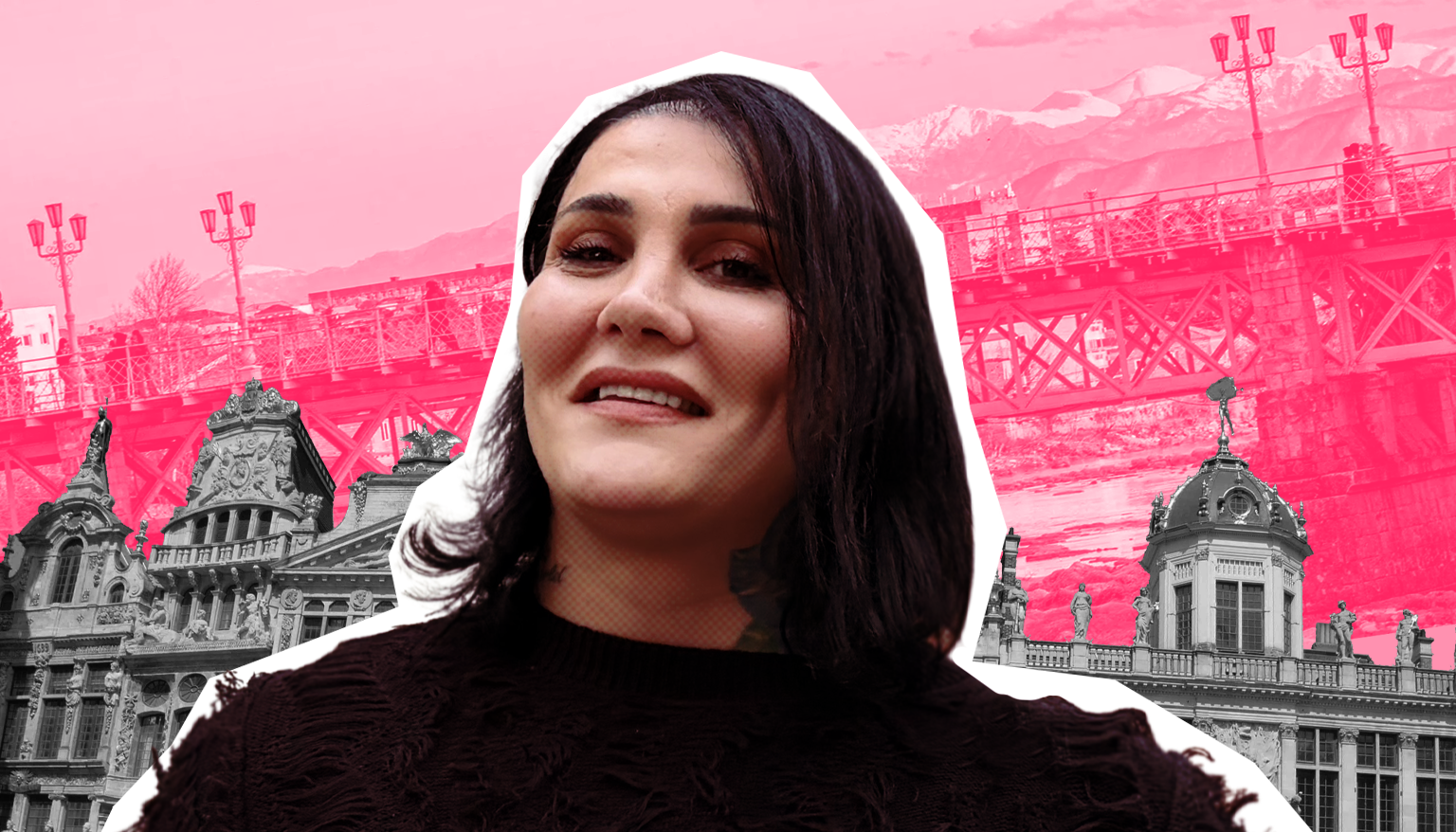
“I am Selena Bukhaidze — originally from Kutaisi, although I have been living in Brussels for five years now. I am from Kutaisi on my father’s side, and Vani on my mother’s side. I resemble my mother’s side in everything, especially my sharp tongue and my humor,” Selena begins to introduce herself, and then adds with a laugh: “No, I’m lying now, people from Vani don’t really stand out for their humor. I resemble people from Kutaisi in humor and people from Vani in my curses.”
Imeretian humor, directness, and the everyday life of a Georgian trans woman in Brussels — this is how TikTok users know her.
However, before she appeared on social media and moved to Belgium, she had gone through a difficult path in Georgia — childhood violence from her father, poverty, difficulties with self-determination, forced sex work, and a constant sense of danger due to her gender identity.
Childhood and Self-Determination
Born in 1990, she spent her formative years of childhood struggling with self-determination. She couldn’t put a name to her condition — she recalls that at the time she didn’t even know about the existence of queer people.
“I didn’t know why I was attracted to boys at all, why I wanted to have long hair, why I wanted to wear dresses. I knew I was a boy and I didn’t understand why I wanted to be a girl. I suffered from that from a very young age because I had to play along as if I were a boy.”
She tells us that when she was little, it was all easier, because when she wore her sister’s dresses, the reaction of those around her was: “He’s a child, what’s wrong with it?” However, as a teenager, they emphasized his femininity and made fun of him, which added to his uncertainty.
At the age of 7, she was sexually abused by a neighbor, after which her father physically abused Selena. She became the target of her father’s aggression many times before and after that.
Over the years, bullying at school and the shouting of insults increased.
“I thought I was the only one like this in the whole world. I dreamed that if only there was someone like me, that I could have a friend, someone like me.”
She recalls the day when, while walking in Kutaisi with a friend, she accidentally met two boys who turned out to be acquaintances of her friend. They got to know each other, became friends, and talked about many issues, including sexual orientation.
“They didn’t hide the fact that they were gay, and they asked me too. I knew I liked boys, but I also realized that I wasn’t like them — they were boys who liked boys, but I didn’t feel like a boy, I always saw myself as a girl. When I asked them, it turned out that they did not. Back then, they didn’t even know that transgender people existed.”
When she turned 18, she decided to leave the violent environment and moved to Turkey. One day, while returning from a club with a co-worker, she saw “beautiful, sexy girls” in a taxi, which immediately caught her attention. A friend explained that they were transgender women.
“I wanted to go and hug everyone, ask them some questions,” Selena tells us, adding that she couldn’t go that night because she didn’t know her coworker’s approach and felt shy. The next Saturday, she went alone and met many of them. There, she also met Georgian transgender women who taught her a lot. She is especially grateful to Maria Kasenko, who has stood by her side many times.
She began her transition in Turkey and returned to Georgia years later. Due to the transphobic environment, she was unable to find a job or an apartment that the landlord would agree to rent. She was forced to engage in sex work.
“Whole Georgia probably learned about the existence of transgender women through Kesaria. I remember seeing her for the first time on a TV show and being shocked by her beauty. At that time, there was no woman more beautiful than her for me. I dreamed of being like Kesaria. I didn’t know her personally, but her murder was devastating to me. I also thought that if this had happened to such a strong woman, if I had stayed in Georgia, I probably wouldn’t be alive.”
Immigration and Life in Belgium
The situation became especially difficult during the Covid period. Together with friends, they began to search for a country where they could go and seek asylum. The main thing for them was to feel like full members of society and not be excluded, as in Georgia.
“In Georgia, a transgender woman can’t even travel by public transport. For example, when I went to the clinic, I knew something unpleasant was going to happen, especially when I gave my ID. They always had an ironic reaction, they would call the employees, ‘Look who’s here.’ We had no income or job, except for the one thing we were forced to do.”
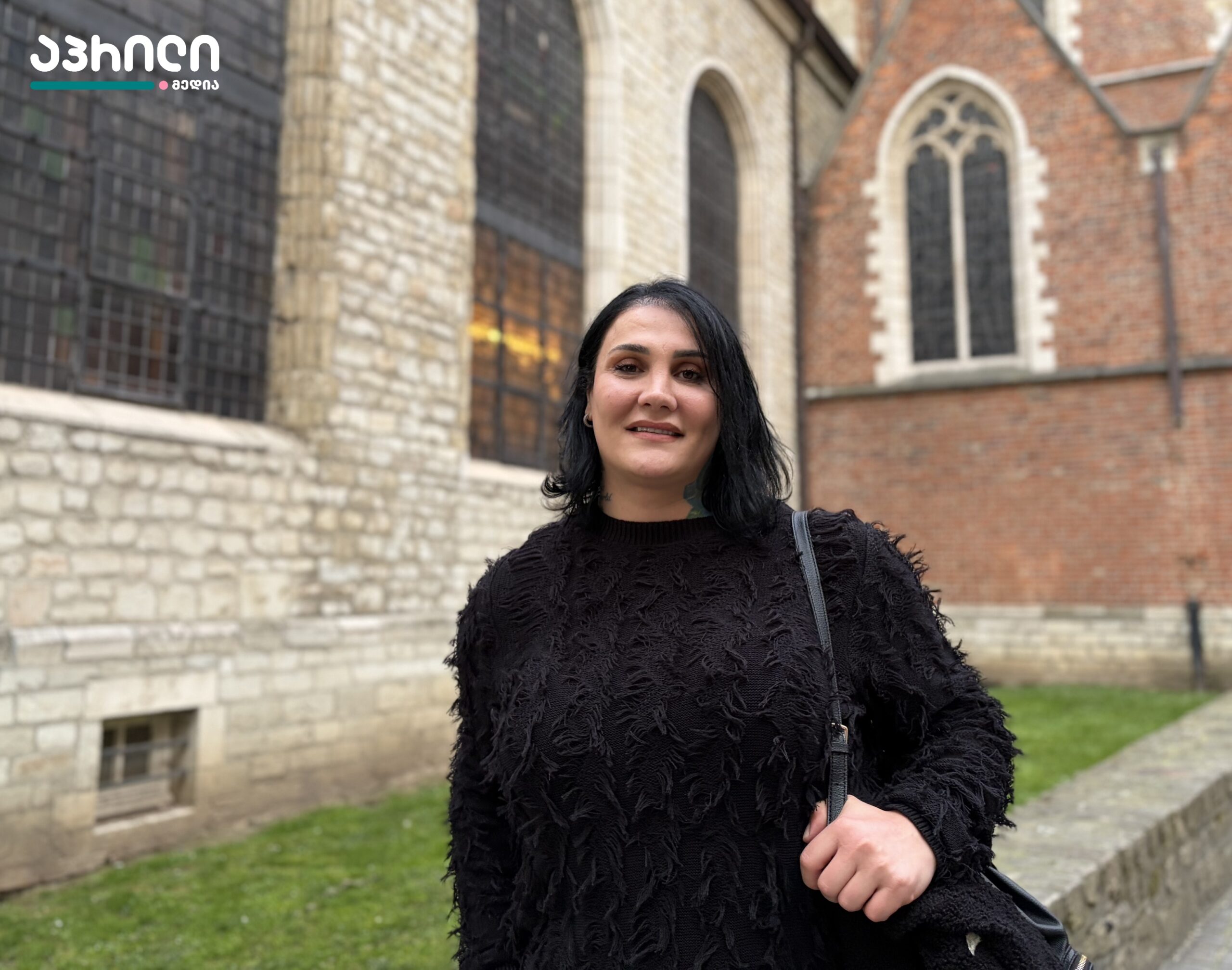
They chose Belgium and went. She tells us that in about four months, all three of them received their documents — Selena was able to find an apartment in Brussels, and her friends in Antwerp.
“The difference between living in Georgia and Belgium is very big. Here I can travel freely by public transport, I can go everywhere freely, I’m not afraid to drink coffee in a cafe because I know someone won’t come and tell me that we can’t serve you. No one feels 100% safe anywhere, but I feel much safer here.”
“In Belgium, I feel like a human being. Most people treat me like a normal person, which I lacked in Georgia.”
However, she still struggles with the trauma. Her current job is cleaning offices, which brings her into contact with many people, and although she has not experienced any negative reactions, she still has a fear and expectation that someone might speak rudely to her.
“I’m so used to being in contact with so many people that I still feel alienated. I probably still don’t consider myself part of this community because I was excluded from society for so long — we only had each other, we only had contact with each other.”
TikTok and Publicity
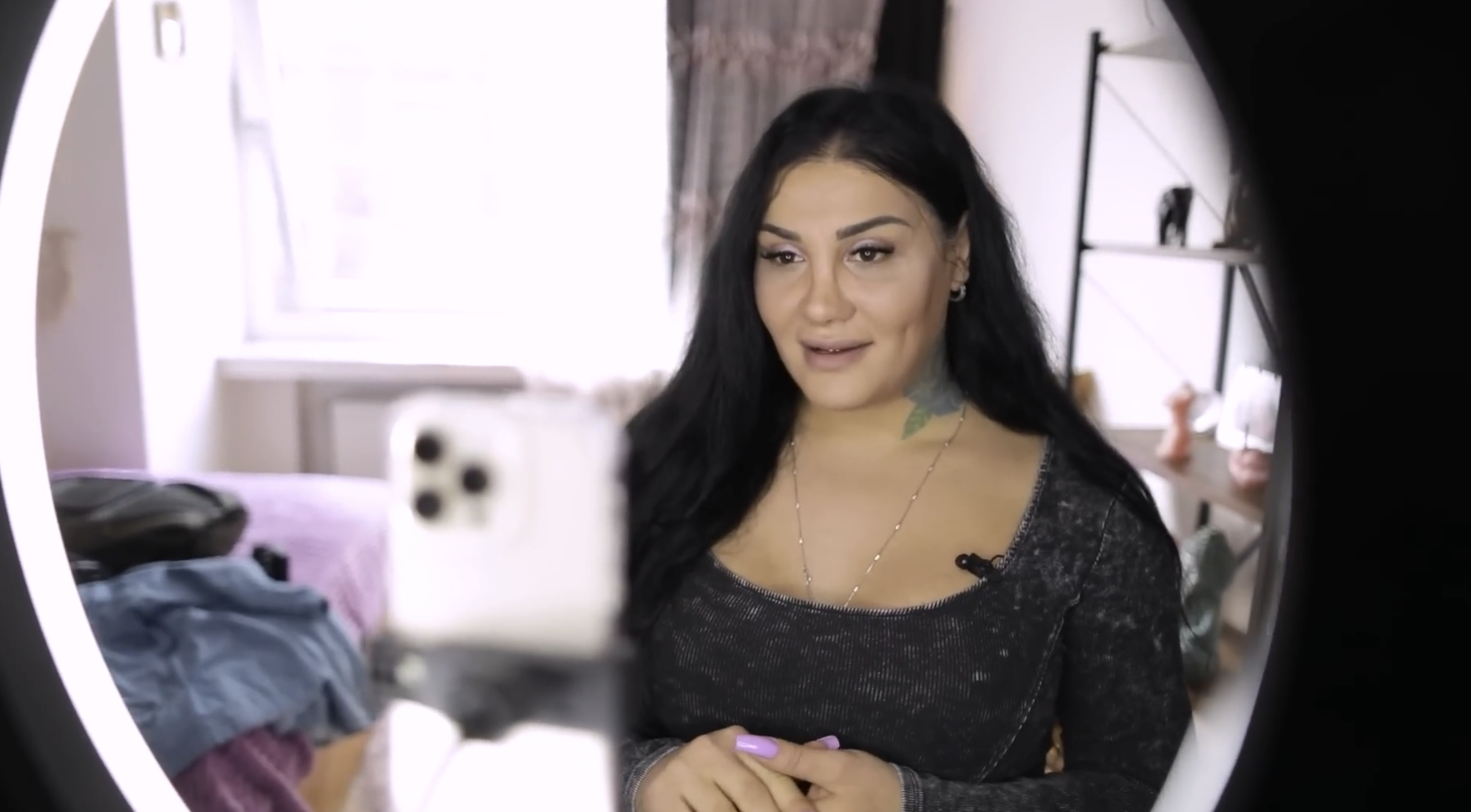
Selena’s relationship with TikTok began years ago. She tells us that at first she couldn’t understand the app and deleted it, but during Covid she downloaded it again and started posting videos. She noticed that TikTokers were responding to comments in videos and decided to try it herself. She recalls saying a word by mistake and that video became viral.
“I went from 300 subscribers to about 17 thousand subscribers in a short time. Then I thought, why not, and I replied to the second comment. This second video turned out to be funny too. Anyway, I have loved joking all my life, and why not? TikTok is a platform where you can do whatever you want, show off whatever talent you have. God gave me a talent only in humor, like all the people of Imereti and Kutaisi,” says Selena with a laugh.
She notes that she has received a lot of love and respect on TikTok over the years. She also tries to spread warmth and positivity, even if it’s just for a few seconds to make people smile. She used to rarely use Facebook — she says it’s famous for bad comments.
“People who leave comments on TikTok often don’t even have their name or a photo, and it does not come too close, but on Facebook, people who have a photo, their name and surname are the ones who leave you comments, and they don’t hesitate to leave you bad comments. Before, my videos were posted by different pages on Facebook, and the comments were filled with horrible words. I suffered the most because my mother saw all this.”
However, she has recently become more active on Facebook. She says that at first it was exactly as she had imagined – people were writing bad comments to her, but gradually everything changed.
She says that part of society has a very negative perception of transgender women and considers them to be perverted, aggressive — “those who are not even worth passing by.” According to Selena, there can be “good” and “bad” in every community, and this does not mean that the entire community is like that. She notes with sadness that she knows many Georgian transgender women who left the country due to threats and are working in Europe, including in hospitals and the Red Cross.
“Couldn’t these people, us, work like this in Georgia? Or get an education like a transgender woman can in Belgium? We should be given the right by society to show ourselves. Show that we too can learn, get an education, work even as a cleaner or in a store; that we too can be part of them and not excluded, separate.”
She also notes that the love of the people has changed her quite a bit.
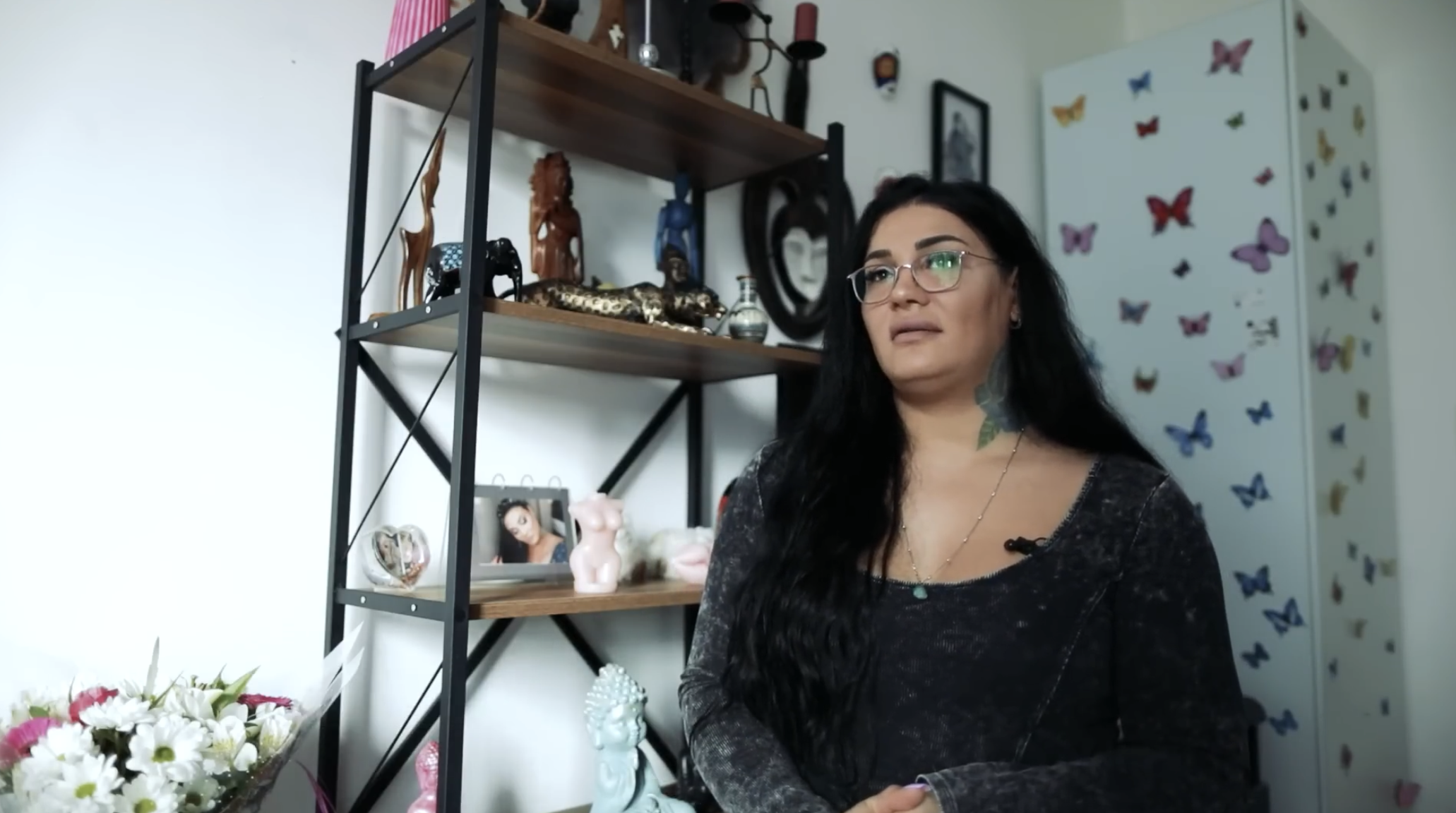
“I used to be angry at everything and everyone because I couldn’t see any warmth from anyone — only aggression on the street, bad comments. When I saw this warmth and love, I realized that not everyone is bad and that many people simply have the wrong information about us. They don’t know us. Many people who I used to hate now support me because I showed them that we are not bad people and that we are just like them. I think I have changed their perception of us, the transgender community, at least a little bit, which is what makes me the happiest.”
Family
“My sister is full of love, her heart is full of love, and it was impossible for her not to accept me for who I am,” is how Selena describes her sister, saying that she was her supporter from the beginning.
“I was raised half by my sister, my mother emigrated. I always say that she is my second mother. She always loved me for who I was and I will always love her for who I am.”
“The fact that they passed that hate law, as if they are protecting families from us, is complete nonsense to me. We are the last people from whom the Georgian people could suffer. We love Georgia more than anyone can imagine. We do not touch anyone’s family. The only thing we want is to be part of society, to freely receive education, medical services, and employment…”
Speaking about her mother, she notes that years ago she didn’t tell anyone about Selena — even though they had a relationship, she still hadn’t fully accepted her gender identity.
“Actually, to tell you the truth, she hasn’t fully accepted it yet, but she respects me and doesn’t hide it anymore. She’s no longer ashamed that I’m her child. It wasn’t like that at first. First of all, she thought about what people would say, that she did not raise her child well, that it’s her fault, etc. She blamed herself the most. She was angrier with herself than with me, but over time she understood everything, and my subscribers and the positive comments they wrote on my videos played a big role in this. I also often explained to her about myself, my gender, my identity. I tried to provide her with information.”
She has a grandmother in Georgia who raised her and whom she misses very much. She tells us that she didn’t tell her about me because she’s old and she didn’t want her to worry, but a neighbor told her recently. At first, her grandmother was angry, but then she talked to her and the relationship improved.
“I told her that I miss her so much. I miss you too, she said, and started crying. I said, ‘Do you want me to come and see you?’ “Oh, if you come, how could I not see you, she said. My heart was lightened. I wanted to buy a ticket and fly to Kutaisi right away, but unfortunately, I’m not a Belgian citizen yet and I don’t have the right to enter Georgia.”
Plans
She is eager to learn French well, as she believes that she will not be able to fully integrate until she knows the language. She also plans to continue working at her current job.
“I work as a cleaner, I’m not ashamed at all. A lot of people have written me comments like… a young person can’t work as a cleaner. Why not? Many young people work here and everyone respects them, there’s nothing shameful about that. Not everyone can sit in an office or be a CEO. I’m very free at work, I have a good salary and schedule, there’s nothing hard about it. I like it.”
After learning the language, she plans to become a Belgian citizen. Then she will be able to come to Georgia temporarily. First of all, she will see her grandmother.
“I miss Georgia so much. I miss absolutely everything so much. Sometimes, when I’m home alone, I cry. I cry when I see that so many foreign transgender women visit Georgia, walking the streets of Tbilisi and Batumi. I also wish I could be there and walk around too. Foreign transgender women are accepted by Georgians, they are only aggressive towards us. I also want to live in my country.”
“In Georgia, there are too many transgender women left without hormonal therapy. What has this done for any Georgian? I really don’t understand. Or what does my hormonal therapy, my transgenderism, do to anyone? Being transgender or gay doesn’t mean that you can point a finger at someone and they will become transgender or gay. This is complete nonsense, absurd. You are born like this and it is impossible to change later. I was born like this.”
When she comes to Georgia, she will definitely go to Mount Gomi. She says it is her dream.
“Maybe someone will think, you lived in Georgia, why haven’t you seen it before? Because I was afraid. I haven’t seen much in Georgia, my life there was mainly my house, a beauty salon, a shop and visiting some friends. I couldn’t go to a restaurant or cafe, I couldn’t take public transport, I couldn’t go to see things…”
She also says that she doesn’t know how safe it will be to come to Georgia, but the longing is so great that she doesn’t even think about it. The support and love she has received on social media has given her confidence, and she is sure that many people will welcome her with great warmth.
“Of course, there will be those who might be aggressive towards me, but I think they will be very few.”