

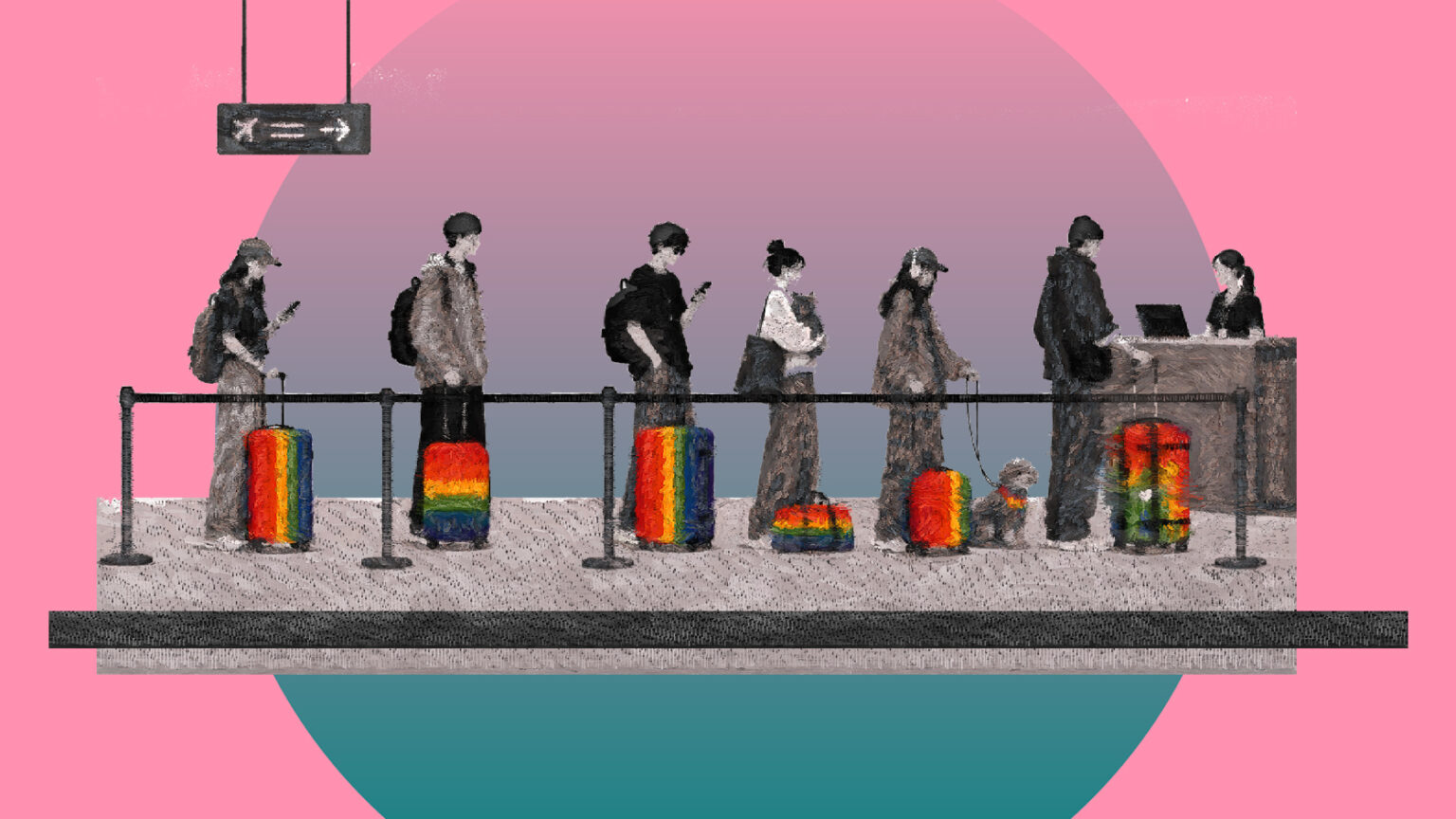
May 17 is the International Day against Homophobia, Biphobia and Transphobia, which queers in Georgia have never had the opportunity to celebrate safely, and in recent years they have been met with a series of repressive laws. The intensification of political homophobia, hate speech, and attempts to restrict freedom of speech and expression have further increased the risk of oppression, exclusion, persecution, violence, and a sense of insecurity. This situation forces our fellow citizens to make a daily choice: to remain in their homeland or to continue their lives in exile.
This path, which is sometimes the only way for queer people to survive, be free, and live in peace, is not easy. It usually involves separation from family, home, friends, and loved ones. Starting a new life in a completely foreign environment, surrounded by strangers, is often accompanied by feelings of loneliness and alienation, among many other difficulties.
In this article, queer immigrants talk to Aprili Media about their personal experiences. They share the reasons why they decided to leave their country; they tell us how their lives changed in emigration; they talk about family, love, loneliness, freedom, and what they miss, what they experience, and what worries them most when they are far from their homeland.
“It breaks my heart that my parents are getting older and I have to be away from them”
Tamar Jakeli is 30 years old, she left Georgia exactly one year ago, on May 15, 2025. She always had the feeling that living abroad would be a more rational decision for her, but she “couldn’t emotionally give up” Georgia. According to her, she moved to another country because of real danger, threats, repressive laws, and a desire to start a new life, but the main reason was that she had lost hope for quick changes in Georgia. She now lives in Belgium and is at a stage of emigration when her everyday life is full of challenges.
Despite having several years of experience living abroad as a student, she could not have imagined that she would have to deal with so many bureaucratic, household, or financial difficulties. In her experience, there are many more obstacles for an asylum seeker. For Tata, finding long-term housing proved to be the most difficult, and she had to change residences several times.
“Personally, I am more in survival mode than development, however, I have the feeling that I am building something new with my partner. Perhaps this path will gradually become easier for me, everyone tells me so,” Tata tells us.
We asked which one of her experiences as a queer person are not understood in other countries:
“They don’t understand how important a sense of mission I had in building Georgia’s democracy. They don’t understand why and how I sacrificed so much personally when my country made it impossible for me to live an equal and free life. They don’t understand why I still miss and love the country with which I am in a toxic relationship. They don’t understand why I still follow and experience the news in Georgia as if I were still there.”
Despite everything, for Tata, her homeland is the place where she feels the most sense of belonging and where she has the most precious people. When she mentions home, she first thinks of her childhood — her parents, grandmother, and sister, and recalls moments from protests, marches, and meetings at the Tbilisi Pride office. She misses the time when she believed that there was a possibility of building a better country. At the same time, she thinks about returning regularly, sometimes every day, but rationally understands that now she must build her life elsewhere.
“My home is still Georgia, but I’m trying to build something solid here too.”
Tata notes that the most important thing that emigration has taken away is a sense of one’s mission and social role. When asked what one misses about being far from one’s homeland, she says:
“It breaks my heart that we have not been able to defeat the regime. It breaks my heart that so many patriotic people are so oppressed and that I can no longer see the end of this oppression. It breaks my heart that my parents are getting older and I have to be away from them.”
Tata says she feels guilty towards queer people who continue to live in Georgia.
“I want them to not only be safe, but also to be able to develop themselves, get an education, get jobs in interesting fields, travel, be open, build healthy relationships. Unfortunately, I think that in Georgia they will have fewer and fewer opportunities for all of this.”
She notes that it would be difficult for her to give anyone advice in this regard, because emigration is a rather difficult path and requires perseverance. She believes that the experience of queer immigrants is more difficult than people say, but for many people it is still a liberating path, bringing stability and prosperity.
“My home now is my very gay family and the peace this country gives me”
“Homeland is like forbidden love,” a queer immigrant living in Belgium told us when we asked them to share what their homeland is, and where they first thought about leaving in the spring of 2022. This happened when, according to them, financial and career problems were added to the already difficult life caused by queerness in this country. The reason, along with complete hopelessness, was the feeling that they had lost this battle. In early 2023, they finally left Georgia.
“Homeland is like forbidden love (how symbolic in terms of queerness) — absolutely all circumstances and objective opinion indicate that you should not love something that hurts you, rejects you, does not allow you to be happy, but for some inexplicable reason you still love it.”
When thinking about her homeland, she remembers her family members, friends, and everything she left behind, “that she loves so much or hates so much.” She says she has no plans to return:
“I make small theoretical assumptions in deep imaginations, but in reality I never think about it and I can’t imagine it. It’s more like a fairy tale, an unrealistic dream/imagination. I don’t believe that Georgia will ever become the country I fought for so many years to create.”
While away from Georgia, she tries to always avoid sentimentality, but what hurts her the most is that what she was once a part of continues without her. What she misses most in Georgia are the familiar faces and nature, the company of friends, where she felt safe and accepted. She tells us that he also misses the “Georgian” shawarma very much, and she manages to cook the rest of the dishes herself.
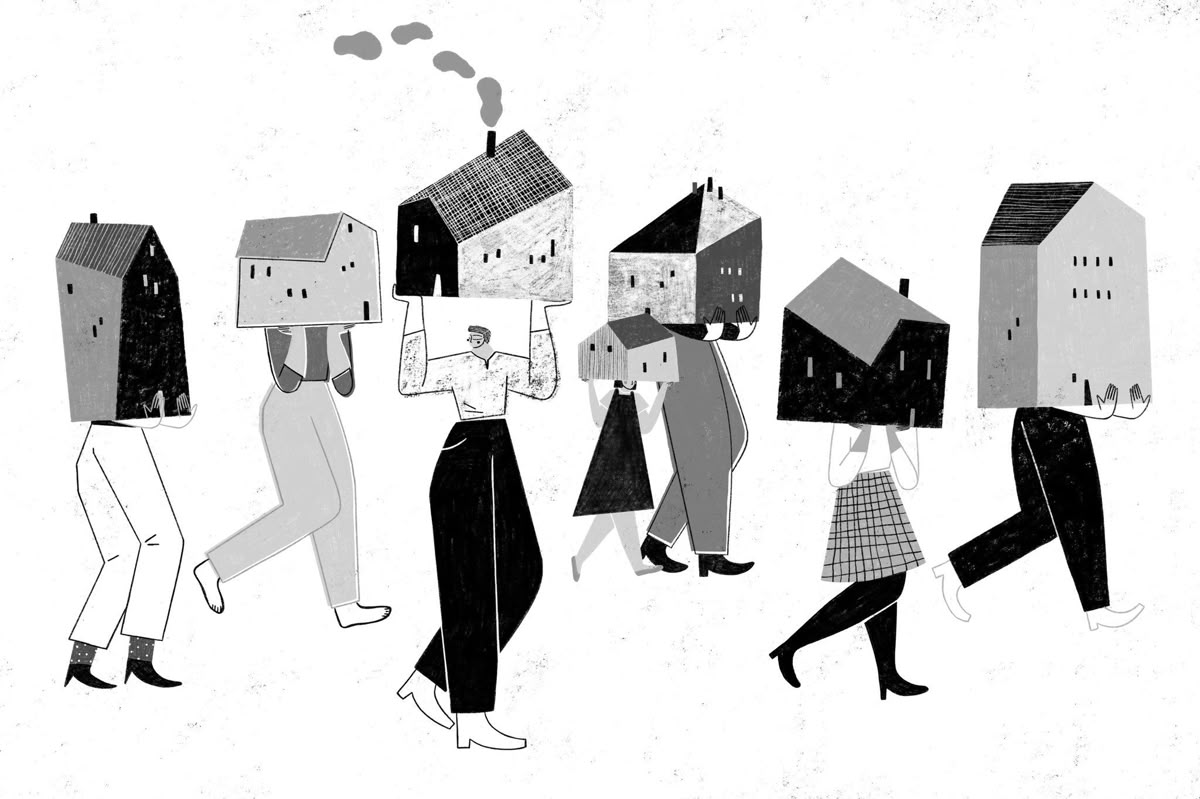
She says that one of the important things that emigration took away was the routine she had while living here.
“When I woke up in the morning, I knew who I was, what I was doing; I knew what kind of coffee I liked, what friends I would see at the end of the day, which way I would go to work; I knew what kind of chocolate I liked, etc.”
She also shares with us the difficulties of emigration that she had to deal with at the very beginning.
“I would say that my entire personality in Georgia is not understood here, who I was and what my role was in society. When you come here, your personality doesn’t exist anymore and you have to create yourself from scratch. [I couldn’t imagine] that I would lose my career and have to do work that I had never done before. Also, that it would be so difficult for me to learn a new language.”
She calls the queer immigrant experience the most stressful, but she says it grows you so much that once you go through it, you can never imagine what life would be like without it. She describes her own experience in one word: “transformation.”
We asked what “home” means to her now:
“My home is my very gay family, my partner, my cat, a house where I chose and built everything with my own hands, and the peace that this country gives me.”
Now her life is full of happiness and hope — with lots of goals and plans, many small difficulties, but with the belief that everything will get better and better.
“It was dangerous to stay, I could have ended up in prison for a long time”
Gender researcher Aia Beraia, 36, lives in Belgium. She has thought about leaving many times over the past 8 years — she has gone there periodically, but has always returned. She finally decided to leave the country last fall, after the country passed new repressive, human rights-restricting laws. According to Aia, for her, as a queer person and at the same time, an activist, staying in Georgia became dangerous — there was a risk of long-term imprisonment.
She says that a local queer living in Belgium finds it difficult to imagine living and working in such a dangerous and hostile, homophobic environment as queers have or have had in Georgia.
“It’s hard to imagine here that you have to hide your personal relationships in Georgia. It’s very difficult to have a partner openly, to express your attitude towards them in public. It’s hard to believe here that they could blackmail you, try to tarnish your reputation, through your relationship, through the illegal distribution of your personal correspondence or other material.”
She recalls that she felt safest mostly in organizations, bars, and clubs, although she emphasizes that along with the repression, the number of such spaces in the country has also decreased. She tells us that she worries about the remaining queer people in Georgia.
“I know it is difficult for them to feel safe, secure and free; I know they are told that they are “radicals” who must be silenced and disappear, giving way to violence, injustice, extremist ideologies; I know it is difficult when a regime distorts reality and distorts the meaning of all concepts with its narratives. It is difficult to live when all essential values are being disrespected.”
Aia shares that forced migration is a very stressful and challenging experience, which has shown that learning new things and self-development is always possible. According to her, people come to this decision because there is no other better way out. As she says, emigration is not about having fun, living in luxury, and “glittering” experiences, which are often mistakenly and superficially associated with the LGBTQ+ community.
We also asked her what comes to mind first when she thinks of his homeland. She told us that for her, her homeland is a unity of freedom-loving and caring people. And when we asked her to name the first thing she associates with home, she said: “Unfortunately, I have never had my own home. When I think of “home,” I think of homelessness and the housing crisis.” She also shared that she misses her mother the most in her homeland. She does not think about returning — as she says, the dictatorial regime in Georgia is a threat to her.
“I miss hanging out with friends, doing nothing, laughing, and feeling light.”
These are the words of a 37-year-old Georgian queer immigrant living in New York. He first thought about leaving Georgia in the 1990s. It was when he first saw MTV and realized that “there was somewhere else, another reality,” where he would feel comfortable. Before emigrating, he would never have imagined how difficult it would be to start all over again. According to him, there is no theory, book, knowledge, shared experience that can prepare a person for this, because everyone goes through this stage in their own way. It was emigration that made him realize his real strength and resilience.
“Emigration showed me very clearly what it’s like to live without a sense of belonging. Your brain has a hard time accepting that something (homeland) should have been mine, but it couldn’t/wasn’t — where I should have found contentment and love, I found rejection.”
He also says that people far from Georgia don’t understand how painful it can be to feel when your desires are perceived as “criminal.” He describes the experience of emigration as difficult, especially in the early stages.
“I couldn’t believe that I had normalized being in an oppressed position, not having a stable partner, inequality. I had so accepted the idea that I would never have a ‘normal’ life, my entire perception of myself was built around it — I was wrapping myself up in the name of ‘difference’, which gave me very distinctive experiences, but over time I realized that this was a self-preservation instinct, a response to trauma.”
He has been living far from Georgia for 5 years now. For the first two years, he actively thought about returning, but now he no longer has the desire to do so. What he misses most is gathering with friends, doing nothing with them, laughing and having fun — this was the space where he felt the safest. When mentioning his homeland, he first thinks of his loved ones, tone of their voice and smile.
“When I think about home, at first, episodic memories come to mind – the view from the balcony, the taste of instant coffee, the Tbilisi spring: the sun, the warmth, the breeze entering the room, and the fluttering curtains.”
At the same time — May 17, 2013, the expressions on the faces of those who dispersed queers in the photographs still give me a negative, traumatic feeling to some extent when I think that those people wanted other people dead, that they preferred that the other person not exist.”
He tells us that his life is now enjoyable, and everyday difficulties have become easier to overcome. As he says, “home” is now his own, because the feeling of security, peace, and tranquility comes from here.
“But it’s impossible to believe that until your nervous system has spent some time in a safe, calm, healthy environment and it becomes the norm.”
“I’m at a point where I often wonder where and what home really is.”
30-year-old Tazo Sozashvili first left the country to continue his studies, but decided to remain in exile when he realized that he needed himself more than anything else.
When asked: “What does homeland mean to you?”, he answers: “A home where you are not a guest.”
Half of my family and most of my friends are also immigrants. I’m at a point now where I often wonder where and what home really is.
When Tazo thinks about his homeland, Georgian food and wine come to mind first, as well as “the corrupt government of the oligarch and the corrupt, unfriendly opposition.” He misses Jonjoli with Kakhetian oil the most, although he adds that he knows he will soon miss the right to vote. He says he thinks about going back as often as he thinks about his future plans.
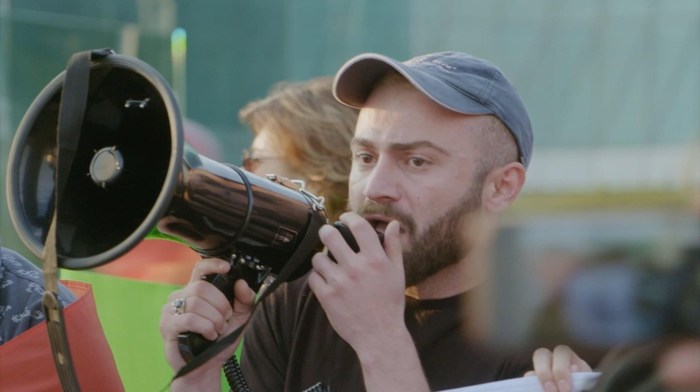
When we asked him what was the most difficult thing he could have ever imagined before emigrating, he replied that he didn’t expect it to be this difficult, if he were deprived of the opportunity to directly participate in the improvement of his own country. He believes that the most important thing he learned from emigration is the inevitable need to see local events in a global context.
He says that the experiences of queer people are as diverse as those of non-queer people — full of challenges and positives. He describes his own experience of emigration in one word — “necessity.”
He feels admiration for those queer people who continue to live in Georgia and appeals: “Take care of yourselves and each other.”
Finally, we asked Tazo what his life is like now, to which he replied:
“Today, I may live in a city where the government and police will not stop me from holding a May 17 or Pride march, and fascists will not attack me, but I will be severely beaten physically if I protest genocide in the street. The scapegoat changes not only with the change of time, but also with geographical location. More generally, the quality of life is much better than it was in Georgia.”
Every year, more people leave Georgia than return. In 2023, the negative balance reached 40 thousand. People leave the country for various reasons, including socio-economic challenges, unstable political situation, and repression.
The human rights crisis in the country, whether it be the hate law adopted in 2024 under the pretext of protecting family values, the disappearance of gender-related entries from legislation, the removal of LGBTQIA+ issues from the Human Rights Action Plan, or numerous laws restricting freedom of expression, with which the state has, in effect, openly refused to protect people from oppression and discrimination based on sexual orientation and gender identity — and has even become their oppressor — has further increased the forced migration of queer people.