

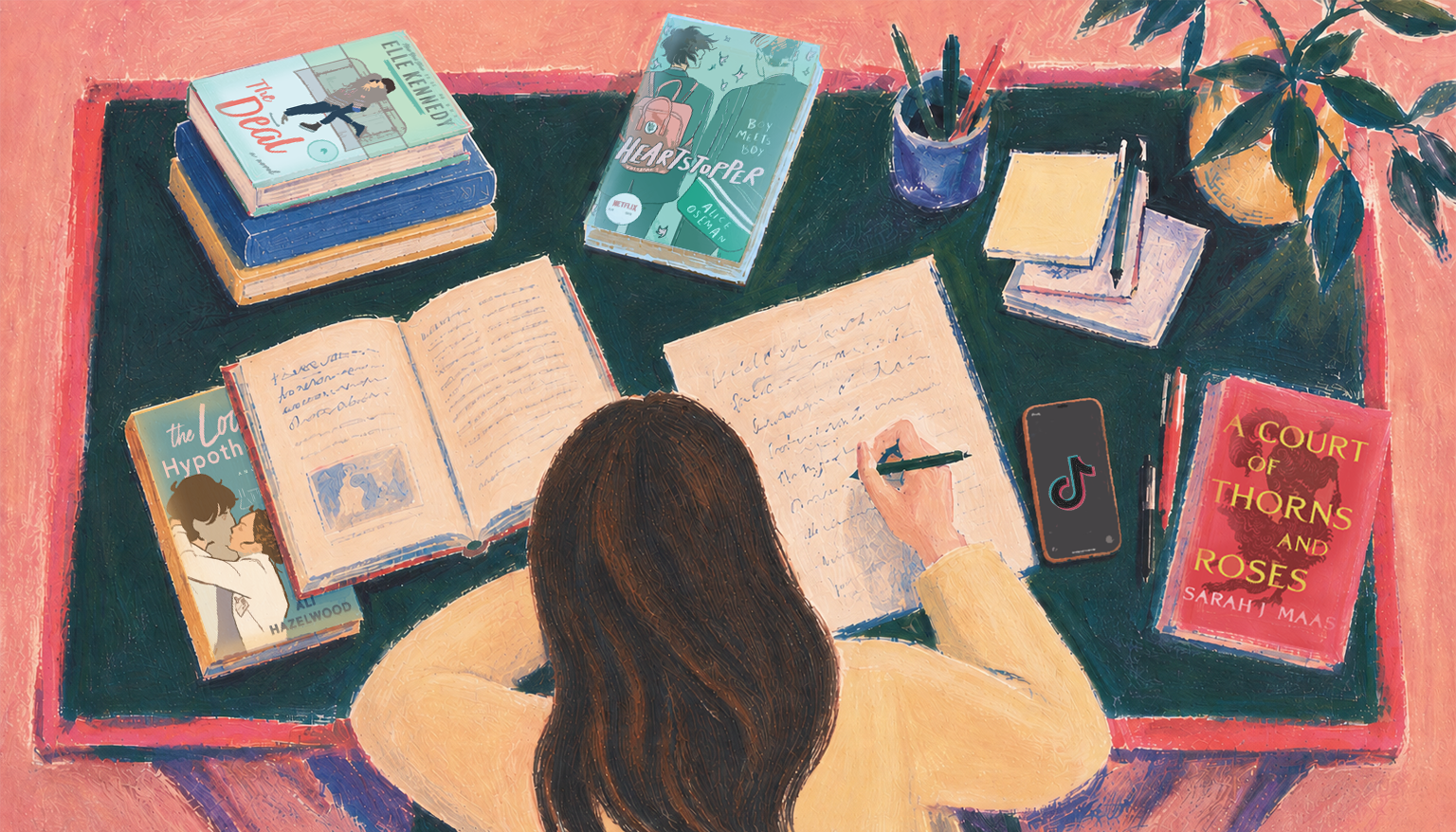
Peeta Mellark, Conrad Fisher, Gareth Graham, Wes Bennett, Johnny Kavanaugh, Zayden Riorson, Alex Nielsen, Ilya Rozanov, Nick Nelson — if you read contemporary fiction, especially fantasy and romance, then these names will be familiar to you. What’s more, there’s a good chance that one of them is your “book boyfriend,” whether you’re single or in a relationship.
These characters are not only consistently featured on the most popular lists of “book boyfriends.” They are characters created by female authors and, at the same time, are considered the main stars of BookTok.
- #BookTok isn’t just a hashtag on TikTok. It’s a community of readers, authors, and content creators where people share what they’re reading, what they’re writing, and which books they recommend.
Along with the popularity of the characters and books, the phrase “men written by women” has become widespread on social media. In this article, we’ll explore what this trend means, what readers and authors are saying, and how it became so popular on social media and beyond.
For example, readwithniniko is a page for a Georgian bookworm. Nino has loved reading since childhood. Over the years, her favorite genres and authors have changed many times, and recently she has switched to modern novels — books in which, as she says, she knows that “everything will be okay in the end.” On the road, during boring meetings, or before bed — she reads almost every free minute.
“A year ago, I deleted all social networks and downloaded TikTok. At first, I was watching funny videos, and then I accidentally came across an English-speaking book talker who was talking about the exact books I was reading. No one here was reading similar books (at least, I didn’t know anyone). I was over the moon. I didn’t know if anything like this even existed.”
#BookTok helped Nino discover many new books, authors, and genres.
“As a reader, I haven’t changed my reading habits so much as I’ve discovered new genres, like MM Romance [a subgenre of romance literature that focuses on male love stories ], and I’ve become addicted to it. There are some amazing books being written about queer couples, and it’s really thanks to TikTok that I discovered them.”
Later, Nino decided to create a similar space on Georgian social media. Since the subgenres of contemporary romantic literature that interested her [Spicy Romance, Dark Romance, and MM Romance] were almost not discussed on Georgian BookTok, she decided to find like-minded readers by creating her own page.
“Just like you watch a good movie and want to share it with someone, it’s the same with a good book. There was no one around me with whom I could talk about these books, so I decided to try and dare, even though I’m in my late thirties. I’m very happy that I made this decision, because today I have gathered a lot of people, girls, around me with whom I can discuss books.”
Nino is most often contacted in private messages. She says that 90% of subscribers and readers ask her for Georgian translations of the books.
Speaking about romantic literature by female authors and the Men written by women trend, Nino told us:
“I think that the reason why romance literature by female authors has become so popular is because they have created male characters that modern women want to see […] It’s not just about men, it’s about women too, and relationships in general, because they’ve started talking about what’s right, what’s wrong, and what we need as emotionally available people in general.”
Written by Women — Female Gaze
Men written by women — male characters written by female authors — has become one of the most discussed topics on social platforms in recent years. The phrase, which has been spreading since 2020, has sparked a new discussion on social networks — what healthy masculinity means and what kind of partner women want to see both in literature and in real life.
The new trend has become a topic of discussion not only among readers, but also among researchers. According to them, this phenomenon is closely related to the concept of the “female gaze”, which is considered the opposite of the “male gaze”.
In literature and visual arts, “The Male Gaze” mainly tells us about a perspective where women are often presented only as sexual objects, passive characters for male viewers, and not as full-fledged, independent heroes. For example, in the dictionary-reference book of social sciences we read:
“Second-wave feminist Laura Mulvey first used the term “male gaze” in her 1975 essay “Visual Pleasure and Narrative Cinema” to explain the gender asymmetry of power in cinema. She argued that women are represented in cinema as objects because men are the ones who have complete control over the camera. The male gaze occurs when the camera presents women from the perspective of a heterosexual man, which in most cases means presenting women as erotic objects. Men are the active spectator, while women are the passive object of the gaze. This distribution of roles emphasizes the asymmetry of power between men and women, since power is in the hands of the active subject, the one who holds the camera and who can watch.”
“The Female Gaze” allows female authors to abandon traditional templates, themes, and notions, such as the “ideal male hero,” and create characters who are more empathetic, emotionally open, and focused on equal relationships.

For example, researcher Mazaia Elsa Zahrin published a thematic paper in 2025, where she examined Suzanne Collins’ “Hunger Games” character Peeta Mellark in the context of the popular phenomenon on social media, from the perspective of critical masculinity theory, and showed how he confronts traditional, toxic masculinity.
“It is often noted on social media that Peeta Mellark violates traditional gender roles. The character’s traits, such as caring, emotional intelligence, vulnerability (sentimentality), and love of cooking, depart from the hegemonic masculinity model, according to which a man should be strong, dominant, and devoid of emotions.
“The character of Peeta shows that masculinity can encompass a variety of traits and behaviors, including those that are often associated with femininity in society. This is what makes him a relatable and appealing character to many readers around the world.”
The author of the work believes that written by women is no longer just a literary trend — it also reflects a broader cultural shift and forces us to rethink what it means to be a man in modern society.
Although the “men written by women” trend has sparked healthy discussion and even sparked talk of possible changes in social norms, literary critics and psychologists on BookTok’s popular genres also point to certain risks.
For example, idealized fictional characters can create unrealistic expectations in real-life relationships. However, this view of romantic literature can be controversial. Some argue that readers are better able to distinguish between fantasy and reality, and that romantic books, on the contrary, can improve relationships by stimulating communication and passion. While romantic books offer us an escape from the complexities of everyday life, we should still maintain a critical perspective and clearly draw a line between the fictional world and reality.
Additionally, in some of BookTok’s popular genres (such as Dark Romance), authors often romanticize toxic and aggressive behaviors. Additionally, while the books are officially intended for adult readers, the algorithm reaches a much younger audience, including teenagers.
According to readers, the problem arises especially when the violation of personal boundaries, control, or isolation is perceived not as a conflict to be resolved, but is presented and rewarded as a “romantic ideal.” The mass consumption of such content during adolescence and the uncritical acceptance of similar behavioral models may reinforce or normalize problematic perceptions about relationships.
These criticisms don’t change the fact that BookTok has significantly changed the culture of reading. Books that were previously only discussed by literary circles are now accessible to millions of people. At the same time, the platform has created a global community around books, where readers share recommendations, discuss characters, and discover new authors.
#BookTok, books and “therapy”
“Therapy is expensive, read these books” — you may have come across this trend on TikTok. Of course, nothing can replace psychotherapy and professional counseling, but this trend is popular on BookTok, and content creators often offer thematic books on various topics, the authors of which are women.
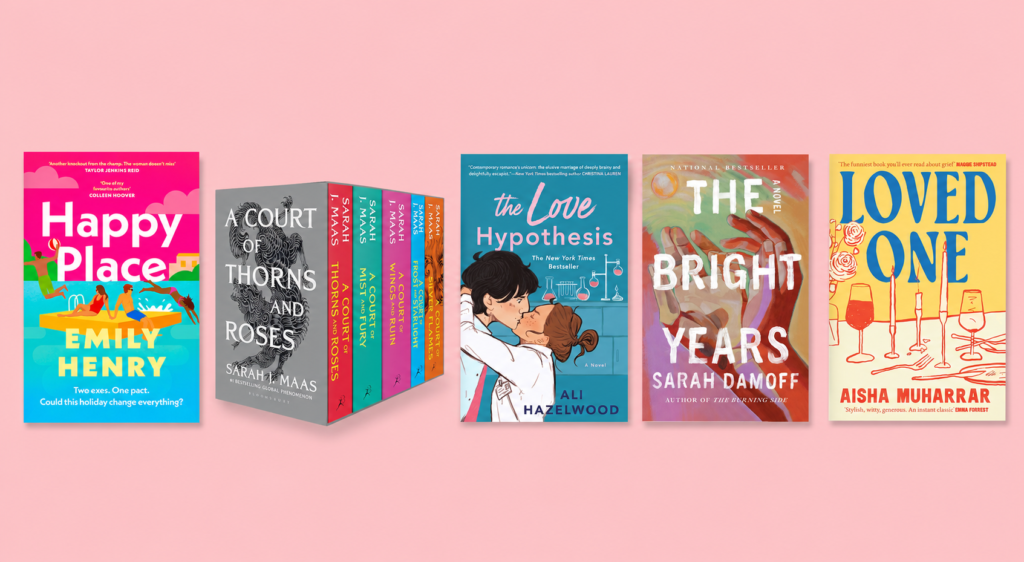
For example, in this list you might find books about love, friendship, grief, trauma and mental health, finding yourself, or “family”:
- Sarah Damoff’s bestselling novel “The Bright Years”;
- Emily Henry’s novel “Happy Place”;
- Virginia Evans’ debut novel, “The Correspondent”;
- Aisha Muharrar’s novel “Loved One”;
- Liz Tomford’s Windy City (Chicago series) is one of the most popular modern sports romance series;
- Ali Hazelwood’s “The Love Hypothesis,” which is set for release in September.
- Sarah J. Maas’s A Court of Thorns and Roses (ACOTAR) is one of the most influential and iconic series in the modern romance genre;
- Ashley Poston’s popular romance book “The Seven Year Slip.”
- Heartstopper is a popular graphic novel (comic) series created by British writer and illustrator Alice Oseman.
Although you will find fans of all genres on BookTok, the so-called romcoms (romantic comedies ), young adult literature, and “Romantasy” (a synthesis of romance and fantasy ) are particularly popular.
If we go back a few decades, reading romance books was associated with a certain stigma. Today, the picture has changed radically. Sales of the romance genre increased by 52% in 2022-2023 . For many readers, this is the first time they have found themselves on the pages of a book. The TikTok community of book lovers — #BookTok — played a major role in this transformation. The adaptation of several books into films or series has also gained great popularity.
The genre has also undergone a tangible transformation in recent years. While stories previously focused primarily on white, heterosexual characters, today readers are exposed to a much more diverse range of characters, stories, and themes. These books increasingly feature characters of diverse backgrounds, ethnicities, and sexual orientations, allowing more people to see themselves in the pages of a book.
Instead of stereotypical, rich or noble men and submissive women, real people with whom readers can identify themselves have entered the arena. The books are full of strong, independent characters who break social norms and follow their own desires. Most importantly, women see themselves in these novels — it doesn’t matter whether the action takes place in a fantasy world full of dragons and fairies or, for example, on the streets of New York.
Romantic literature and its subgenres are not just entertainment. In a world full of chaos, stress, and bad news, for many it can be a source of hope, refuge, support, empowerment, knowledge, inspiration, or a way to escape reality and everyday stress.
What Do the Authors Say?
Although romance is often described as superficial or banal, during the COVID-19 pandemic, it has become a temporary escape from reality and an emotional relief for many readers. Modern romance is not just about love stories. These books also touch on topics such as the experiences of people with disabilities, sex and consent, family relationships, loss, grief, and personal growth.
New York Times bestselling authors Helen Hoang (author of The Kiss Quotient) and Emily Henry (author of Beach Read and People We Meet on Vacation) spoke with wbur.org about love and romance.
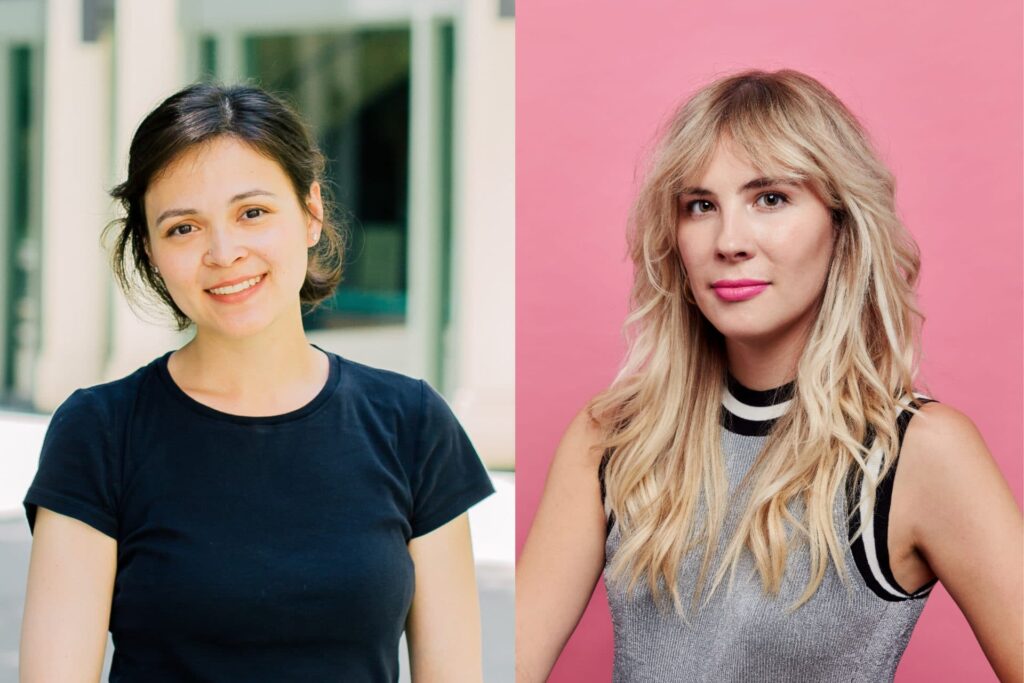
Emily Henry says that romantic literature is not necessarily a shameful or awkward genre. In her opinion, love is inherently a vulnerable experience, and the author’s main goal is to authentically convey the emotions and vulnerabilities of the characters.
“When I’m writing sex scenes, that’s probably the only time I have to convince myself that no one will ever read this text. Otherwise, I start worrying too much about how the reader will perceive it, instead of trusting the characters and trying to make them as honest and vulnerable as possible.”
Helen Hoang says that although she has loved romance literature since childhood, it is important to her that this genre is not just about love and that it also covers deeper themes. Her books also deal with growing up, family, loss, various life experiences, and self-discovery.
“At first, I didn’t even realize that I was doing something new. I just had an idea that seemed very natural to me and, at the same time, very exciting. That’s why I wrote it exactly that way. It was only after I finished the book and published it that people said to me, ‘Are you crazy or a genius?!’ because I had an autistic woman and an escort man as the main characters.
“I’m very proud that through my books I’ve been able to increase the representation of autistic people and people of Asian descent. Especially now, when the political environment is so difficult for them, especially people of Asian descent.”
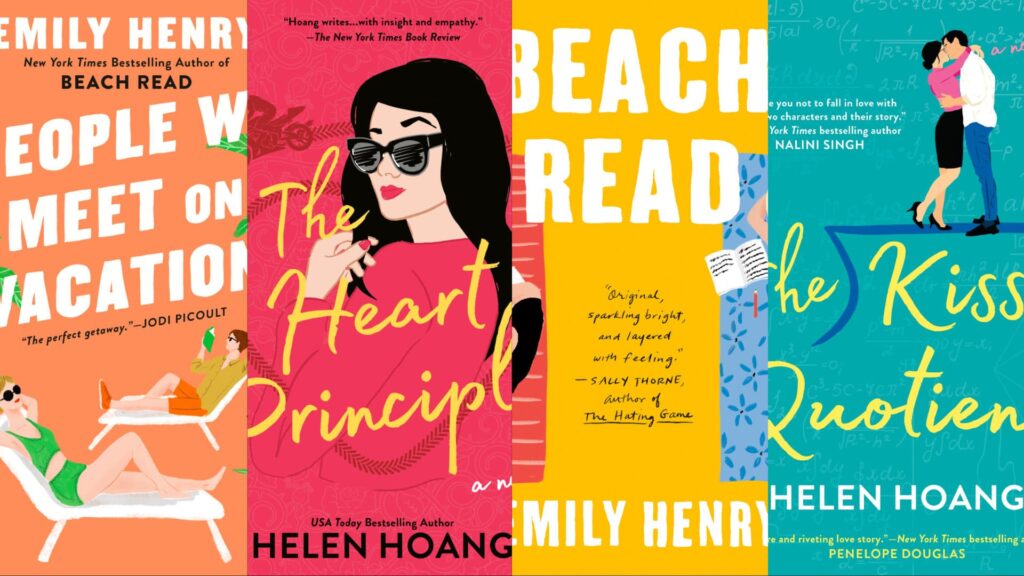
According to Emily Henry, the derisive attitude towards romantic literature is also historically conditioned by the fact that this genre is mainly created by women and written for women. For centuries, women’s experiences, emotions, and daily lives were considered “unimportant”, which is why the art they created was also given less value.
“That’s why it’s especially important to realize that the topics we think about most often and that are most precious to us are the ones that really deserve attention. Our everyday, seemingly ordinary lives are the experiences that most people share and about which it’s no less valuable to write.”
“Furthermore, it is revolutionary to say that women’s pleasure is not shameful. There is a reason why we have been taught for so long to view these topics as trivial, ridiculous, and superfluous. That is why it is so important to give this experience the value it truly deserves.”
Tio Dvaladze is an artist-architect by profession, but as she says, she would like her main occupation to be reading. Among other benefits, BookTok has also taught her time management — she knows exactly how much time to devote to reading and how much to sharing and creating content.
“I always wanted to create content that would be close to movies, music or books, because I wanted to share this endless love of mine with others, and I also really wanted to connect with people who share my tastes. By the way, I met a lot of like-minded people, which is the best thing — talking to someone who has the same love and who knows exactly how you feel about a work.”
Tio recalls that the novel that changed his life and turned her into a true reader was “The White Tatman” by Mayne Reed. Since her teenage years, she has mainly read classics and still has favorite classics, modern authors, and Georgian writers. She was 19 when she discovered fantasy. Brandon Sanderson’s “Mistborn” turned out to be an epochal book that opened the door to a whole new world for her as a reader.
“Later, on BookTok, I discovered a relatively new subgenre of fantasy — romance, which was the beginning of something new and big for me. My love for this genre gave me the courage to take the risk of starting to read in English, which I was very afraid of. And here I am today — I read fantasy in English as well as in Georgian, and then I share it with you on my social networks.”
Tio created her BookTok account in October 2025. The main goal was to find like-minded people and share her feelings and emotions. She says that the goal was achieved — she met many good people who, like Tio, are in love with fantasy and books in general. However, as it turned out, genre stereotypes also appear in the Georgian space, which is also compounded by the language barrier:
“Many people write about the language barrier. Most often, they wonder why these books haven’t been translated into Georgian. They haven’t been translated because fantasy hasn’t been widely read by Georgian readers, because it’s considered the weakest genre.
You know, they often say, “What’s the point of reading fairy tales?” Or that fantasy is fairy tales for the great, “A genre from which you can’t learn anything is a waste of time,” etc. Once, someone wrote to me in the comments that you should read Dostoevsky, because there is a stereotype that if you have read Dostoevsky, you are a “cool” reader. I recorded a separate video for that person and showed them my Dostoevsky collection. By the way, I really love this writer’s work, I have read all the novels by him.”
Today, Tio’s favorite genre is fantasy and its subgenres, from epic fantasy to romance. The only genre she reads with less enthusiasm, but still does, is dystopian fantasy.
As for authors and books, Brandon Sanderson’s Mistborn trilogy was a turning point for Tio, while Sarah J. Maas’s series (ACOTAR , Throne of Glass) found their way into her daily thoughts and even dreams. Rachel Gillig’s gothic fantasy (One Dark Window, Knight and the Moth) also holds a special place – due to the synthesis of two favorite genres, Tio says that this author seems to write specifically for her.
When discussing the Men Written by Women trend, Tio emphasizes the historical context. According to her, the majority of classic authors were men who drew love stories or characters from their own perspective, and therefore love, romance, and literature in general were known for this perspective. However, according to her observations, the turning point came as early as 1813, when Jane Austen created Mr. Darcy in Pride and Prejudice and turned classic literature upside down.
“I think these writers unite women, form us into a single community, give us what we lack in the real world — freedom, social acceptance, adventure, love, and, most importantly, a happy ending, which we often don’t have in our reality. They, like the Chronicles of Narnia, hold up a magic door for us to escape from reality.”
As a reader and bookworm, Tio would like to see more modern fantasy translated into Georgian, and she advises others to definitely give this genre a chance, as she believes it will change their lives for the better.
BookTok, the phenomenon of written by women, and many new trends have shown once again that literature, themes, and characters raise new questions about relationships, change perceptions of gender roles and masculinity, and start discussions. And at the forefront of these changes are female authors.
Of course, it is a misconception to equate the work of women authors with only romantic literature. For centuries, women have written significant works of history, philosophy, fantasy, and other genres, with complex and multidimensional plots and characters. However, modern books and new trends have once again demonstrated how much influence women writers can have on modern literature and the culture of readers. This has become another space that has found a new audience for the work of women authors — with new trends, discussions, and possible socio-cultural changes.