

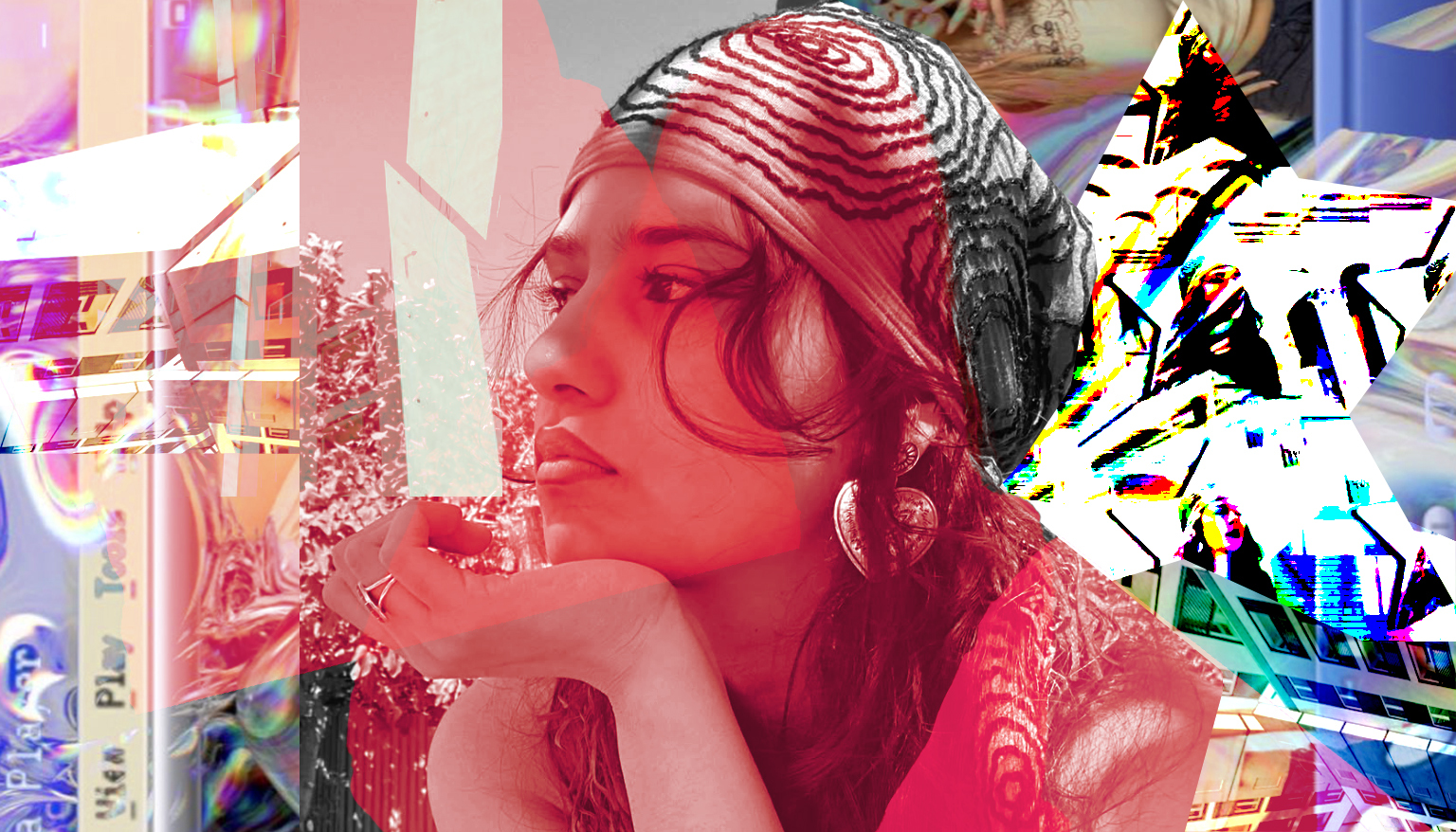
The sound of airplanes, the noise of the highway, relationships, inequality, airport settlement, injustice, news about Abkhazia, Svaneti — the sounds, places, and concepts in the work of young musician Elene Gigani are not vague. On the contrary, they are themes that are collected in memory and expressed through music.
The stage name Deena is an example of this. “Deena” means girl in Svan, and for Elene, this became a statement. She has been writing original music for five years now. In 2022, she released her debut album LOW LOVE, and is currently working on a new album. Singer, musician, producer — over the years, the regalia have diversified.
Aprili Media spoke to Deena about her musical journey, inspiration, socio-political context, and the challenges that female musicians face.
First Emotion in Music
No one in Deena’s family was a musician. She cannot remember how her musical talent was discovered, but she vividly remembers the first emotion that made her connection with music inevitable.
“I remember one feeling, very vividly. I was 6 or 7 years old and a relative of our family was listening to a track. It was a Japanese song, performed by a child, and I remember that this track evoked strong emotions in me: my heart raced and tears came to my eyes. It was after that that I started looking for this emotion in music. I had never felt anything like this in my life before, and music was the only thing that made me feel it.”
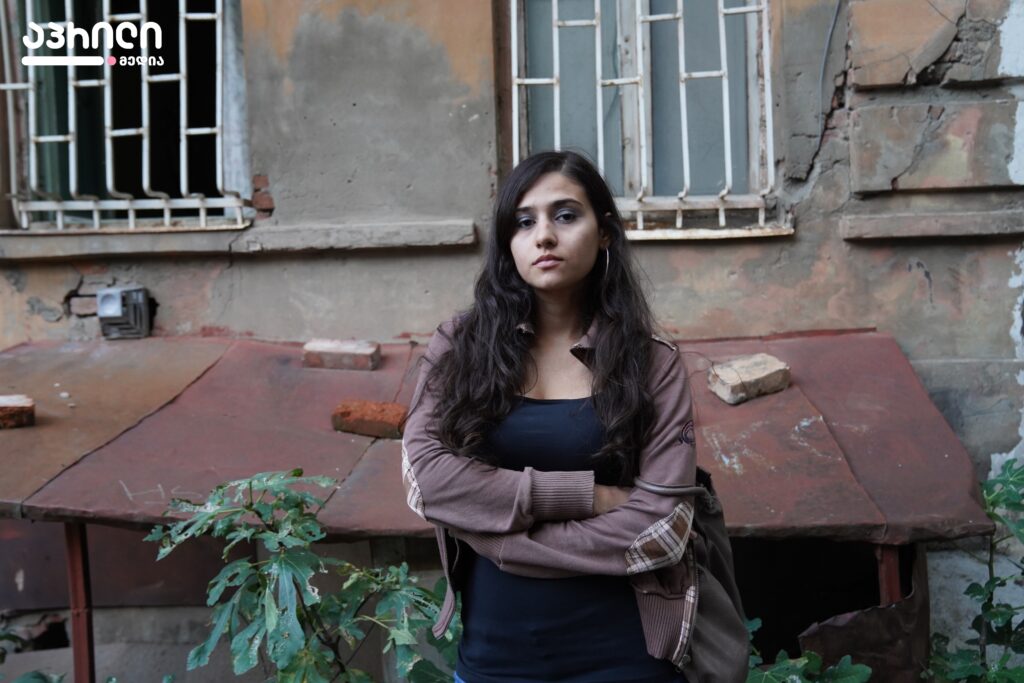
This is how Deena’s path in the world of music began. First, she studied folk songs and playing the panduri (traditional Georgian instrument). Then, she was enrolled in music classes. She never felt nervous or anxious on stage, and she attributes this to participating in school performances and public events.
“I’ve never had stage fright or a complex. […] Not even during my first live performance. School and vocal lessons gave me a kind of immunity — being on stage became my natural state.”
Covid, Protests and the First Album
During the Covid pandemic and isolation, Deena’s life changed, as did many others. She was left alone with herself, not going anywhere, and had a lot of time for reflection and discovery. She had a lot to say that needed to be expressed, and this medium turned out to be music.
“I felt a kind of protest. Suddenly, there were people around me who were making music, but almost all of them were boys. I also felt confused. Of course, I knew about Georgian female musicians, but I didn’t see young people around me who were actively making music and were girls. […] Music was so important to me, that’s how I wrote my own song.”
Although Deena viewed music as a hobby at the time, 10 months of hard work and improvised music created on her phone paid off and she found herself in the experimental music label Didube Records. It was in this space that she worked on her debut album LOW LOVE with Nika Pasuri. The album was released in 2022.
“The album combines disharmonies, dissonances, and unexpected musical transitions with Deena’s melodic and sentimental vocals. It tells us about the contradictory reality in which a teenage girl lives — with Internet-based relationships and the influences of global culture,” is the official description of the album.
Blush, Girly, Needy, Nesa and 7 more songs are included in Deena’s debut album. As Deena says, the lyrics are about relationships, the hardships and problems of a teenage girl in Georgia, and the inequality between men and women. While working on the new album, the style, the words, and the lyrics changed.
“I was a teenager then, struggling with new emotions. I think that after the release of LOW LOVE, it was as if one chapter in my life ended and a different, more serious phase began. I reconsidered some issues, became more aware of my values, I also understood my identity more, and since then it has happened that most of my new tracks deal with political and social issues.”
At first, it was difficult for her to talk about these topics, she didn’t know how to start. However, every day, when she left the house, she saw mothers and children sleeping outside, grandmothers with things taken out of their homes to sell so that they could eat bread, etc.
“It was very difficult to struggle with this and to hide this emotion. […] I felt helpless and even today, I don’t know, given the situation we have, people are being arrested for nothing, and that makes me very angry. […] That was my inspiration, to turn that pain into some kind of power and art.”
Finding a Style and a New Phase
Deena’s sources of inspiration are places, facts, and situations; she hears and sees everything that happens around her.
“My whole life, I hear people talking about Abkhazia. I was actually supposed to be born there, but I wasn’t. […] For a while I was alienated from it, I didn’t understand where I belonged and whether I should be here at all. Well, this PTSD and trauma from my family may have been passed down to me genetically, because all my family members are refugees from Abkhazia. […] Also, Svaneti, the values there, have had a huge influence on me — even though I was born in Tbilisi, I’ve spent a lot of time there as well. Where I live is also very important. It’s near the airport settlement, that’s what my neighborhood is called, and it’s a slightly different environment, unlike the center of Tbilisi.”
Working on music independently helped her find a new genre and style. It was a cognitive process for her. She thinks she discovered strange emotions and views.
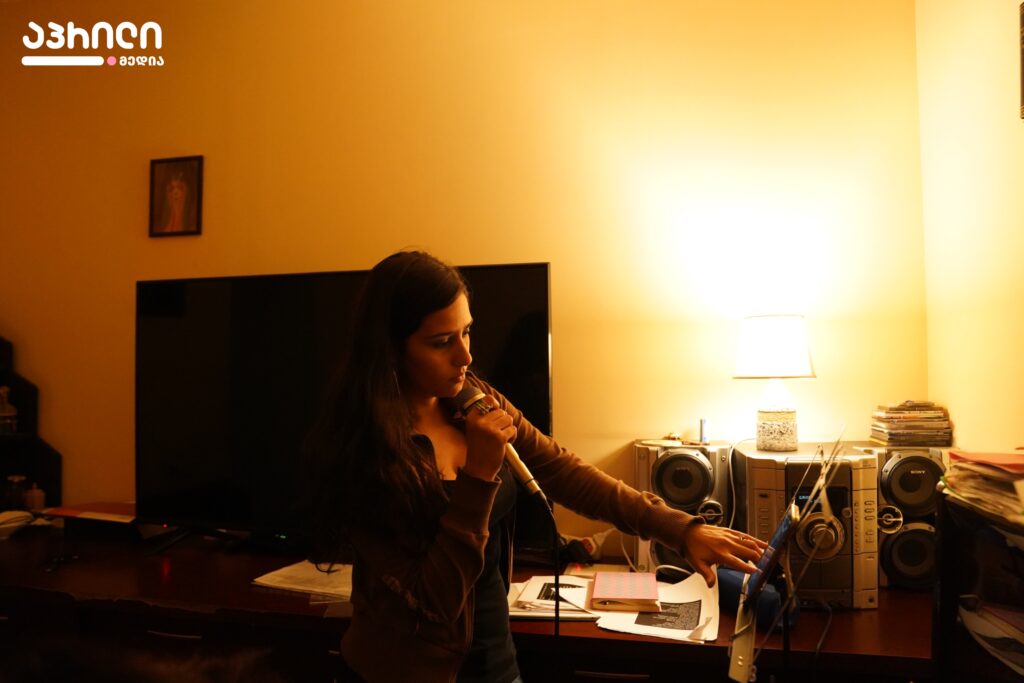
“For example, I discovered how to express a specific kind of emotion through sound, and not just through vocals. It was a very interesting process. My new tracks are more Cyber Trap and cyber punk in genre. I’m a sci-fi obsessed person and I mostly express that side of myself in my tracks.”
For Deena, the process of writing music is both relaxing and liberating. Sharing her creations with the audience on stage is associated with responsibility – she must perform well and present herself well.
“I’m very happy when I’m on stage, because I get to interact and communicate directly with people who listen to my music, or with people who, for example, don’t listen to me and don’t know who I am, but I can give them my music, something to say. It’s a kind of challenge, who will be your collaborator, who will be familiar with what you’re talking about, etc.”
She says that people between the ages of 25 and 35 listen more on various platforms. She also says that there are many people between the ages of 16 and 24, as well as older people.
Challenges for Female Musicians in Georgia
As a female artist, she has experienced various kinds of difficulties and discrimination. One of the most common cases that Deena tells us about is the questioning of women’s competence.
“They say that this music is not written by you, and many have had such experiences, but in my case it was so that all this was said by both men and women. […] Another case, for example, when you are a female musician, first of all, you are perceived as a sexual object, which is made more interesting and attractive by music and musicianship, and this is some kind of attribute, as if for a woman.”
Deena tells us about another contradictory fact: despite everyone talking about the emergence of more female artists in the Georgian scene and industry, most events are filled with men and organizers sometimes need an additional “reminder” to invite female artists. Deena finds this approach a bit incomprehensible, because everyone works the same, but for some reason the priority and visible ones are still more often male artists. She says that in order to change, they need to talk more about these stereotypical views and artificial barriers.
“When a man does something, no matter what, everything is serious, as if it’s not like that with women, and we have to prove that we can do it and we do it. […] All of that is not normal and we need to talk more about it.”
A Song about Georgia and Future Plans
Lil Star — Deena’s new song, the video for which was released in September, is about the political processes and protests taking place in Georgia. Lil Star refers to Georgia and the song is dedicated to Georgia, says Deena.
“This song is about the heartache and sadness when you want to help your country. You try to hold it in your hand, but you can’t, you can’t do anything, because there are so many obstacles in front of you, and you can’t leave this place either. Is it because you don’t want to leave, you feel a responsibility and obligation to be here and stand by your country?”
Heroes’ Square, Parliament, Government Administration — in the clip, Deena stands near various state institutions. She wanted to film an episode at the courthouse as well, but this would have been impossible due to new regulations that prohibit filming in court.
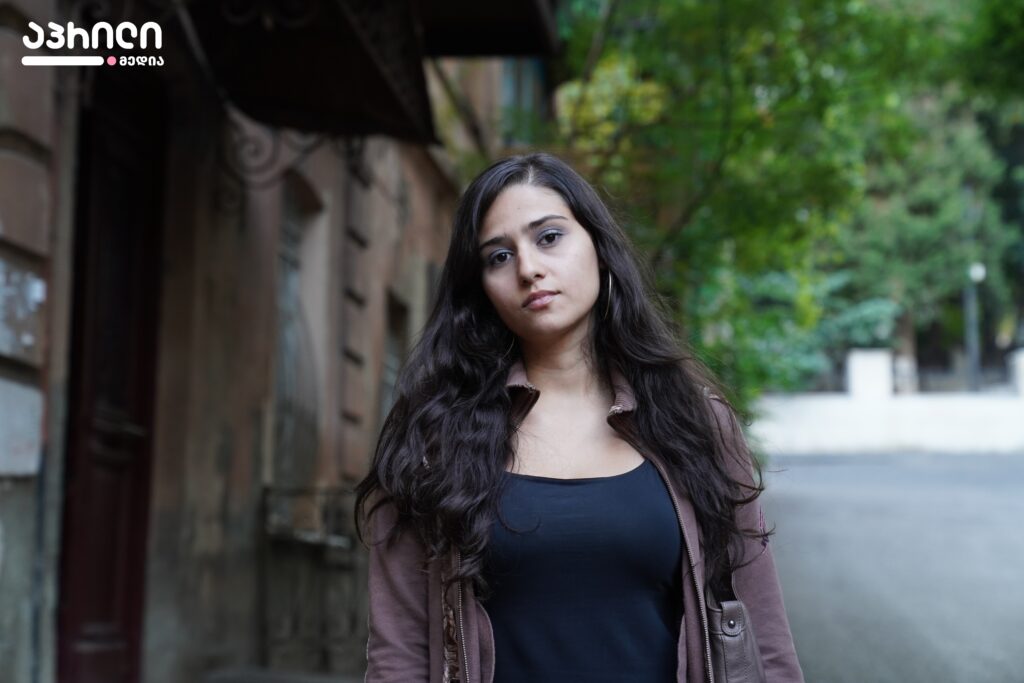
“In reality, these systems should be with the people and for the people, but in our reality, it happens that no one is with the people, no one listens to the people’s opinions, they are only focused on themselves, and our country is slipping away from us and it seems like we can’t do anything about it. There are continuous protests, but it gets worse and worse. When I want to talk about this or do something about it, I put it into art.”
For Deena, music is not just a genre, but a way to find herself and her voice. A medium through which she can express what she has to say, her sadness, and respond to injustice, social, and political processes.
“In art, we are all one, equal, and free. There are no labels. We are all members of a commune, creating something new and interesting and then sharing it with everyone. Art is a safe space for all people.”
Deena wants to live in an environment where people can think not only about survival, but also about development.
“I want to live in an environment where I no longer have to think about the basic everyday problems that not only I, but the whole of Georgia, think about. I want my mind to be completely focused on such issues: how to develop, what to learn, discover something new. Most people today think about how to survive from day to day — and this is not a good state.”