

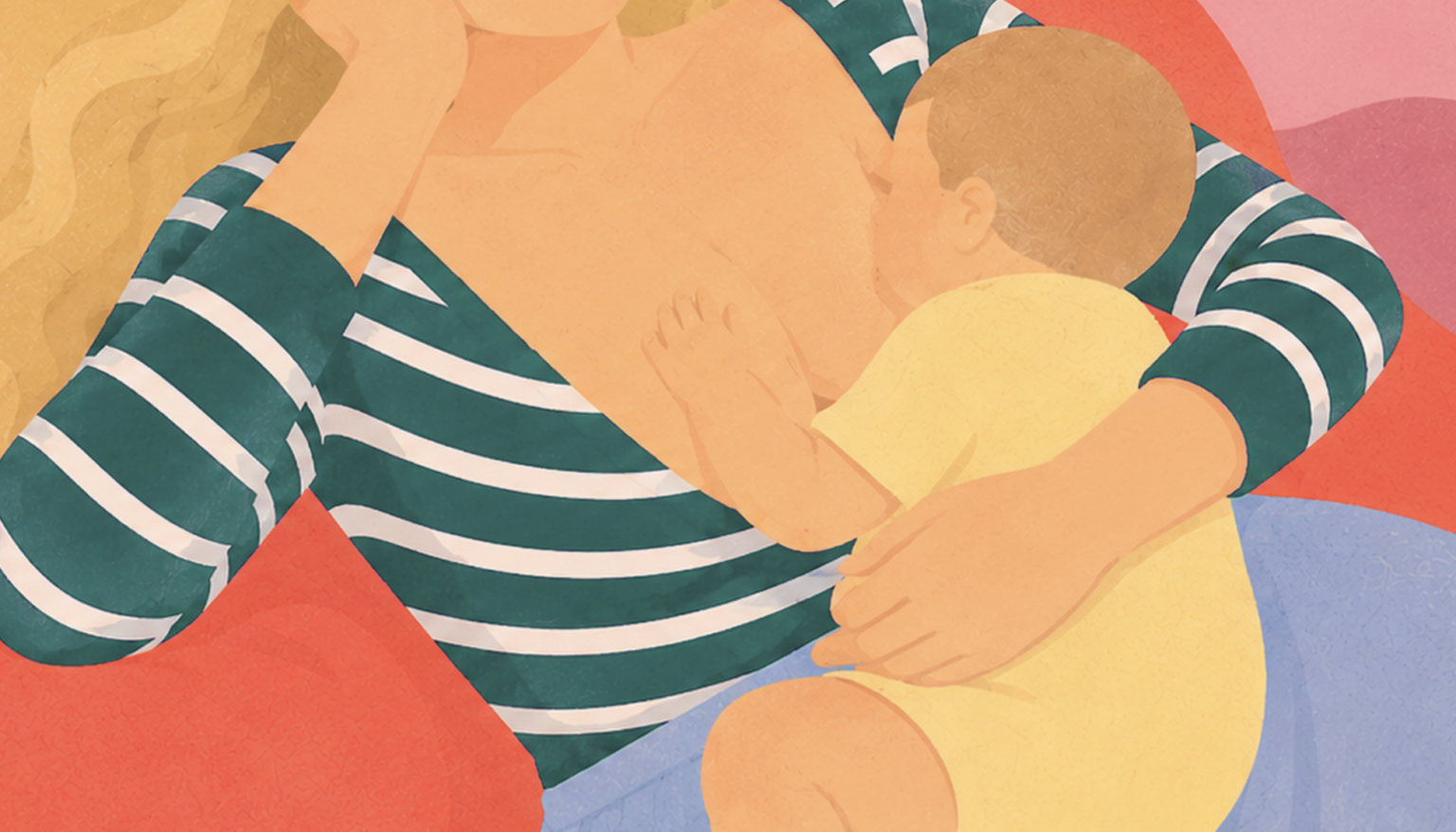
“Before the milk comes in, there is the so-called colostrum, which is very useful, but it was not enough for my child and he cried endlessly, and the milk did not come in. I tried to feed the child, but due to not being experienced, I could not. No one taught me or helped me, not even in the maternity ward, until I simply met one of the nurses who felt bad for me. As soon as the baby latched on well, within a few seconds I felt how much all my organs ached, probably with the most intense pain I had ever experienced. As my son latched on to the breast, a drop of milk rolled down his cheek. It turned out that this pain was caused by the first let-down of the milk.”
This is how one woman recalls her first experience of breastfeeding to Aprili Media. For her, it was a priority to feed her baby breast milk for at least 6 months, which is why she “accepted” the pain and difficulties that accompany this process:
“Then there was the discharge home and hyperlactation — I thought my breasts would burst. Added to that were the cracked nipples, which from feeding the baby to feeding, not only didn’t heal, but didn’t even have time for the ointment to dry. Then there was the washing off of the ointment, feeding the baby, applying the ointment again, and this endless cycle for several weeks.”
“I think the vast majority of mothers face this choice — the benefits of breastfeeding outweigh the difficulties that breastfeeding puts a woman’s body through. A new mother is already self-critical enough and doesn’t need a helping hand from society. Every woman should be able to decide for herself what to do with her own body.”
This process is specific for everyone. For some parents, it is a difficult path to go through, both physically and emotionally, for others – easy. The challenges that accompany this process are rarely discussed, and discussions on the topic are mostly limited to recommendations or criticism. This time, we will try to discuss, based on personal examples of parents and various studies, what the real experience of women is like and why it goes beyond the issue of child health.
We will discuss, along with the benefits, what barriers and challenges may be associated with breastfeeding and the extent to which women have the opportunity to make an informed choice, what the needs of mothers are, and what happens when using this feeding method becomes not a personal choice, but a matter of societal pressure.
What Is Lactation and Breastfeeding?
First of all, it is important to distinguish between lactation and breastfeeding, as these two terms are usually used interchangeably in everyday conversation.
Lactation is the physiological process by which the mammary glands produce and secrete milk to nourish an infant. It begins as a result of hormonal changes after childbirth.
Breastfeeding is the practice of feeding an infant that is based on the process of lactation.
Lactation begins just a few weeks into the second trimester of pregnancy. As estrogen and progesterone levels rise, the body prepares for lactation — the number of milk ducts in the mammary glands increases, which allows milk to flow into the breasts. The ability to produce milk and the length of time a body goes through the lactation process are individual. Some bodies produce milk for years, while others have difficulty producing enough milk. This is influenced by various factors, including hormone levels and hormonal disorders, certain medications, past radiation therapy, trauma to the breast or nipple, and more.
Milk production gradually decreases as the baby’s dependence on breast milk decreases, or as the parent reduces the frequency of breastfeeding or pumping. It is also important to note that lactation can occur without breastfeeding, or continue after breastfeeding has stopped. Some parents also use the so-called pumping method in this process.
According to data from the World Health Organization (WHO) last year, 48% of children under 6 months of age are exclusively breastfed. According to WHO, breast milk is the ideal food for infants — it is clean, safe, and rich in antibodies that protect the newborn from many common childhood infections.

Breastfeeding is a natural process, but along with reliable theoretical knowledge, it requires practice and, in some cases, professional help. It is not surprising that a new parent may not know how to properly attach the baby to the breast, what to do in case of pain, lack of milk, or excess – for this process to be successful, timely support is needed, especially in the first days after the birth of the baby.
Some parents describe breastfeeding as a painful, uncomfortable, and tiring process. Various complications may also arise during lactation, including:
- Nipple pain, irritation, cracks;
- Breast swelling;
- Blockage of milk ducts;
- Fungal infection.
UNICEF and the World Health Organization (WHO) have also emphasized the importance of parental support in this process. They point out that this is necessary both for initiating and maintaining breastfeeding. They recommend that qualified counseling on this method of feeding be made available to all women.
What Do We Know About Parents’ Experiences?
This very important process for both parent and child can be difficult for many to go through. When discussing the issue, we sometimes overlook the physical and mental health of the parent. After pregnancy and childbirth, the woman’s body is in a particularly vulnerable state. She undergoes the most important physiological and hormonal changes. Lactation is also a continuation of these changes, which requires great resources and adaptation from the body, and to this is added the responsibility of care. In addition, for a nursing parent, this is daily, intensive work. This physical effort often remains invisible.
Mariam is the mother of a one and a half year old child. She exclusively breastfed her child for a year. She spoke about her experience with Aprili Media.
Exclusive breastfeeding means that a baby receives only breast milk and no other food or fluids, including water, for the first 6 months of life. Exclusive breastfeeding protects the baby from common complications such as diarrhea and pneumonia, and in the event of illness, promotes a faster recovery.
She tells us that after giving birth in one of the clinics in Tbilisi, a so-called lactation specialist went to talk to her: “She gave us advice. I can’t say that she helped me a lot. She answered some of my first questions, but it was still superficial.”
Her main source of information was thematic Facebook groups, where mothers shared their experiences. In addition, she read various literature during her pregnancy and, in some ways, was theoretically prepared for the lactation process. However, she says that in practice it turned out to be more difficult than she imagined.
“The most difficult thing was that I didn’t know what to do, what was right and what wasn’t; when did the baby latch on, when was he eating, when was he not. At the same time, in the first months, there was terrible pain caused by cracked nipples, so I needed so-called silicone, which I used to feed the baby for two and a half months.”
She made the decision to breastfeed her baby from the very first weeks of pregnancy. The reason was its benefits. She did not even consider the alternative of artificial feeding during pregnancy, although after experiencing the difficulties of the process, she thought about it several times.
Artificial feeding is the feeding of an infant with a specially prepared formula. It can be used by a parent in addition to breastfeeding, as well as in cases where the baby is not breastfed. A special bottle is used for artificial feeding.
“Of all the things I have done in my life, I can safely say that this was the most time-consuming process. That is why I think that a woman should have a choice — to go through this process or not. In many cases, this choice is not possible for women, because the price of artificial feeding is so high in Georgia, many families simply cannot afford it. And if we add to this the cost of good quality diapers, which are also a basic item for a child, all this costs so much that it can be more expensive than the family’s monthly income.”
Mariam also talked to us about the emotional side of this process. She told us that breastfeeding was also very tiring in this regard.

“When you breastfeed a baby, they are completely dependent on you, no matter how many helpers you have. The baby always wants to be breastfed and is completely dependent on you. Consequently, you can’t sleep, no one can help you as much as you need. Your life changes completely and it is very difficult both physically and emotionally. At the same time, I was suffering from hyperlactation, which is why I often had mastitis (inflammation of the breast), and this was also the most difficult and painful process,” says Mariam.
“Would I be a really bad mother if I bottle-fed my expressed milk instead of breastfeeding? It just hurts so much when the child latches on,” — this question was asked in one of the thematic Facebook groups, where parents share their experiences with each other. Often, lactation is not considered a personal decision and choice of the parent, but the only acceptable form of care. In some cases, it is even equated with “good parenting,” and therefore any other behavior related to feeding the child is perceived as “not in line with the norm,” which causes many mothers to feel inadequate, guilty, and question their own “good parenting.” This can be especially difficult for first-time parents.
“Breastfeeding has been the hardest thing in my life — both emotionally and physically. I had no idea it would be this hard.”
“It was so difficult at first that I was afraid of the child coming close during the feeding.”
“I felt like I had disappointed my son. He was my first child and I didn’t know what I was doing.”
“The pressure from society to breastfeed [my baby] is enormous. So when someone asked me, I was very nervous to say that I wasn’t doing it anymore.”
These experiences were shared by women in a study published in the journal Scientific Reports in 2025. The authors aimed to examine how mothers themselves assess the impact of breastfeeding difficulties on their mental health. According to one of the researchers, Elizabeth Braithwaite, factors related to breastfeeding have a much greater impact on mental health than was initially thought.
The study, which surveyed 1,141 mothers, found that the majority of mothers wanted to breastfeed their children, but faced various psychological, physical, and social barriers. 65% of those surveyed said that problems related to this process affected their mental health.
Participants reported that they lacked sufficient knowledge about how to feed their babies, what the process actually entailed, and how expectations could differ from actual experiences. Mothers reported that they were unprepared for the challenges associated with breastfeeding, which in some cases caused them significant emotional distress.
Furthermore, because breastfeeding is considered a “natural” process, respondents had the impression that it should happen instinctively, without any effort.
“You think it should be the most natural thing, but it’s actually very difficult. It makes you doubt everything.”
“After having my first child, I thought breastfeeding would be easy and would come naturally, I just knew I would be able to do it.”
In the same study, more than 51% of parents reported experiencing pain while breastfeeding, which affected both their ability to continue feeding and their mental health — mothers said the pain was so severe that they hated the process.
Such experiences show that in addition to physical resources, this style of feeding also requires significant mental preparation for the breastfeeding parent, which is often overlooked. Society is less informed about the emotional or psychological dimension that accompanies this process. For many parents, this path, along with pain, is associated with anxiety, guilt, and self-doubt.
On the other hand, the pressure that parents experience in this regard can threaten women’s bodily autonomy.
Bodily autonomy is the right of a person to make decisions about their own body, whether it concerns medical interventions, reproductive or health-related matters. In this case, this refers to a woman's right to freely decide, on an informed basis, whether to initiate, continue or discontinue breastfeeding.
This connection between the pressure to be “perfect mother” and breastfeeding has been discussed by a number of researchers. For example, in a 2007 paper published in Social Science & Medicine — “Being a ‘Good Mother’: Breastfeeding Management and the Fusion of Identities” — the authors argue that “good, bad, or normal motherhood” are social constructs that may influence both the decision to initiate and continue breastfeeding. They argue that this is a kind of “moral labyrinth” that women must navigate.
Artificial Barriers to Natural Nutrition
A 2009 study published in the journal Feminism & Psychology found that breastfeeding is often a conflicting experience, as women in modern society are pressured by different and often conflicting expectations, adding further strain to the process. Instead of being an empowering experience for women, breastfeeding has become a “moral imperative,” according to the author.

Speaking of conflicting expectations in society, we must say that we are faced with a kind of paradox here. On the one hand, parents are asked to prioritize breastfeeding their child at any cost — even at the cost of denying their own needs, in some cases, at the expense of physiological pain, time resources, or physical effort. On the other hand, they are judged for this very reason. This is especially noticeable when it comes to feeding their child in public. The mother of a 4-month-old baby talks about this experience Aprili Media. Lika (name changed) exclusively breastfeeds her child. As she says, this process is interesting for her, but tiring. She tells us that she often has to feed her child in public because she tries to always take her child outside when the weather is nice.
She said she was lucky with the people around her, as they never advised her to refrain from breastfeeding her baby outside, although there was advice that she could have bought a “covering cloth not to feel uncomfortable.”
“Of course, I didn’t take it into account,” Lika tells us, adding that she tries not to pay attention to the public mood she sometimes faces when she breastfeeds her child in public.
“For me, a comfortable environment means a space where no one is surprised or/and annoyed by the lactation process — when they don’t stare at you and judge you as if you’re doing something wrong.”
Lika says that before having her child, she had expected to see more mothers lactating outdoors, and she calls it a shame that she didn’t see such a reality. According to her, society is not yet ready for outdoor lactation.
“At first, I was insecure about myself, then I processed and overcame it within myself, which my husband helped me a lot with, as he was the first to suggest feeding me outdoors,” she says.
A report was published in 2025, in which researchers studied the negative experiences of 2,562 women around the world who breastfed their babies in public. Of these, 1,674 shared their experiences in detail.
The results of the study were grouped into four main categories, which were distributed as follows:
- 56% of respondents received unsolicited advice and comments;
- 39% had a judgmental attitude;
- 16% have had the experience of breastfeeding being considered an indecent act;
- 7% have had experience with prohibitions and restrictions.
Women participating in the study described receiving unwanted advice, as well as experiencing instances of shaming and stigmatization aimed at diminishing breastfeeding practices.
According to them, there were relatively rare, but more severe reactions, such as the sexualization of breastfeeding, expressions of disgust towards this process, etc. In addition, women described cases when they were accused of violence against children, urged to stop the process, cover their breasts, and so on.
In a study published in the journal Scientific Reports, participants reported that the fear of being judged and criticized when feeding their babies in public negatively affected their mental health. Some said that this pressure led them to stop breastfeeding early. The women reported that they were criticized for a variety of decisions they made, including whether to stop breastfeeding, bottle-feed their babies, or use formula.
“Because of this, I was angry with society for not being more supportive and understanding.”
This experience of women is also discussed in the aforementioned study. The authors point to the prevailing opinion that breastfeeding is the best choice for infants’ health, but on the other hand, they cite the example of Western countries, where, according to their observations, breastfeeding parents are rarely visible in society.
“Because new mothers do not yet have practical knowledge of breastfeeding (Hoddinott & Pill, 1999), this may contribute to a lack of confidence in their own bodies (Dykes, 2005). This is further complicated by the media’s portrayal of breasts as sexual objects,” the study notes.

On one side is the romanticization of motherhood — the cultural and social norms and perceptions established in a patriarchal society, according to which parenthood is perceived as a “mandatory” and “desirable” role for women, calls for the need to solve the demographic crisis and attempts to place responsibility for this on women, standards of “good motherhood,” etc. On the other side is the reality that women face after giving birth — physical and emotional exhaustion, lack of time, insufficient support, a scolding, unsupportive environment that is not adapted to the needs of a nursing parent.
When we talk about freedom of choice, we can say that this alone is not enough. Along with it, the social conditions in which this choice is made must be taken into account, otherwise it amounts to formal freedom.
When discussing breastfeeding, we should remember that in this case, we should not only judge the responsibility of the breastfeeding parent, because it does not only concern him. The choice depends significantly on the environment in which we live: whether the family is supportive and encouraging, not only physically, but also emotionally; how equally the responsibilities are distributed – whether it is the burden of caring for the child, or household chores, which, as a rule, are invisible work for women.
It is also important to understand whether the work environment is supportive — what are the working conditions like, to what extent are maternity leave issues resolved. There are a number of challenges in Georgia in this regard.
Healthcare policy and the willingness of this system to provide parents with appropriate support and enable them to make informed choices play an important role.
“There should be more workshops, more involvement in this regard, at least from the state, so that there are more qualified lactation specialists in Georgia who, when you give birth, will help you manage the process correctly. Yes, clinics have specialists, but this is definitely not enough,” Mariam told us.