

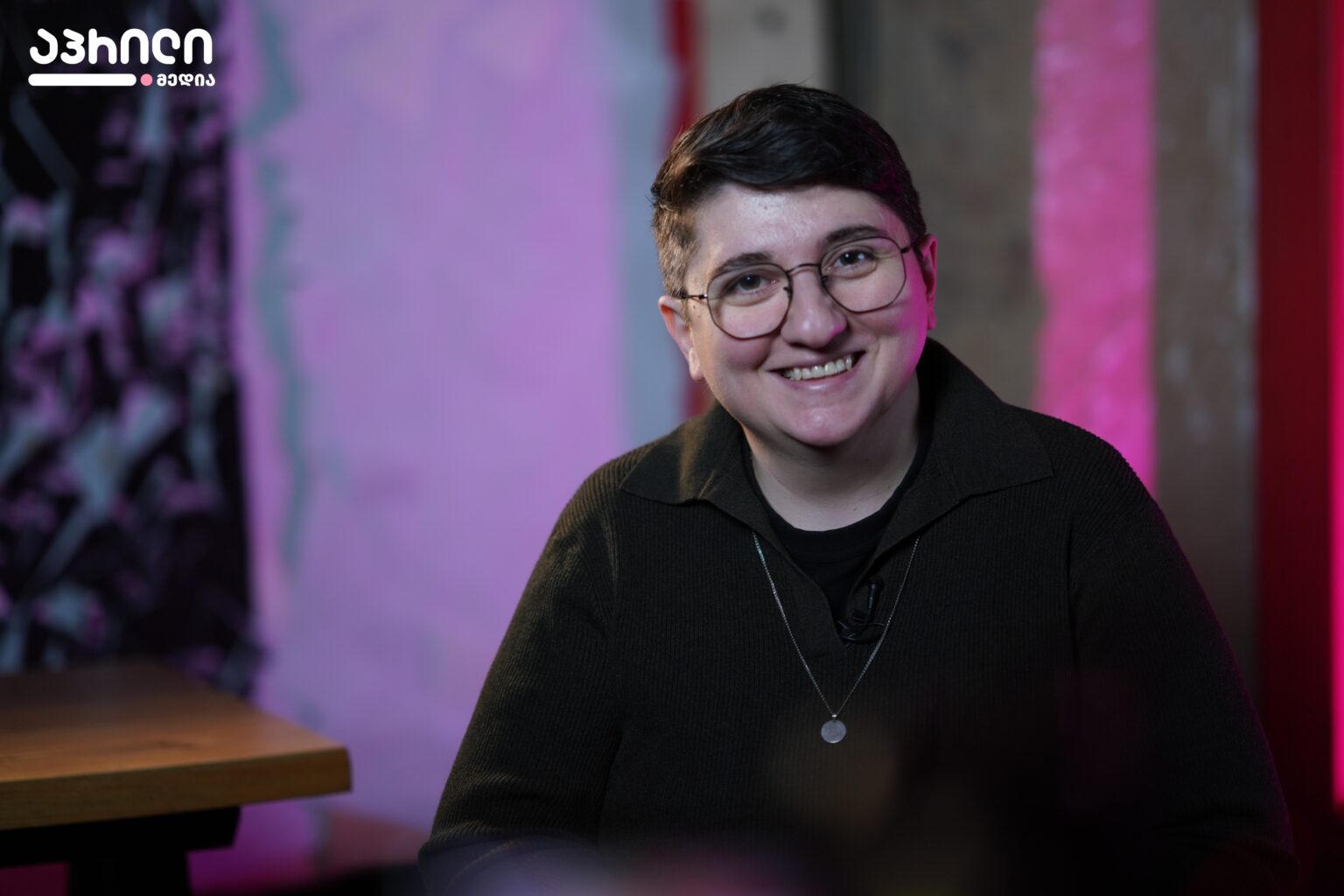
“I think that the average Georgian is less concerned about queer issues than politicians say and try to portray that “propaganda” was banned because it is supposedly the will of the people. “The will of the people” has become a justification, when this has not even been properly researched. On what basis do they say that this is the will of the people? It is simply populism.”
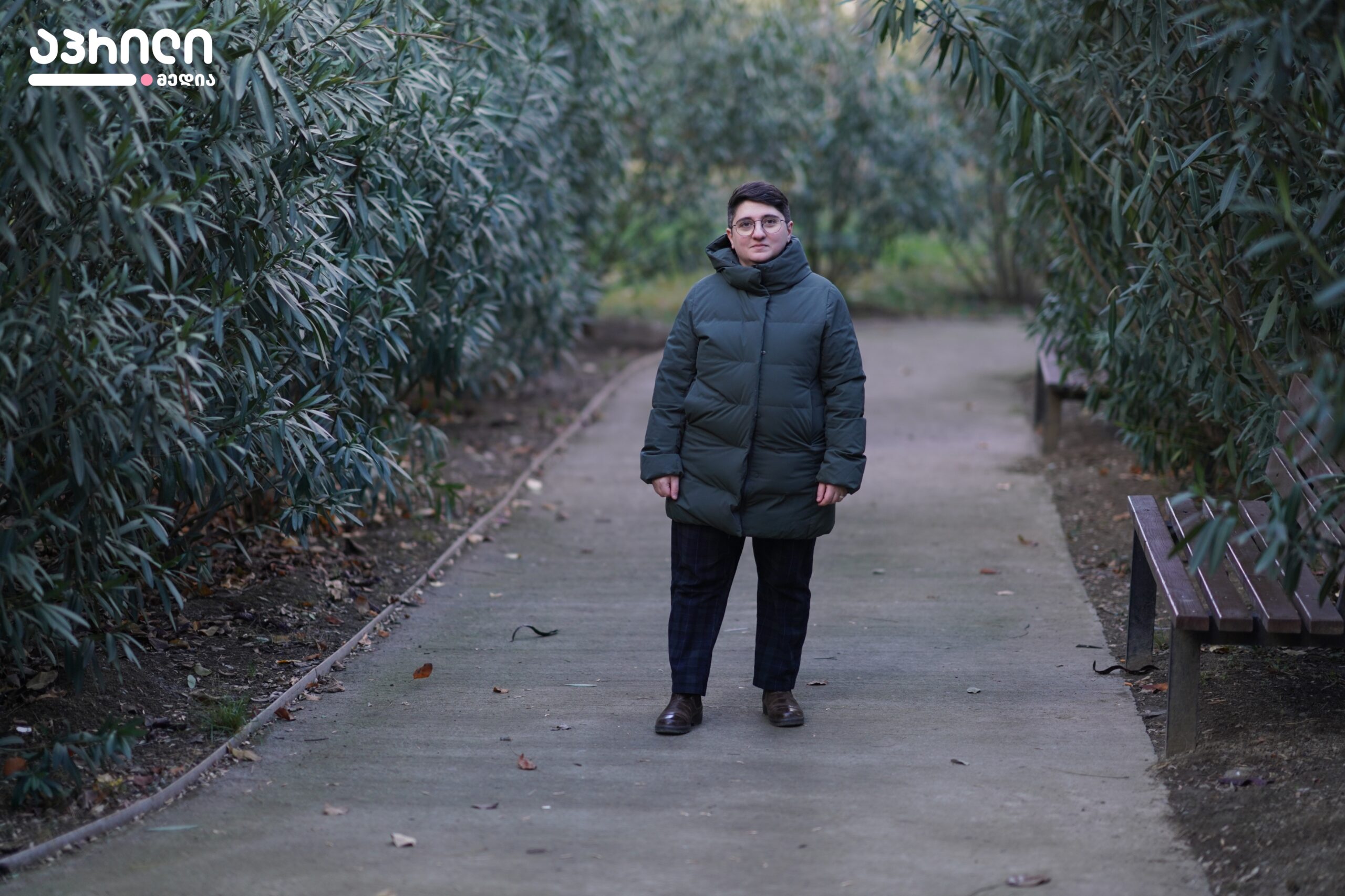
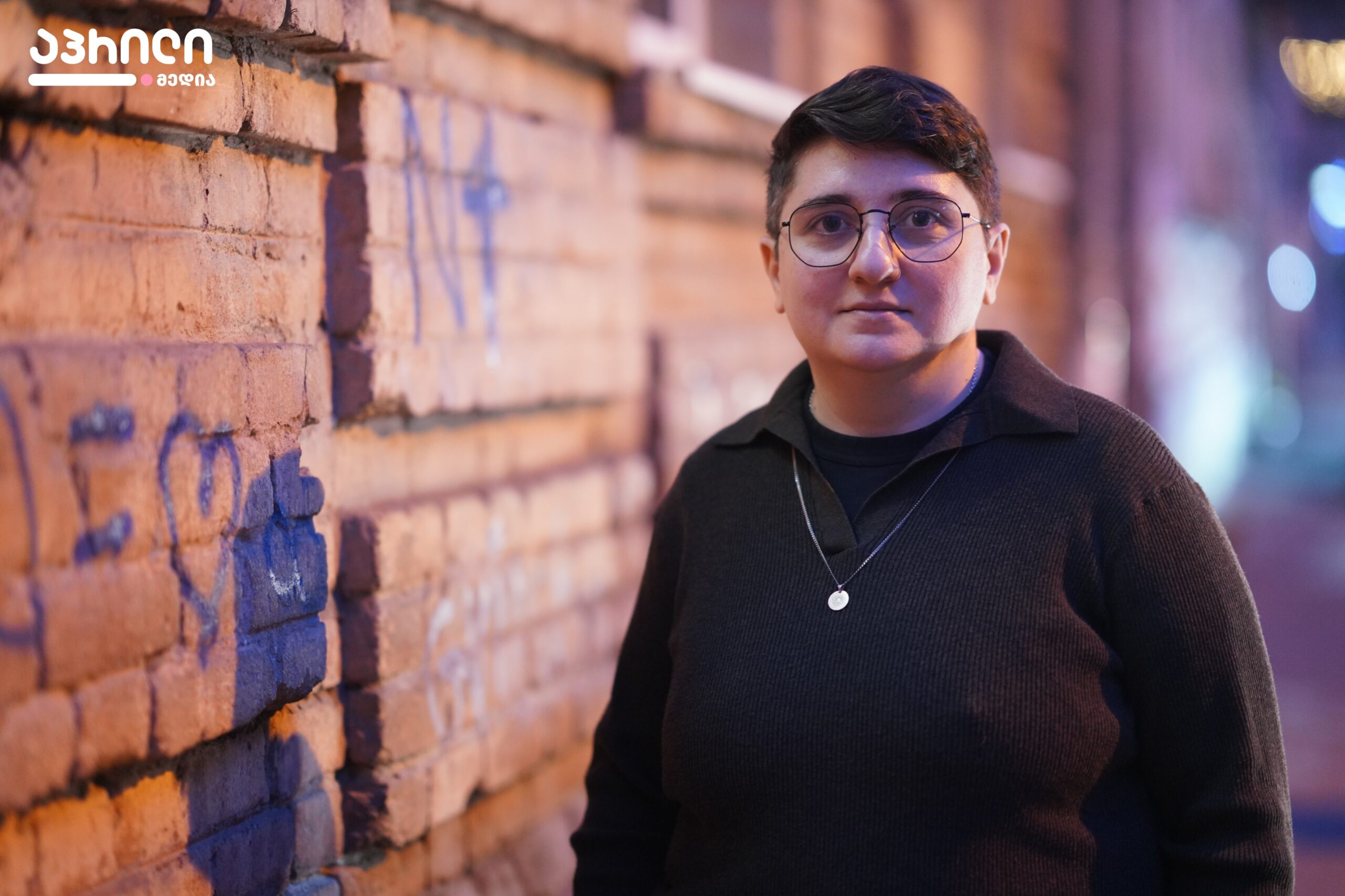
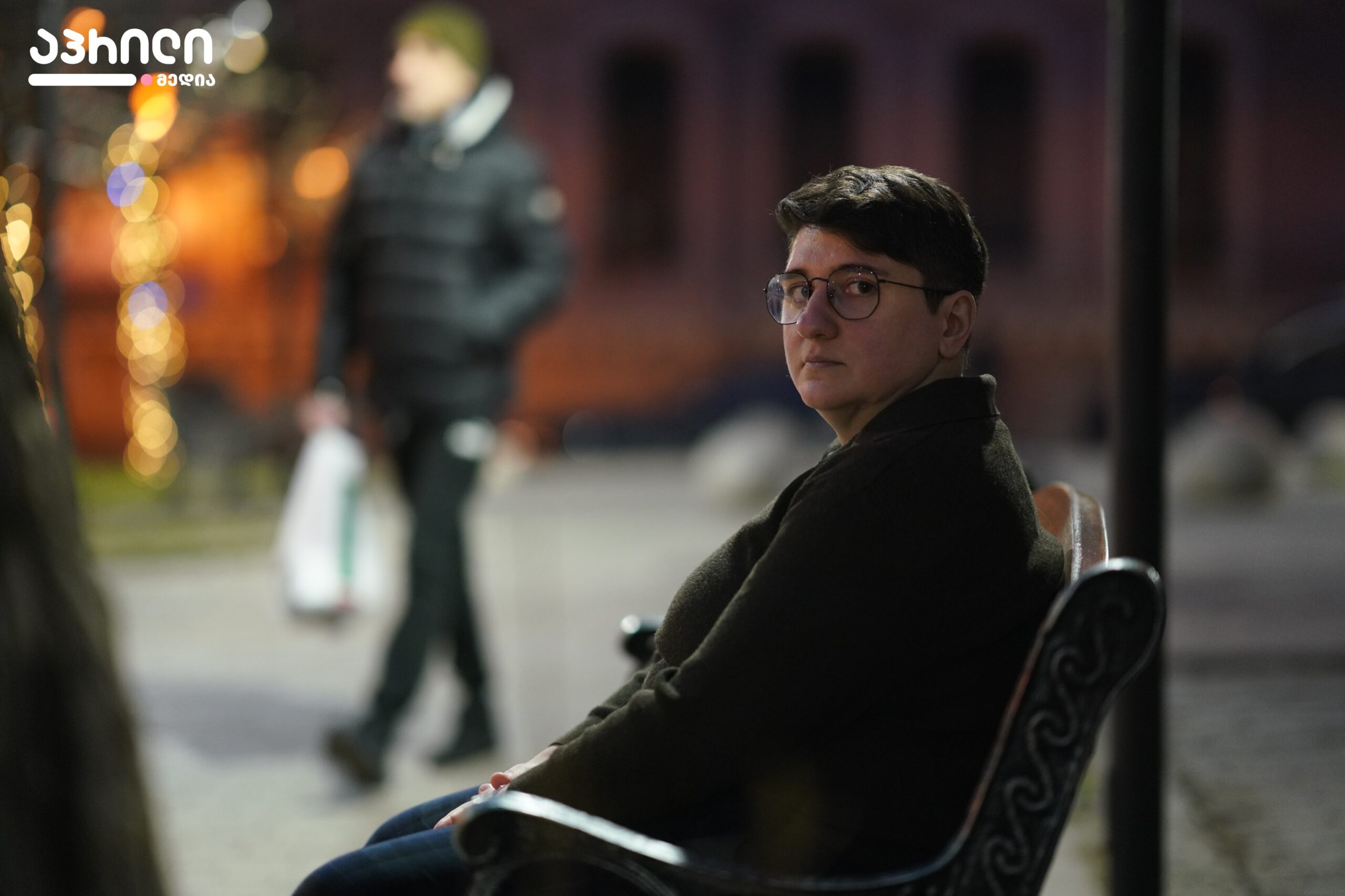
Natia Gvianishvili has been in Sweden for almost ten years. Before that, she spent very important years of her life in Georgia connected to queer-feminist activism. Despite being geographically distant now, she constantly tries to not only stay informed about the events in her homeland, but also to support queer people who have remained or who have been forced to leave the country. At the beginning of the interview, when introducing herself, she says that one of her main identities is precisely “a queer-feminist activist from Georgia.”
She manages to come back several times a year and tries to spend time with her long-lost family members and friends. The interview with Aprili Media took place during one of these visits. We talked to Natia about her personal experiences, childhood, self-determination, parents, Georgian activism, the current situation in the country, being queer in Georgia and Sweden, etc.
Childhood
We start talking about childhood. She sighed and recalled growing up in Tbilisi in the 90s, in the cold and darkness. She says she has mixed feelings, because she was well aware of what was happening around her — the constant danger on the streets and the daily struggle of her parents to have a job and support their family. At the same time, she fondly remembers the solidarity and mutual assistance in the neighborhood, the New Year period — when they gathered together and looked to the future with the hope that the new year would at least bring something good.
“One winter, I don’t remember how old I was, it was very cold and we had very little firewood. This was the period when wood-burning stoves were common in Tbilisi apartments. We ate beans that whole winter, I think almost exclusively beans. And we had a mouse, which unfortunately froze to death one night. This is probably a symbol of that period.”
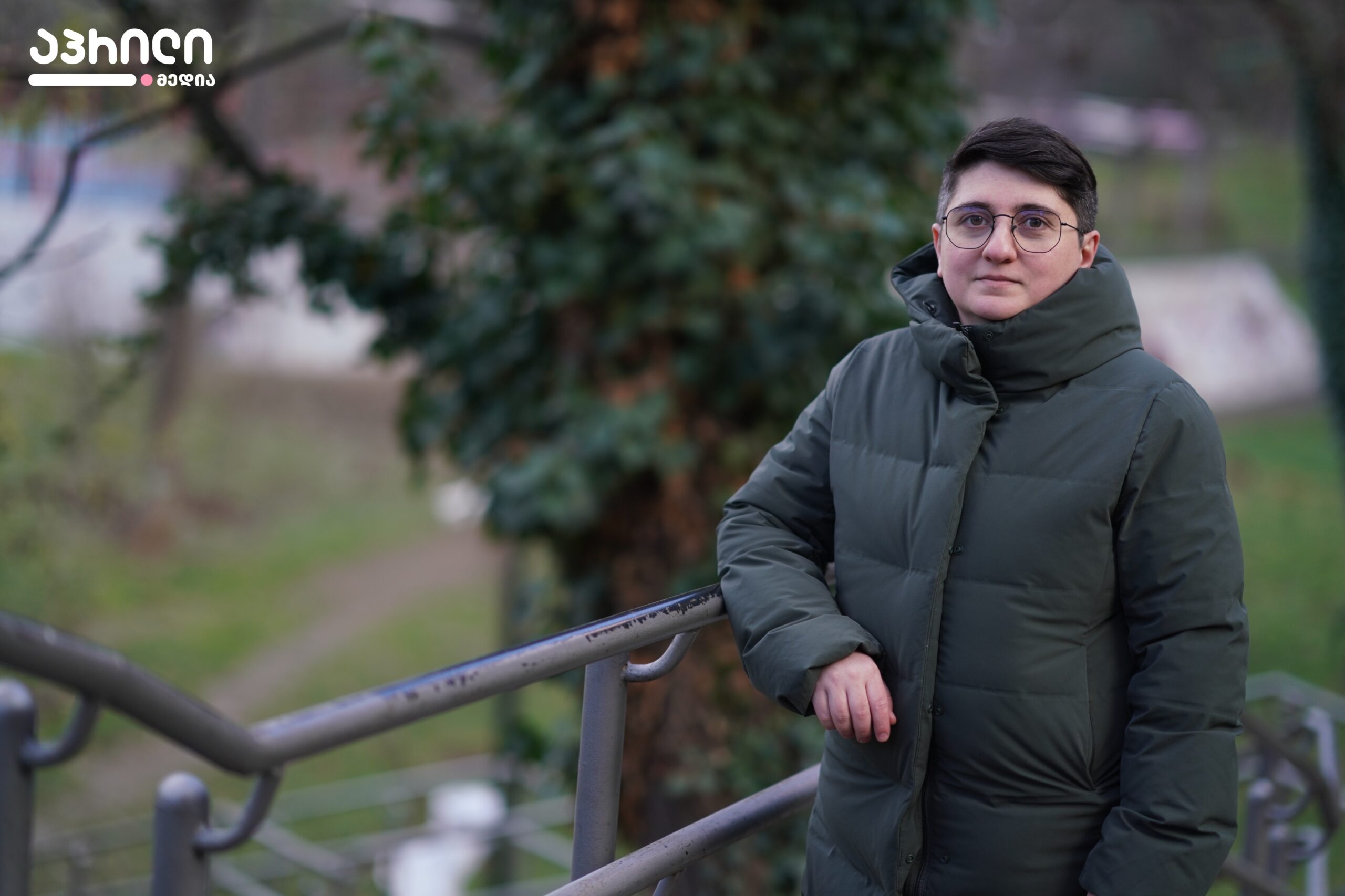
Among her positive memories, she mentions visiting her grandparents in Dusheti, helping them in the fields, and spending summers in the forest with his children, free and carefree. She adds that there was also more food in the village.
Given these childhood experiences and the historical context, it is clear why Natia Gvianishvili had no information about her sexual orientation and gender identity at the time. She tells us that she realized quite late that she did not like men, and that using the word “lesbian” to define herself came even later.
“There was no information, no visibility of queer people. It was only later, when I went through the stage of self-determination, that I realized that, for example, since childhood, I only liked female characters in historical novels, and if I had a crush on a classmate, they were always girls. Years later, when I started to analyze this, I realized that all this was an indicator of the formation of my identity.”
“I thought that something was wrong with me and it would definitely pass”
When she consciously thought about his sexuality, she was already a student. It was 2003-2004, and there may have been relatively more information on the topic, but there was still very little.
“I really thought that something was wrong with me and that it would definitely pass, that I would definitely meet some guy who would fall in love with me and everything would be arranged as the society around me wanted — I would “get married,” have children, etc.”
She says she spent several years being lonely. Her first relationship was also cracked by internalized homophobia — the constant worry that something was “wrong” with her.
She also avoided attending community meetings.
“Then at some point I realized that I don’t want to be so unhappy and hate myself. I thought, I’ll take a risk, meet other people and see what they’re like. And I went. I still remember going to the Inclusive and WISG offices. They were showing some film and I was afraid I might see someone I knew. I couldn’t even think that if I met someone I knew there, they would also be in my situation,” Natia recalls.
At that time, there were only two organizations working on queer rights in Georgia — Inclusive and the Women’s Initiatives Support Group (WISG).
After attending the community meeting, a completely new phase in Natia Gvianishvili’s life began. She says she met some very good people there, many of whom are still in her life and play a very important role.
“My parents’ support gave me a lot of courage to talk about things in the first person and not in the third person.”
She remembers this period very fondly. She tells us that Inclusive worked mainly in the direction of gay men’s rights, while the Women’s Initiatives Support Group worked mainly in the direction of lesbian women’s rights. Both organizations worked together on the rights of trans people. According to Natia, they tried to find community members who would have positive socialization with each other — “Because at that time, being a queer person was very, very lonely.”
Meetings, trainings, film screenings, discussions were held. It was there that Natia first received information about sexuality, gender, and discrimination.
“It was there that I first learned that there are certain categories, that there is a ‘lesbian’, etc. Then you deconstruct this information as a person and call yourself something. So this is a very important stage, because you are very invisible in society and no one wants to call you by your name. Terms denoting sexuality were mentioned in whispers, so I felt a lot of freedom when I said that I was a lesbian.”
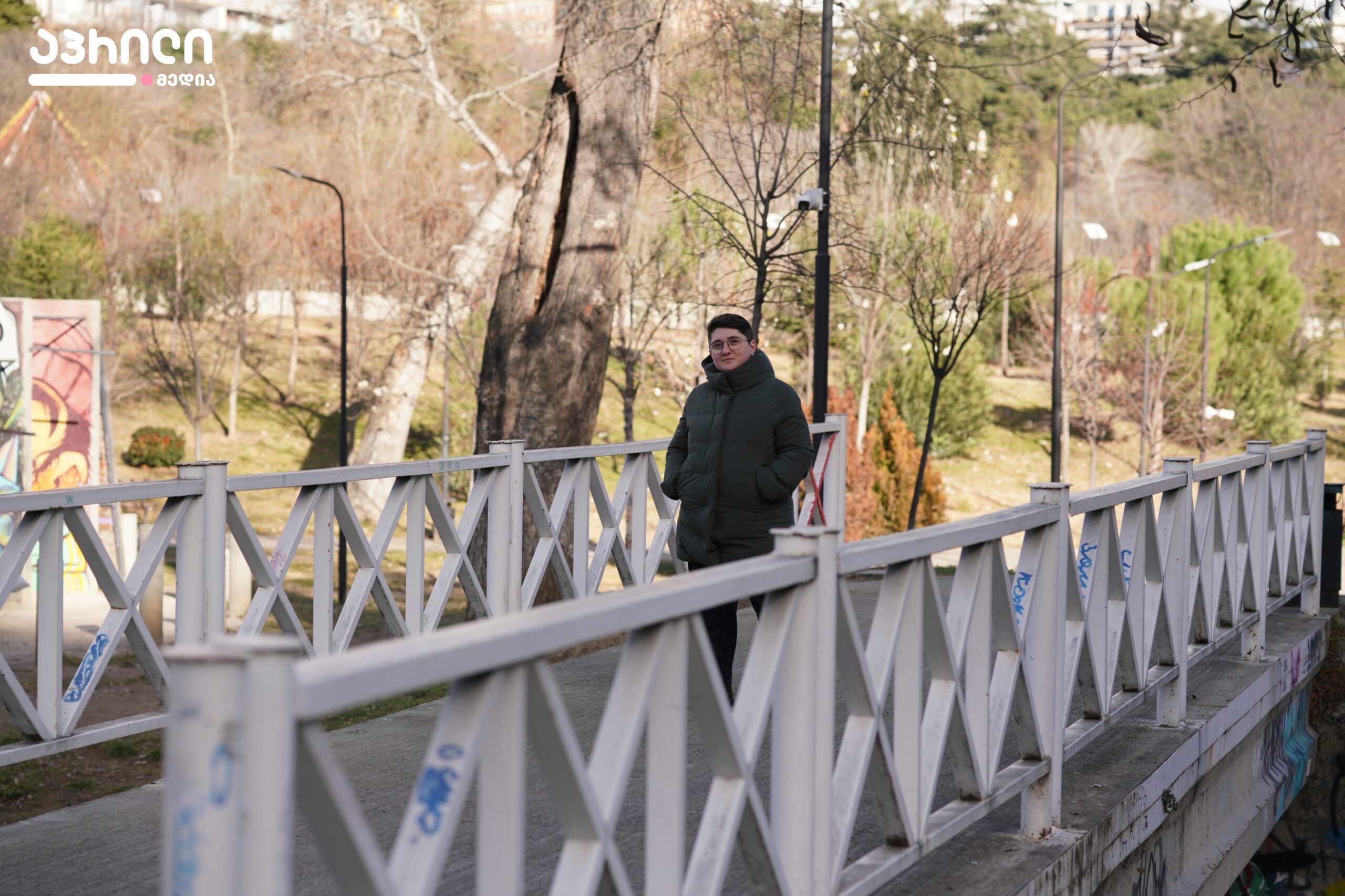
Natia tells us that the organizations also offered psychological and legal assistance to community members, but the most significant impact was still the meetings and seeing each other.
“So, the movie is over and we’re all eating saltine sticks with instant coffee… So many friendships were formed during that time that continue to this day. Or that have lasted a long time beyond these spaces, which was very important.”
From the current perspective, she says that she was a very enthusiastic and perhaps naive activist. She partly attributes this to the fact that she is talking about the period after the Rose Revolution, when her generation was already of a conscious age and saw that there was a more or less upward dynamic in the country.
“The economic crisis was more or less over, we had electricity, we had gas, and the country had a government that more or less talked about rapprochement with the West. At least there was a feeling that some reforms were being carried out; that if we work, we work hard, and we contribute to building this society, society will see us and we will overcome homophobia.”
It was with this sentiment that the May 17 protests of 2012 and 2013 were planned, although neither the government that came after the Rose Revolution nor the subsequent ones took care of protecting the rights of queers and their supporters. At that time, Natia realized that “history is not linear” and that it is not so simple that “we are 50 years behind Europe, but we will catch up.”
“Today, my parents are my supporters, which has determined my activism”
As a child, when she had no information, she accidentally heard the word “homosexuality” and asked her parents what it meant. They explained, within the knowledge they had at the time, that some women love women, some men love men, and that everyone should be respected and no one should be oppressed.
Years later, the conversation about this topic was brought up with Natia coming out. She had always had a close relationship with her mother, so this conversation was important to her.
“I had already realized that my sexual orientation was an integral part of my life, nothing could change that, and I didn’t want anything to change. I was in love, happy, and worried that I was hiding an important part of my life from my mother, it was very difficult for me. Before talking to her, I didn’t sleep properly for several nights, I couldn’t eat, I was anxious. You still don’t know what will happen to you when you haven’t talked about this topic for a long time, even though I don’t know what I would have to do in life so that my mother cut me out of her life, threw me out, or abused me. I’ve never been afraid of that.”
Now she recalls it with a laugh: “I’m funny, I brought her flowers on March 3rd,” and that’s how she told her. She received support, but her mother began to blame herself — “She started to think about what she did that this happened to me.”
The knowledge she gained from community meetings and trainings helped Natia a lot in this process. She knew for sure that she didn’t need anything “medical.”
“We had a somewhat tense relationship for about a year. I felt like my autonomy was being restricted, and she felt like I was doing something wrong. I was slowly telling her stories of my friends, telling them about couples, etc. I was trying to normalize queer relationships. At one point, she turned to me and said, ‘It’s good that you gave me some time, and now we can talk about these topics.”
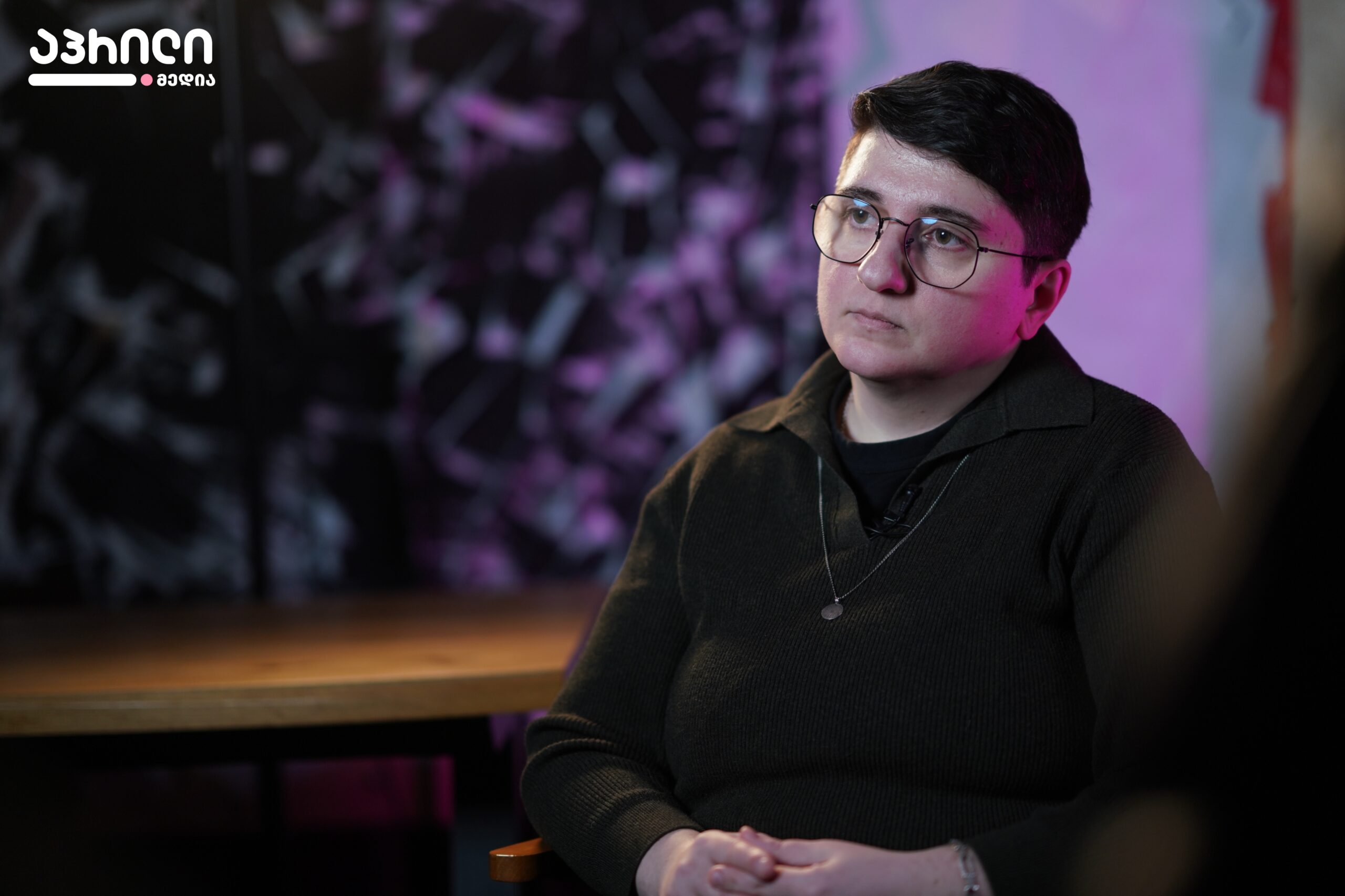
As for her father, Natia says that fortunately, he had no fear or expectation of violence in this case either — he was just nervous about how to properly convey this information. Once, when they were talking about Natia’s job, her father said that no one should experience discrimination.
Today, her parents are her active supporters. Natia says that this support has determined many things, including her activism. However, she also notes that she knows that standing by her parents is a great privilege.
“Exclusion from the family is the hardest thing to deal with. And this is probably one of the biggest differences between queers and other vulnerable groups,” says Natia, adding that over the years, parents’ groups have formed, where meetings are held, information is provided, and experiences are shared with each other, but when she had to talk to her mother and father herself, nothing like this existed.
She believes that family support changes a lot in the lives of queer people, especially in countries where this institution is strong.
“Family is a social structure where we go first for support. Especially in the conditions of Georgia, where people are generally very dependent on family, because whatever good things the state should and does not give us, the family provides. For example, the economy, social support, etc. When the family deserts you, you are automatically cut off from all this and become vulnerable. This is a pragmatic part, to which is added the emotional part — since childhood, everyone talks to you about the importance of family, that you should value family and know that it is your safe space. And suddenly it turns out that the people who should be your source of security are collapsing and, in the case of many queers, are violent. This has a bad effect on mental health, self-esteem. When you face an elementary crisis, you need the support of your family. For example, I am 40 years old and sometimes when I get a fever, I want my mother.”
“You don’t have to completely understand your child’s experience. The important thing is to express your support and let them know you love them and that you will continue to be their safe space.”
Natia says that the most important thing a parent can do in the case of a child coming out is to support them and tell them they love them.
“You don’t have to completely understand your child’s experience; you don’t have to understand the concepts they’re talking about. The important thing is to express your support and let them know that you love them and that you’re still their safe space. And you really have to weigh up what you’d rather have — your child be happy and able to come to you, or be unhappy, isolated, and ultimately have no interaction with them. I think most parents would choose their child’s well-being, happiness, and normal relationships.”
She also says that parents also face difficulties. She recalls from her own experience difficult periods, especially when her parents were worried about her safety and there were disagreements on this basis, for example, regarding going to the May 17 protests.
In addition, my experience working in queer organizations over the years has shown me how desperate parents of queer people can be and how society tries to isolate them, especially mothers: “All these stereotypes, clichés go to the mother: ‘You couldn’t control your child’s behavior,’ ‘They fell under someone’s influence,’ ‘They’re sick and you didn’t treat them,’ etc. A relative, a friend, a neighbor — everyone considers themselves authorized to make this person understand their opinion. And they are very alone with all this.”
“You can’t ask a vulnerable teenager to do this, but we queers, who are a little stronger, should try to put ourselves in the parents’ shoes. Of course, if there is no violent situation. Nothing justifies violence. But if someone uses the wrong terms or simply doesn’t understand something, we also need to have a little patience to break that ice and have a conversation.”
“It’s hard when you’ve been banging your head against a wall for years and it doesn’t budge”
During her years in queer feminist activism, there have been many struggles for change, sleepless nights, struggles for self-preservation and the survival of community members. There have also been disappointments, setbacks instead of progress, and insurmountable barriers.
She says that the most important thing she has done is working with young people. She recalls students from that time, teenagers graduating high school, who still tell her that the training she conducted on gender and sexuality gave them important knowledge. In her opinion, it also helped in this process that she was openly queer and could talk to them in the first person, as well as answer uncomfortable questions. She thinks that in certain situations this can also set an example for people — “that if you are queer, you don’t have to be unhappy, hate your parents; that you have normal interests and live a normal life. To put it simply: a queer person can be open and not be unhappy.”
In 2017, when she was extremely exhausted and realized that she could no longer develop personally or professionally, she decided to go to Sweden to study. Added to this, the years spent in activism had also led to a deterioration in her mental health and an anxiety disorder, which she continues to experience even in a completely safe environment.
“I had anxiety and depression, which was largely due to the country I lived in. It’s hard when you’ve been doing something for years and you’re banging your head against a wall and it’s not going away.”
We asked her what the difference is between being a queer person in Georgia and Sweden. She says that there you can be who you are, walk freely on the streets, and no one will bother you because of your identity.
“The fact that queer people have families or can have them is absolutely normalized and society has not collapsed and the sky has not fallen. You can plan something with your partner, whether it’s buying an apartment, renting, moving somewhere, having a child or a pet. You are part of that community and that is not something that’s questioned.”
As for Georgia, Natia recalls that while living here, she was repeatedly cursed at, spat at, and given displeased looks simply because she has a relatively masculine gender expression.
“Even now, when my partner and I come to Georgia, after leaving Stockholm airport, we have to think about not holding hands too much, not kissing, not calling each other names that the neighbor will hear, etc. It’s a lot of pressure… When you live in Georgia, you adapt and try to just get by. But it’s a lot of pressure, a lot of vital energy that being in this constant tension — whether someone will understand something, whether they might try to beat me up or not… You can’t plan for the future at all. Yes, the average heterosexual couple and cisgender person have a hard time in Georgia, but you also have the disadvantage that you don’t have family support, you can’t plan for the future, and you have to be constantly afraid that someone will hit you in the head.”
At first, she thought she would stay in Sweden for a bit, but she was already finishing her studies when a vacancy appeared in one of the Swedish organizations that had programs, including in the Eastern Partnership countries, and they needed someone with experience in advocacy. She was hesitant, because she considered herself obligated to return to Georgia and continue her activism there. After much thought, she filled out an application and received a positive response.
“For a while, I felt very guilty about staying in Sweden, but on the other hand, those of us who were outside the country and working with organizations working in Georgia were able to make our contribution from here. Approaches in many organizations have changed since the influx of migrants began in these areas. For example, I can explain the Georgian context to an average statistical colleague and show them the current situation. I saw my contribution and that of my colleagues from the region in this — finding a way to support people in a repressive environment.”
“During the Soviet Union, homophobia was formed as a political tool, and in our reality, Georgian politicians have also brought these tools into their daily work. They have continued to use these tools very well for blackmail and political speculation.”
“Solidarity and resilience will get us through these crises”
Natia tells us that when she arrived in Sweden, she was so exhausted that she spent most of her first year of studies at lectures or sleeping, but at the same time, there was a space for self-reflection — “including about my own strictness and what role I had in the discussions and disagreements within the queer movement.”
As she says, years ago, she was much stricter on many issues than she is today. According to Natia, people often work with the principle: “I am right,” and in the case of queers, this is compounded by attacks from the outside, which makes it even more difficult to have space for self-reflection.
“Over time, these external crises have made people realize that this cannot continue and that we need to meet somewhere in the middle. We cannot leave each other room for mistakes. This also comes from the outside, because sometimes you are a traitor, sometimes a traitor to the nation, sometimes a foreign agent — they call you many names — stateless, non-Georgian, etc. At this time, there is a great temptation to be without mistakes and if you still make a mistake, to not talk about it as much as possible, so that everyone thinks that you are the best. You want to be on good terms with society. And this leads to a lack of self-criticism. I think that has changed a little now.”
“If we don’t allow each other to make mistakes and go through them together, we won’t grow. For example, 10-15 years ago I had biphobic attitudes and clichés that I might not have voiced, but I did have them. Then I met a bisexual person with whom I blurted out a stupid thing, and, instead of hitting me in the head, they asked me why I thought that way. I reached a point that it had no factual basis and came from self-doubt and misunderstanding.”
Natia also notes that the second important aspect that is not often talked about publicly is personal disagreements.
“A lot of things are presented as ideological conflicts when in reality they are not. I think there is more awareness of this in the community now, and people are able to see where there is a real ideological conflict and where there is just personal incompatibility. Queers are normal people – some love each other, some can’t stand each other, sometimes they get along and sometimes they fight. I’ve also apologized to a lot of people after I realized that my position wasn’t always right. People are distinguishing this in the community more now than before, so I think there is more ground for solidarity, they don’t talk about personal conflicts.”
She notes that activism in Georgia today is more diverse, stronger, and more resilient than it was years ago. All of this gives Natia a little reason for optimism.
“Activism is at a stage and the community is more aware that despite the pressure, people do not want to be passive. Even when they are forced to leave the country, they are active in diaspora groups. Queer activists are really at the forefront of pro-democracy processes, and today activism is much more ideologically diverse than it used to be. This is very natural — some are more left-wing and see this as a liberation for queer people, some are more neoliberal and liberal in their attitudes, and conflicts occur within this framework, but the emergence of ideological divisions is an inevitable part of the development of society. When it comes down to it, I still see quite a lot of solidarity and I think that this, along with our resilience, will get us through these crises.”
Natia thinks that the impact of the homophobic law adopted by the Georgian Dream will depend on how it is enforced, although there is already a kind of chilling effect — “People are avoiding talking about queer issues, covering them. Some people now have a great excuse not to touch on this topic at all. This puts the queer movement, queer people, and queer media in a very difficult position.”
She says that if the law were to be enforced more strictly, the visibility of queers would decrease even further, but examples from other countries show that “even in such repressive environments, people find creative ways to help community members and share resources.”
“I think that no law can kill queer activism and the queer movement, not in Georgia or anywhere, but especially in Georgia. Maybe I have such a positive bias because I come from here, but I know that we are very resilient people and we will definitely find a solution.”