

Aprili Media’s blog column is dedicated to different people and different views. Blogs are not an editorial category and include the personal opinions of the authors. The position expressed by them may not reflect the position of Aprili Media.
Author: Mariam Nozadze, Activist
On November 28, 2024, when Irakli Kobakhidze announced a change in political course and halted the move towards European integration, no one could have imagined that an era of continuous protests would begin in the country, which has been going on for more than 450 days.
During this time, many people, naturally belonging to different social groups and professions, changed their personal and professional agendas and engaged in activist activities. For example, after the illegal detention of actor Andro Chichinadze, his colleagues were seen in the courtroom more often than on stage.
Citizens involved in this routine of the protest are in different phases of activism: some have been activists for a long time, while others came out to the rally for the first time during the demonstrations after November 28, wrapped the Georgian or European Union flag around themselves for the first time, shouted into a megaphone for the first time, blew a whistle, went to the courthouse or to the door of an isolator to be there for a friend, went on a protest march from Tbilisi to Dmanisi, Telavi, etc. for the first time.
Everyone who participates in this process, regardless of their profession or personal interests, is involved in activism to some extent and determines public life.
Who Is an Activist?
In general, an activist is an individual who demands the protection of human rights, social justice, institutional change, expresses a political position and does so publicly. Freedom of expression on public issues is a human right and in democratic countries, as a rule, people do not suffer because of this. However, in Georgia, due to the recent political crisis, in exchange for activist action, an actor may give up the stage, put aside professional duties and make qualitatively new actions in order to achieve change their daily duty. Georgian Dream also significantly contributed to the acquisition of new skills and the abandonment of old experience, having dismissed so many civil servants from their jobs.
The demand for change is irreversible, just as the persecution of people for free thought by the ruling party is permanent. Therefore, as a citizen in favor of change and an activist with many years of experience, I constantly think about the circumstances and methods that an activist needs, facilitates or hinders.
Publicity
An activist has an audience: supporters, to whom they publicly express their position and what they say, and who are a kind of witness to their dedication and sincerity. On the other hand, an activist always addresses an opponent, from whom they ask for a change. Their opponent is often an organization, agency, ministry, decision- maker, or official who is responsible for implementing the change. Thus, the activist constantly has to calculate who their target audience is, both among supporters and opponents.
Because an activist needs to interact with an “audience,” because publicity demands it, rhetoric and effective communication become his or her tools.
Rhetoric
Rhetoric is also the art of skillful expression in the case of activism. Naturally, it often has to make public statements, both in street interviews and on television (which is why activist groups necessarily have a so – called spokesperson, a person who directly contacts the media), but the success of rhetoric does not depend only on verbal narration. Protest uses short and concise messages, slogans, inscriptions and banners, the effectiveness of which must be determined by the activist. A protest message is especially resonant if the selected phrase or slogan addresses some view or expression established in the collective memory of society, if it is accompanied by a flexible, humorous or ironic retelling. Commonly used cases of transferring phrases, metaphors, and images from cultural memory include, for example, references to George Orwell’s books 1984 or Animal Farm on protest banners.
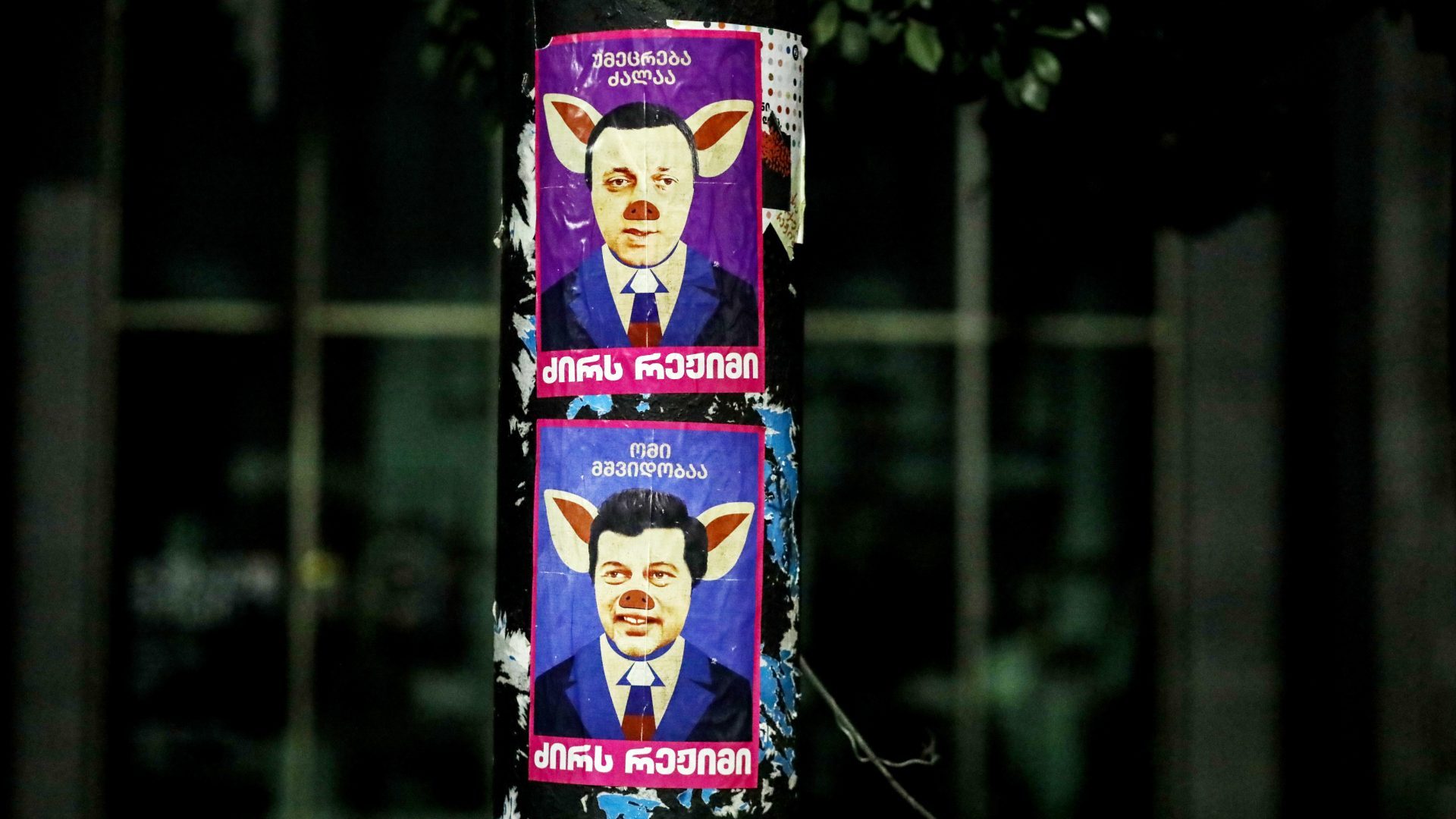
And a strong example of reactionary paraphrasing from recent banners was the one contrasting Kakha Kaladze’s election slogan: “A city full of poison,” which is a sarcastic variation of “A city full of light” and “A city full of goodness.” This banner echoed both the infrastructural failures in the capital, which the Tbilisi City Hall is unable to solve, and the use of poisonous substances against peaceful demonstrators when dispersing a demonstration. After the BBC’s story, the main slogan of pro-European citizens was also related to this event: “Tell us, what did you poison us with?”
Context
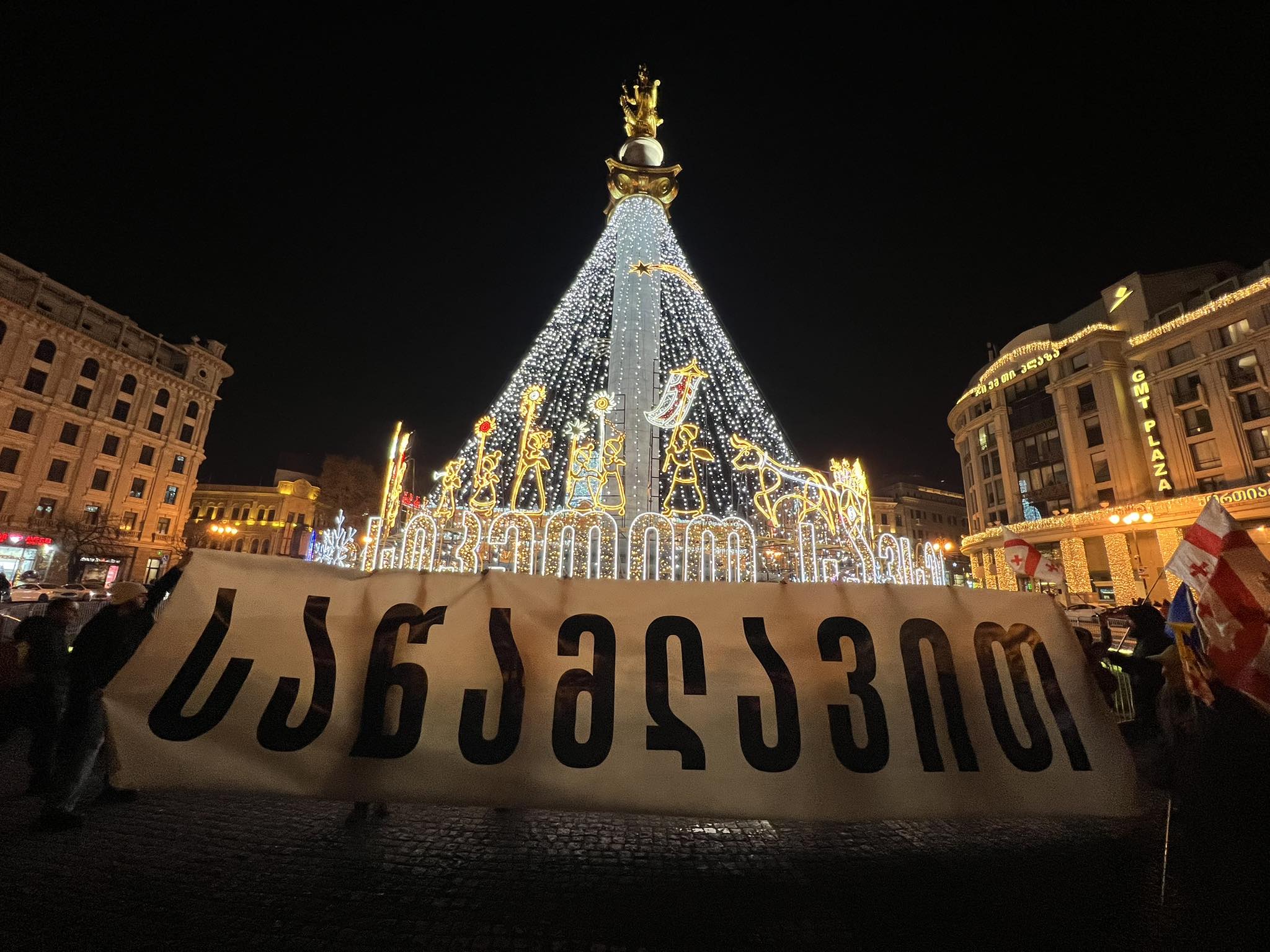
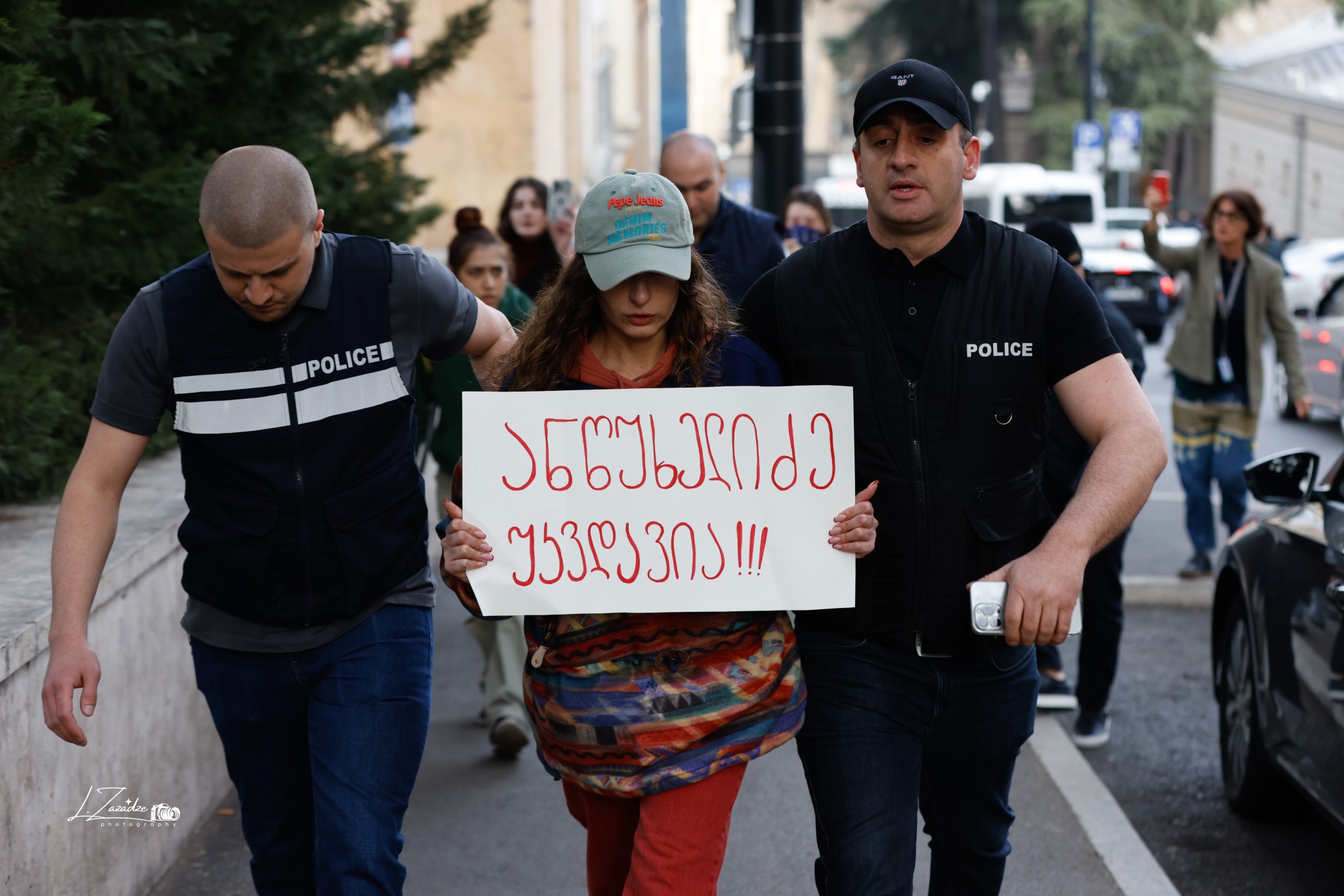
Context is part of rhetoric. The right context is often determined by reaction. It is important to determine both the physical location and the thematic, ideological basis. Given the right context, it is possible to have an effect even with minimal resources. For example, this happened when civil activist Tamar Kuratishvili stood on the street next to the parliament with a banner “Antsukhelidze is immortal ” and was arrested because of the banner. The financial value of this particular banner may not have exceeded two GEL, but the impact was large – scale. The context of this case was the meeting of the investigative commission on the August 2008 war, which was being held in parallel with the protest rally, which was headed by Tea Tsulukiani. The purpose of the banner was to protect the name and dignity of the hero who died in the war, Giorgi Antsukhelidze. The subsequent repeated use and spread of the phrase “Antsukhelidze is immortal” is an indicator of the resonance of this incident.
Discipline
This characteristic, in addition to regularity, also implies endurance and management of emotions. Activism has the charm of being able to perform an influential, resonant action with little expense or, at first glance, in a simple form – by publicly stating a civic position, which is quickly reported in the media. Such an action demonstrates endurance and perseverance for everyone to understand and increases the motivation of both the activist and the citizens.
A successful and resonant activist performance may seem simple to the outside eye, making us wonder why we couldn’t think of or do the same ourselves.
But, let’s look at how many circumstances need to be taken into account for the so-called successful activist action, for an activist performance. In addition to the specific political context and the threat created by the police, an activist very often faces resistance caused by physical laws. This is sometimes of decisive importance. For example: how many people are involved in the protest? Where is it taking place? Who is the protest being held against, is a specific official or decision – maker still in the building ? Is the street already blocked? Are you surrounded by supporters or opponents ? How far away are the police ? Has it suddenly started to rain ? Or maybe the wind has picked up and you can no longer open a banner ? And so on. The list of impeding circumstances is long. Accordingly, you may have come to the rally with a pre-prepared performance idea, but suddenly either the weather changed, or there weren’t enough people, or the rally was already breaking up, or it was moving to another location… When the physical environment and conditions change, the plan no longer works.
Such “missed” episodes are followed by destruction and sadness, because people were not encouraged by your actions. The protest day passed blandly for you.
In reality, a successful and effective performance may be one in a hundred attempts. The rest is routine.
Routine
You have to routinely go outside, routinely hold a banner, routinely blow a whistle, routinely talk to people about current events, routinely give interviews to the media, repeat every day in public, in a taxi, at a bus stop, on the street, in a store checkout line, why you are outside, what you are protesting, who you are protesting for, what you are not happy with, what your demands are, what happened on which dates, what your position is on which political decisions, and many other routine actions.
Accordingly, the activist agenda is dominated by content and communication with the public. And, because you are fighting for change, honesty and awareness are your main weapons in this process.
Sincerity
An activist sincerely believes that they should raise their voice against injustice. They want something “ differently” from how it is. For example, if a person involved in a protest demands an improvement in the standard of living of people with disabilities, they often have either a personal affinity with this area or a professional one: they are fighting for the rights of a family member, child, or patient. Therefore, they have firmly decided to contribute to the issue, to the need for specific reform. The affinity with the issue adds sincerity to their public speech, and the goal is to benefit society. The listener, the addressee of the protest, understands that the desired result will not only be to obtain a medicine for an individual person, but also to improve the area as a whole, for example, to create an adapted environment on a larger scale, to improve the infrastructure in more public buildings, or something else.
Publicity often insures the sincerity component of protest. If you have already protested the problems of people with disabilities in all institutions, if you have done this on the street, in the ministry, in court and in the media, naturally you will not change your demands for nothing, you will try to increase the listening audience and defend your position until change occurs. In our recent past, this happened during the protest rallies demanding a medicine for achondroplasia, where the parents participating in the rally showed dedication and sincerity at the same time. The protest demanding medicine for achondroplasia can be considered one of the most successful experiences in the history of Georgian protests, as their request was granted, although the policy of the Ministry of Health is still the subject of criticism – for several weeks, parents of patients with Duchenne muscular dystrophy have been asking the Ministry to import medicine to Georgia in the form of a public protest, although their request has not yet been granted.
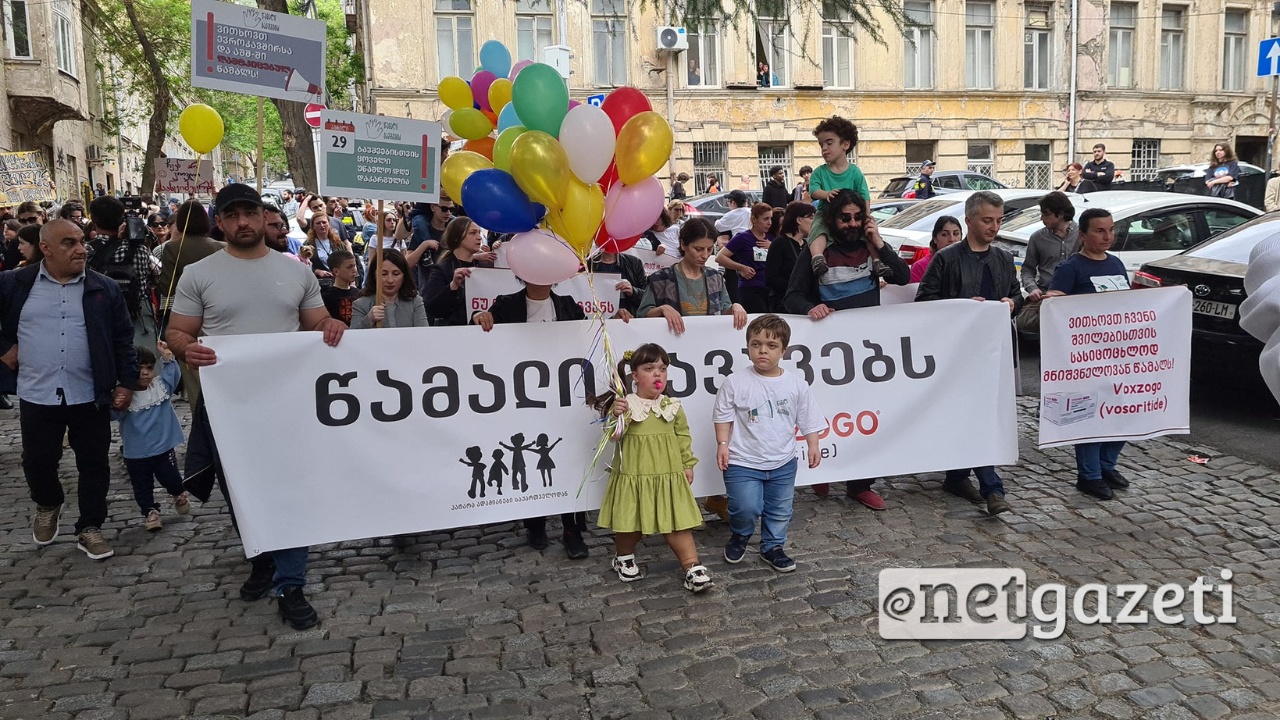
Protests in our country are diverse, and they should be. However, the fight for change is long and difficult. Accordingly, we, active citizens, often worry and ask ourselves and those around us, what does an activist need in Georgia today? Perhaps, recognizing all of the above characteristics, declaring that publicity, rhetoric, context, discipline, routine, and sincerity are the tools at our disposal, tools that we must use and be guided by in our daily protest. Because the changes have yet to come, because we are in the process of fighting for change.